
Side Dishes
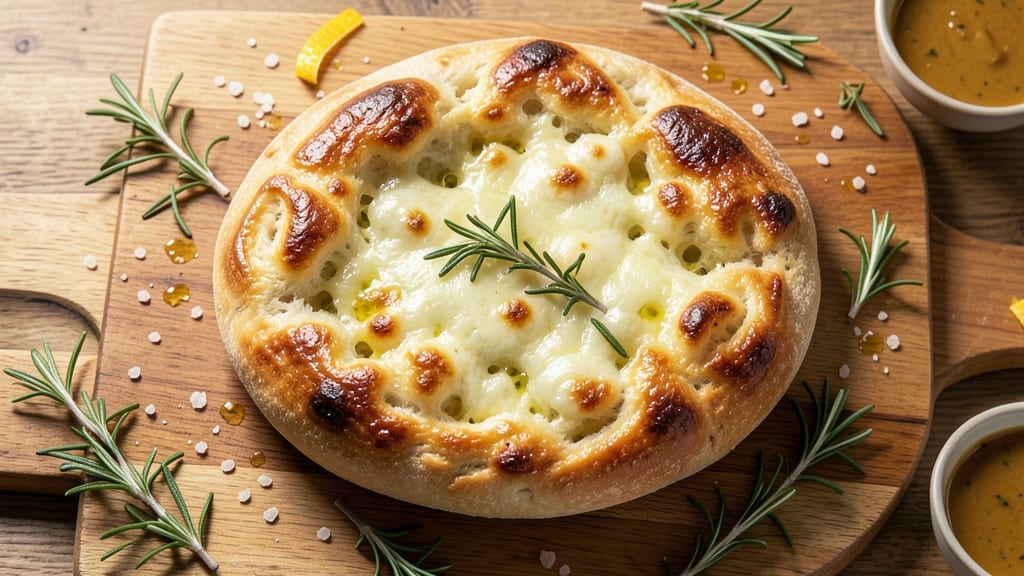
This Asiago cheese focaccia bread recipe transforms simple ingredients into a golden, pull-apart masterpiece with a melty, herby crust that disappears faster than you can say "balsamic glaze." 💛 The secret lies in a rich yeast dough infused with garlic and rosemary, topped with shaved Asiago that bubbles into crispy, cheesy peaks during baking.
I developed this recipe after years of testing—it’s the perfect balance of crispy edges and tender, airy centers, with just enough saltiness to elevate any meal.
The beauty of this focaccia is its versatility—whether you’re serving it warm with olive oil and flaky sea salt, drizzled with honey, or as a base for bruschetta, it’s always a crowd-pleaser.
The dough gets its signature texture from a slow rise (overnight in the fridge, if you’re planning ahead), which deepens the flavor and creates those coveted dimples. Asiago’s nutty, slightly sweet notes melt into the olive oil, adding a luxurious touch that makes this bread feel special without the fuss.
What you’ll end up with is a restaurant-quality loaf that’s crisp on the outside, soft and pillowy inside, and studded with pockets of gooey cheese. The aroma alone—garlicky, herby, and buttery—will have everyone gathered around your table.
It’s the kind of bread that disappears in minutes, leaving only crumbs (and maybe a few extra slices) behind. Perfect for meal prep, holiday gatherings, or a cozy night in, this focaccia proves you don’t need a bakery to make something extraordinary.
For an extra touch, brush the baked focaccia with a mix of olive oil and red pepper flakes, or sprinkle with fresh herbs before serving. The possibilities are endless, but the effort? Minimal. Let’s get baking—your kitchen will smell like heaven in no time.
Ingredients for asiago cheese focaccia bread
Four cups flour, one cup olive oil, and a sprinkle of Asiago cheese—simple staples for a golden, pull-apart masterpiece.
| Ingredient | Amount | Notes |
|---|---|---|
| Active Dry Yeast 🍞 | ¼ tsp | One packet or 7g |
| Granulated Sugar 🍚 | 1 tbsp | Feeds the yeast |
| Extra-Virgin Olive Oil 🫒 | 1 cup | High quality, fruity |
| Warm Water 💧 | 1 ¼ cups | 110°F for yeast activation |
| All-Purpose Flour 🌾 | 4 cups | Plus extra for dusting |
| Kosher Salt 🧂 | 1 ½ tsp | Diamond Crystal preferred |
| Garlic Cloves 🧄 | 4 cloves | Minced for dough infusion |
| Fresh Rosemary 🌿 | ¼ cup | Finely chopped, stems removed |
| Shredded Asiago Cheese 🧀 | 1 ½ cups | Freshly grated, not pre-shredded |
| Flaky Sea Salt 🧂 | 1 tbsp | For finishing, optional |
| Red Pepper Flakes 🌶️ | ½ tsp | For finishing, optional |
| Fresh Basil Leaves 🌿 | ⅛ cup | Chopped, for garnish |
The yeast is non-negotiable here—Fresh Yeast or Saf-Instant both work, but avoid expired packets. For the olive oil, Trader Joe's or Whole Foods carry the best fruity varieties—look for extra-virgin labels. The Asiago? Grocery store pre-shredded gets gummy, so grab a wedge and shred it yourself. Fresh rosemary from the farmers market has more punch than dried, but if you're using dried, halve the amount. The flour should be all-purpose, but King Arthur or Bob's Red Mill brands yield slightly better results.
No fresh rosemary? Dried rosemary at half the amount works, but the flavor won't be as vibrant. Short on Asiago? Parmesan or Gruyère can substitute, though the flavor will differ slightly. The garlic can be roasted for a mellow sweetness—just toss whole cloves in olive oil at 400°F for 15 minutes. For the olive oil, any good quality extra-virgin will do, but avoid the cheap stuff labeled "light" or "pure." The red pepper flakes? Trader Joe's has the best pre-ground variety—no waste, no mess. And if you're out of flaky sea salt, Maldon is the gold standard, but any flaky salt works.
This dough keeps beautifully in the fridge for up to 48 hours—perfect for overnight rising. Shape it into a loaf pan, cover with a damp towel, and let it rise on the counter for 1-2 hours before baking. The baked focaccia stays fresh for 3 days at room temperature, wrapped in a clean kitchen towel. For longer storage, freeze slices for up to 3 months—just reheat in a 350°F oven for 5 minutes to restore crispiness. The cheese gets extra melty when reheated, so save some for topping fresh bread.
Why You'll Love This Recipe
- No-Knead Magic: I swear by this dough—just mix, let it rise, and forget it. That’s right, no standing at the counter wrestling flour. The yeast does all the work while you sip coffee or scroll through your phone.
- Cheese Pulls All Nuts: The moment that golden-brown crust cracks open to reveal melted asiago? Chef’s kiss. It’s rich but not heavy, with that perfect salty tang that makes every bite feel like a little reward.
- Weeknight Hero: This bread saves my dinners when I’m too tired to think. Toss it in the oven while dinner simmers, and suddenly you’ve got crispy, cheesy perfection with zero effort. (Yes, even on a Tuesday night.)
- Budget Stretch: A single batch feeds my family for days—sliced for sandwiches, toasted for breakfast, or even crumbled into soups. Honestly, I make it just to have extra cheese bread lurking in the fridge.
Step-by-step instructions for Asiago cheese focaccia bread
Here's how to make this irresistible herby focaccia with melty cheese pockets every time.
👨🍳 Step 1: Activate the Yeast and Mix the Dough
In a large bowl, combine the 1.25 cups warm water (tested at 110°F) with the 1 tbsp granulated sugar and 0.25 tsp active dry yeast. Let it sit for 5-10 minutes until foamy—this means your yeast is alive and ready to work. If it doesn't foam, your yeast might be dead.
In a separate bowl, whisk together the 4 cups all-purpose flour and 1.5 tsp kosher salt. Make a well in the center and pour in the yeast mixture along with the 1 cup extra-virgin olive oil. Using a wooden spoon, stir until a shaggy dough forms. This dough will be sticky, but that's exactly what we want for that tender, airy focaccia texture.
🥘 Step 2: Knead and Let the Dough Rise
Turn the dough onto a lightly floured surface and knead for 5-7 minutes until smooth and elastic. If it feels too sticky, wet your hands slightly and keep kneading—don't add more flour or you'll make the focaccia dense. Shape the dough into a rough ball and place it back in the bowl.
Cover the bowl with a damp towel and let the dough rise at room temperature for 1-2 hours, or until it has nearly doubled in size. You'll know it's ready when you poke it gently and the indentation stays put. This first rise develops the gluten structure for that perfect focaccia texture.
🍳 Step 3: Shape and Add Cheese Infusion
Preheat your oven to 400°F and line a 9x13-inch baking pan with parchment paper, leaving an overhang on the sides for easy removal. Punch down the risen dough and transfer it to the prepared pan. Gently stretch the dough to fit the pan, using your fingers to create dimples all over the surface—this helps create those signature air pockets.
In a small bowl, combine the 4 minced garlic cloves, 0.25 cup finely chopped fresh rosemary, and 1 tbsp extra-virgin olive oil. Drizzle this mixture evenly over the dough, pressing it in gently. Then sprinkle the 1.5 cups shredded Asiago cheese evenly over the top, pressing it down slightly so it melts into the dough during baking.
⏰ Step 4: Second Rise and Bake to Golden Perfection
Cover the focaccia with a damp towel and let it rise again for 30-45 minutes until it's puffy and the cheese has begun to soften. This second rise is crucial for that light, airy texture. While it's rising, position a rack in the middle of your oven.
Bake the focaccia for 20-25 minutes until the edges are deep golden brown and the cheese is bubbling. If the top browns too quickly, tent it loosely with foil. The focaccia is done when it sounds hollow when tapped on the bottom and the internal temperature reaches 190°F.
🍽️ Step 5: Finish with Herbs and Serve Warm
Remove the focaccia from the oven and immediately sprinkle with the 1 tbsp flaky sea salt and 0.5 tsp red pepper flakes. While still warm, use the parchment overhang to lift the focaccia onto a cutting board. Let it cool for 5 minutes before slicing into squares.
Garnish with the 0.125 cup chopped fresh basil leaves just before serving. The cheese should be gooey and stretchy, the crust crispy and golden, and the herby olive oil aroma should fill your kitchen. Serve warm with your favorite dipping oil or alongside a simple salad for the perfect Italian-inspired meal.
Pro Tips For Making Asiago Cheese Focaccia Bread
- Use Room-Temp Olive Oil: Focaccia dough loves oil that’s not straight from the fridge—cold olive oil makes the dough sluggish and uneven. Let that bottle sit out for 30 minutes before measuring, especially in cooler kitchens. I learned this the hard way when my first batch took forever to come together.
- Dissolve Yeast in Warm Water First: Skip the dry yeast sprinkle-and-hope method. Mix the yeast with warm water (110°F, not boiling) and a pinch of sugar before adding flour—this guarantees it activates fully. I used to just toss it in dry, and half the time, my dough never really woke up.
- Dimple Early, Dimple Often: Don’t wait until the dough is in the oven to make those signature dimples. Press them in after the first 20 minutes of rising—this gives the yeast more time to puff up between dimples. I used to rush this, and my focaccia always looked flat and sad.
- Stretch, Don’t Poke, the Dough: When shaping, resist the urge to punch it down like pizza dough. Gently stretch the edges toward the center with wet hands—this creates that airy, open crumb. I was skeptical until I tried it, and now my focaccia has that restaurant-quality texture. (Yes, even if you’re impatient like me.)
Dietary considerations for this dish
Gluten-Free Adaptations
For a gluten-free version, swap the all-purpose flour for a 1:1 gluten-free baking flour blend like King Arthur Measure for Measure or Bob's Red Mill 1-to-1. Add 1 tsp xanthan gum to help bind the dough, as gluten-free flours lack natural elasticity.
Keep the yeast amount the same, but expect a denser texture—this focaccia won’t be as airy, but it’ll still be delicious with that melty Asiago. 💛
Dairy-Free Options
Replace the 1.5 cups shredded Asiago cheese with nutritional yeast (for a cheesy flavor) or dairy-free shredded mozzarella like Miyoko's. For extra richness, mix in 1 tbsp olive oil with the nutritional yeast to mimic Asiago’s creaminess.
The texture will differ slightly, but the herby olive oil and garlic infusion will still shine.
Vegan Variations
Turn this focaccia fully plant-based by using a vegan yeast like Red Star Vegetarian Yeast and replacing the Asiago with vegan Parmesan (look for brands like Follow Your Heart).
For a cheesy pull-apart effect, sprinkle vegan mozzarella shreds on top. The flavor will be milder, but the crispy crust and aromatic herbs will keep it satisfying.
Lower-Carb Adjustments
Reduce the flour to 3 cups and add 1 cup almond flour for a lower-carb version. Keep the yeast and olive oil the same, but expect a slightly denser texture. The Asiago will still melt beautifully, and the extra fat from the almond flour adds richness.
This works well if you’re watching carbs but still want that cheesy, herby focaccia experience. 💡
Nut-Free Considerations
If nut allergies are a concern, stick to the original recipe—it’s naturally nut-free! Just double-check that your extra-virgin olive oil and Asiago cheese aren’t processed in facilities with nuts. The focaccia’s flavor comes from the herbs, garlic, and cheese, so no substitutions are needed for safety.
Nutrition facts
Frequently asked questions
Can I make this focaccia without a 9x13-inch pan?
Use a 9x12-inch pan for a slightly wider loaf or a 9-inch round cake pan for a rustic shape. For extra-large batches, try two 8x8-inch pans. Just adjust the baking time by 2-3 minutes if using smaller pans—they'll bake faster. The key is to keep the dough ½-inch thick for even cooking.
Why did my focaccia turn out dense instead of airy?
This usually happens when the dough rises too quickly or gets over-kneaded. Let the dough rise at room temperature for the full 1-2 hours (not in a warm oven), and avoid adding extra flour—stickiness is normal! Also, make sure your yeast is fresh (it should foam within 5-10 minutes in warm water). For extra airiness, dimple the dough more aggressively before the second rise.
Can I add other cheeses to this recipe?
Yes! Mix in ½ cup grated Parmesan for extra umami or swap ½ cup Asiago for mozzarella for stretchier melts. For a smoky twist, add ¼ cup smoked Gouda. Just keep the total cheese to 1.5 cups to maintain the right texture. The Asiago's nutty notes pair perfectly with rosemary and garlic, but these alternatives work beautifully too.
How do I store leftovers to keep them fresh?
Wrap cooled focaccia tightly in a clean kitchen towel (not plastic) and store at room temperature for 3 days. For longer storage, slice and freeze for up to 3 months. To reheat, wrap slices in foil and warm at 350°F for 5 minutes—the cheese will get extra gooey! For extra crispiness, broil for 1-2 minutes after reheating.
What's the best way to serve this focaccia?
Serve warm with a drizzle of high-quality olive oil and a sprinkle of flaky salt, or tear into pieces for a rustic bread bowl. Pair it with marinated olives, prosciutto, or a simple tomato-basil salad. For dessert, brush with honey and sprinkle with crushed pistachios. The herby, cheesy flavor works equally well with savory and sweet toppings!