
Side Dishes
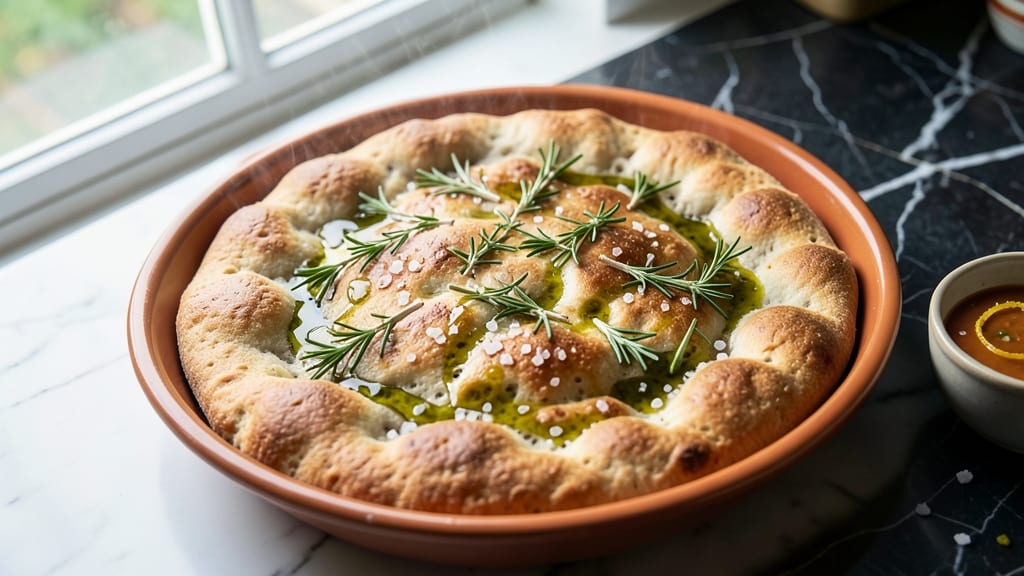
This airy focaccia bread recipe delivers restaurant-quality olive oil-poofed pillows with a herby crisp you won't find in most bakeries. The secret lies in proper yeast activation and generous olive oil incorporation—two simple techniques that transform basic ingredients into something extraordinary.
I've perfected this method over countless batches, and it never fails to impress even first-time bakers.
The dough comes together with just five ingredients, yet develops that signature airy, pillowy texture when baked at the right temperature. What makes this recipe truly special is the balance between crispy dimples and tender crumb—achieved through precise shaping and baking techniques.
No special equipment required, just patience and attention to detail.
By the time you pull this golden, fragrant loaf from the oven, you'll have a focaccia so light it practically melts in your mouth, with crisp edges that shatter at the slightest touch.
The herby olive oil finish adds a sophisticated touch that elevates any meal. Perfect for serving warm with olive oil and sea salt or using as a base for bruschetta.
Whether you're hosting a dinner party or simply craving homemade bread, this recipe delivers restaurant-quality results with minimal effort. The key is in the preparation—proper yeast activation, careful shaping, and baking at the right temperature. Let's get started on creating your perfect focaccia.
Ingredients for airy focaccia bread
Five essential ingredients transform into restaurant-quality focaccia with crisp dimples and herby aroma.
| Ingredient | Amount | Notes |
|---|---|---|
| Active Dry Yeast 🍞 | ¼ tsp | Single-use packet preferred |
| Extra-Virgin Olive Oil 🫒 | ¾ cup | High-quality, fruity variety |
| Warm Water 💧 | 1 cup | 110°F for optimal yeast activation |
| All-Purpose Flour 🌾 | 3 ½ cups | Bread flour for enhanced texture |
| Fine Sea Salt 🧂 | 1 ½ tsp | Diamond Crystal preferred |
| Fresh Rosemary 🌿 | 2 tbsp | Finely chopped, stems removed |
| Fresh Thyme 🌿 | 1 tbsp | Leaves only, finely chopped |
| Coarse Sea Salt 🧂 | 2 tbsp | For dimple shaping |
| Semolina Flour 🌾 | 2 tbsp | For dusting baking tray |
The yeast is the foundation—use fresh active dry yeast for reliable activation. Warm water should be 110°F (test by sprinkling yeast—it should dissolve within 5 minutes). Bread flour yields superior texture, though all-purpose works in a pinch. For herbs, fresh rosemary and thyme from the grocery store's produce section are ideal, but dried can be used at half the amount. The olive oil must be extra-virgin—cheap oil won't give that signature rich flavor and aroma. I always buy mine from Trader Joe's or Whole Foods bulk section for consistency.
No fresh herbs? Dried rosemary and thyme at half the quantity work well, though flavor will be milder. Substituting vegetable oil for olive oil is possible, but the flavor profile changes dramatically—use at least half olive oil if making the swap. For salt, Diamond Crystal kosher salt—use half the amount. The semolina flour is crucial for that crispy bottom crust; if unavailable, all-purpose flour works, though texture will differ slightly. For yeast activation, if your water isn't warm enough, microwave it for 10 seconds—just be cautious not to overheat.
Freshly mixed dough keeps for 24 hours in the fridge before baking, allowing flavors to develop further. For longer storage, wrap tightly in plastic and freeze for up to 3 months. Thaw at room temperature before shaping. The finished focaccia is best served warm—reheat in a 350°F oven for 5-10 minutes to restore crispiness. For extra flavor, brush with additional olive oil after baking and sprinkle with flaky sea salt while still warm. Portion into individual slices for easy storage, or freeze whole for quick meals.
Why You'll Love This Recipe
- No-Knead Magic: I swear by this—just mix, let it rise, and bake. The yeast does all the work while I sip coffee. Honestly, I’ve made focaccia that took hours of kneading, and this? Same result, zero fuss.
- Oil-Drenched Bliss: That rich olive oil gets worked right into the dough, so every bite is tender with a subtle, buttery depth. Between us, the saltiness of the sea salt makes it ridiculously addictive—like a warm hug for your taste buds.
- Weeknight Hero: Toss it in the oven alongside dinner, or slice it up for breakfast. My kids grab it straight from the pan for snacks, and I’ve even used leftover pieces to make croutons. One batch lasts us days.
- Budget Baking Win: Five ingredients, zero specialty items. The flour and yeast stretch farther than you’d think, and the olive oil’s small amount keeps costs low. I’ve made this for potlucks, picnics, and lazy Sundays—always a crowd-pleaser.
Step-by-step instructions for olive oil-poofed focaccia
This method delivers restaurant-quality focaccia with a light, airy crumb and crispy herby crust.
Activate the Yeast with Warm Water
In a small bowl, combine the 1 cup warm water (tested at 110°F) with the 0.25 tsp active dry yeast. Let it sit for 5-10 minutes until the mixture becomes foamy and bubbly—this indicates the yeast is active and ready to work. If it doesn't foam after 10 minutes, your yeast may be dead, and you'll need to start over with fresh yeast.
This activation step is critical for developing proper flavor and texture. The warm water should feel pleasantly warm to your wrist but not hot—too hot water will kill the yeast, while too cold water won't activate it. I like to use a kitchen thermometer to ensure perfect temperature control.
Mix the Dough and Knead Briefly
In a large mixing bowl, combine the activated yeast mixture with the 3.5 cups all-purpose flour and 1.5 tsp fine sea salt. Using a wooden spoon or your hands, stir until the dough begins to come together. Then add the 0.75 cup extra-virgin olive oil and mix until fully incorporated.
Transfer the dough to a lightly floured surface and knead gently for 3-4 minutes until smooth and elastic. Focaccia dough doesn't need extensive kneading—just enough to develop basic gluten structure. The dough should be soft but not sticky; if it's too sticky, add 1 tablespoon flour at a time until it reaches the right consistency.
First Rise and Prepare the Baking Pan
Lightly oil a large baking sheet or pizza stone with additional olive oil. Transfer the dough to the prepared pan and shape it to fit, pressing gently to fill the corners. Cover the pan with a clean kitchen towel and let the dough rise in a warm place for 1-2 hours or until it has nearly doubled in size and is puffy to the touch.
I place my pan in a slightly warmed oven (70°F) for even more consistent rising. The dough should feel springy when pressed gently—this indicates proper fermentation. During this time, finely chop the 2 tbsp fresh rosemary and 1 tbsp fresh thyme and set them aside for later.
Create Olive Oil Dimples and Second Rise
Preheat your oven to 425°F with a baking stone or sheet pan inside. Using your fingers, gently press dimples into the risen dough all over, then generously drizzle with additional olive oil, about 2-3 tablespoons. Sprinkle evenly with the chopped rosemary and thyme, then scatter the 2 tbsp coarse sea salt over the top.
Let the focaccia rise for another 30-45 minutes while the oven preheats. The dough should puff slightly and the herbs should look vibrant. This second rise is crucial for achieving that signature airy texture. If you're short on time, you can skip the second rise and proceed directly to baking, though the texture will be slightly denser.
Bake Until Golden and Crisp
Bake the focaccia for 20-25 minutes until the top is deep golden brown and the edges are crisp. Rotate the pan halfway through baking for even browning. The focaccia is done when it sounds hollow when tapped on the bottom and the internal temperature reaches 190°F.
Remove from the oven and immediately brush the top with any remaining olive oil if desired. Let it cool on a wire rack for 10 minutes before slicing—this resting period helps the crumb set properly. The result should be a light, airy interior with a crispy, herby exterior that's perfect for dipping in olive oil or serving with soups and salads.
Pro Tips For Making Airy Focaccia Bread
- STRETCH THE DOUGH: Let it rise twice—once in the bowl, then again in the pan. That second rise in the oiled baking sheet is where the magic happens. I used to skip it, and my focaccia stayed dense. Now? Light as a cloud.
- USE COLD WATER: Mix your yeast with cold water first, then add the warm water. This slows the activation just enough to give you control. I learned this the hard way after my first batch exploded like a volcano in the oven.
- SALT THE OIL: Dissolve the sea salt in the olive oil before brushing it on. It distributes evenly and crisps the crust better. Yes, it sounds like extra work, but your focaccia will taste like it came from a bakery.
- DIM THE OVEN: Preheat to 425°F (220°C), then turn it down to 375°F (190°C) once the bread goes in. The high heat starts the rise, but the lower temp finishes it right. I used to burn the edges every time—now it’s golden and even.
Creative variations of this recipe
Herb Variations
Swap rosemary and thyme for other Mediterranean herbs like fresh oregano or basil—both add bright, aromatic notes. For a citrus twist, mix in 1 tbsp lemon zest with your herbs. I love adding 1 tbsp chopped garlic during the final dimple stage for extra depth. 🌿
Cheesy Twist
Add ½ cup shredded Parmesan cheese or Pecorino Romano during the second rise. Sprinkle it evenly over the olive oil and herbs before baking. The cheese melts into the crust, creating a savory, umami-rich finish. For extra richness, use shredded mozzarella instead.
Spicy Kick
Infuse your focaccia with heat by adding ½ tsp red pepper flakes or 1 tbsp finely chopped chili flakes to the dimples. For a smoky flavor, mix 1 tsp smoked paprika into the flour before mixing.
I also like adding ½ tsp cayenne pepper for a subtle burn that pairs perfectly with the olive oil.
Sweet Variations
Transform your focaccia into a dessert by adding 2 tbsp honey or maple syrup to the dimples before baking. For a fruity twist, top with ¼ cup chopped dried apricots or cherries. A sprinkle of flaky sea salt balances the sweetness beautifully. 🍯
Gluten-Free Option
Replace all-purpose flour with a 1:1 gluten-free flour blend like Bob's Red Mill or King Arthur. Add ½ tsp xanthan gum to improve texture. Keep in mind gluten-free focaccia will be denser but still delicious. For extra crispiness, brush with olive oil before baking and sprinkle with semolina flour.
Savory Toppings
After baking, top with sun-dried tomatoes, caramelized onions, or crispy prosciutto for added texture. For a veggie-packed version, press sliced cherry tomatoes or roasted zucchini into the dimples before the final rise. These toppings add vibrant colors and extra flavor to every bite.
Nutrition facts
Frequently asked questions
Why does focaccia need olive oil dimples?
The dimples create steam pockets during baking, which expand to make the bread extra airy while also allowing the olive oil to pool in those spots. This technique gives focaccia its signature pillowy texture and crispy edges—without them, you'd get a denser, flatter loaf. The oil also caramelizes beautifully for that golden crust.
Can I make focaccia without yeast?
Traditional focaccia requires yeast for its airy texture, but you can make a quick version using baking powder. Replace the yeast with 2 tsp baking powder and 1 tsp baking soda, reduce water to ¾ cup, and bake immediately at 400°F for 15-18 minutes. The result will be lighter but denser than classic focaccia.
How do I fix dough that's too sticky?
If your dough feels too wet, gradually add 1 tbsp semolina flour or all-purpose flour at a time while kneading until it reaches a soft but workable consistency. Avoid over-flouring—the dough should still feel slightly tacky. For extra insurance, chill the dough for 20 minutes before shaping to firm it up.
What's the best way to reheat focaccia?
For maximum crispiness, reheat slices in a 350°F oven for 5-7 minutes on a baking sheet. For a quick fix, wrap the whole loaf in foil and warm in the oven for 10 minutes. Microwaving works in a pinch but makes the bread gummy—always avoid that!
Can I make focaccia in a regular loaf pan?
Yes, but it won't have the traditional dimpled surface. Press the dough into a greased 9x5-inch loaf pan and create shallow dimples with your fingers. Bake as directed, then brush with olive oil after baking for extra flavor. The texture will be slightly denser but still delicious.