
Side Dishes
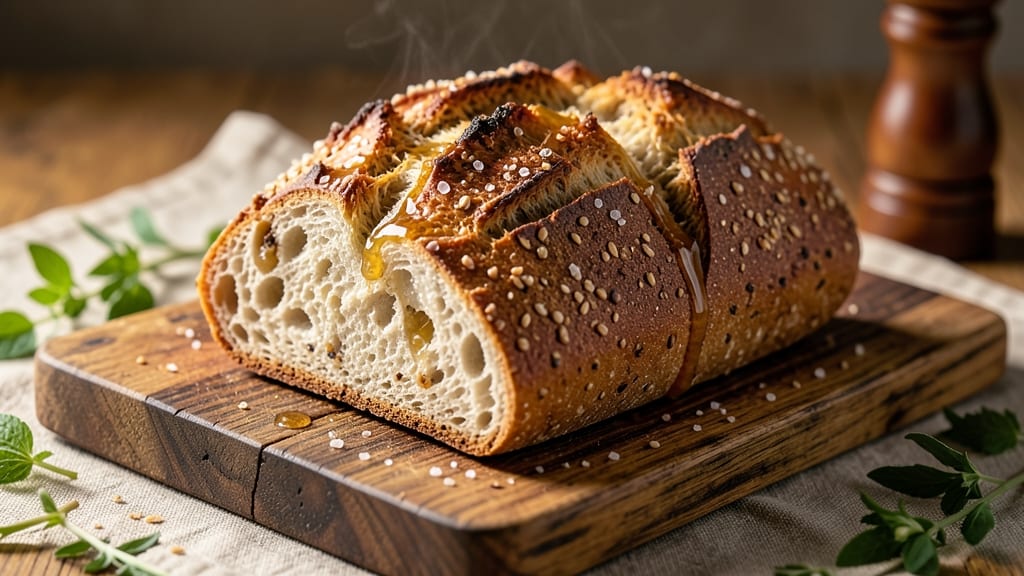
This artisan whole wheat sourdough bread recipe delivers the nutty depth of whole grains with the tangy complexity of traditional sourdough fermentation. 🌾 The key lies in balancing whole wheat's moisture demands with proper fermentation techniques—something most home bakers struggle to perfect.
I've refined this method over years of experimentation, ensuring a loaf with an open crumb structure and crisp crust that rivals artisan bakeries.
Unlike standard recipes that treat whole wheat as an afterthought, this method accounts for its higher hydration needs and shorter gluten development time. We'll use a 24-hour cold bulk fermentation to strengthen the dough's structure while allowing flavors to mature fully.
The result? A loaf with visible crumb, substantial chew, and that unmistakable sourdough tang—all without requiring a professional oven or years of practice.
What makes this recipe particularly reliable is the step-by-step approach to handling whole wheat's unique properties. From adjusting hydration levels to strategic folding techniques during bulk fermentation, each phase is designed to prevent dense crumb or weak oven spring.
The scoring technique I've perfected ensures an even rise and that signature crispy, caramelized crust that's impossible to resist.
Whether you're baking for a weekend breakfast or preparing for a holiday meal, this bread becomes the star of any table. The nutty whole wheat flavor pairs beautifully with soups, sandwiches, or simply buttered and shared.
Let's begin with the foundation—your sourdough starter—that will make all the difference in this recipe.
Ingredients for artisan whole wheat sourdough bread
Nine ingredients, two loaves of restaurant-quality whole wheat sourdough—no shortcuts needed.
| Ingredient | Amount | Notes |
|---|---|---|
| Active Sourdough Starter 🍞 | ½ cup | 100% hydration, bubbly and active |
| Whole Wheat Flour 🌾 | 3 ½ cups | King Arthur or Bob's Red Mill preferred |
| Bread Flour 🌾 | 1 cup | High protein for structure |
| Water 💧 | 2 ¼ cups | Room temperature, filtered preferred |
| Honey 🍯 | 1 tbsp | Raw, unprocessed preferred |
| Salt 🧂 | 1 ½ tsp | Diamond Crystal kosher salt |
| Unsalted Butter 🧈 | 2 tbsp | Cold, cubed for scoring |
| Olive Oil 🫒 | 1 tsp | Extra-virgin for dough handling |
| Instant Yeast 🍄 | ¼ tsp | Optional for backup fermentation |
The whole wheat flour is where this recipe shines, but it demands respect. King Arthur or Bob's Red Mill brands grind their wheat more finely, which improves hydration and gluten development—critical for whole wheat's higher moisture content. If your starter is young or weak, the instant yeast acts as insurance, though true sourdough purists will skip it. For the water, room temperature is non-negotiable; cold water slows fermentation, while hot water can kill the starter's beneficial bacteria. The honey serves dual purposes here: it feeds the starter while adding subtle sweetness that balances the whole wheat's nuttiness. I source mine from local apiaries when possible, but any raw, unprocessed honey works.
No whole wheat flour? Substitute with a 50/50 blend of bread flour and vital wheat gluten—this mimics the protein structure. Short on time? Replace 1 cup of whole wheat with all-purpose flour, but expect a denser crumb. The olive oil isn't just for flavor; it coats the gluten strands, improving oven spring. If you're avoiding oil, add an extra 1 tsp of water instead. For the butter, European-style cultured butter like Plugrá adds depth, but any unsalted butter works. The Diamond Crystal kosher salt is essential—it dissolves more easily than table salt, ensuring even distribution. Pro tip: Toast your whole wheat flour for 5 minutes at 350°F before mixing to deepen its nutty aroma.
Store your starter in a glass jar with a loose lid at room temperature for daily use, or refrigerate for up to 1 week if baking occasionally. The dough benefits from a 24-hour cold proof, so shape your loaves the night before and let them ferment overnight in the fridge. For scoring, use a razor blade or lame—a serrated knife leaves uneven cuts. Freshly baked loaves keep well wrapped in a cotton towel for 3 days at room temperature, or freeze sliced for up to 3 months. The crust develops more flavor each day, so embrace the wait.
Why You'll Love This Recipe
- No-Fuss Fermentation: I’ll admit, I was skeptical about whole wheat sourdough—until I realized the starter does all the heavy lifting. Just toss in your active starter, mix in the flours and honey, and let time work its magic. No kneading, no stress, just a slow rise while you sip coffee.
- Nutty Crust, Sweet Depth: That honey isn’t just for flavor—it caramelizes into a golden crust with a subtle crunch, while the whole wheat adds a toasty, almost nutty richness. Honestly, the first slice out of the oven had me reaching for seconds before the loaf even cooled.
- Weeknight Workhorse: This bread is my go-to for breakfast toast, lunch sandwiches, or dinner sides—no fancy planning needed. The whole wheat keeps it hearty enough for a full meal, but the bread flour gives it that light, airy crumb that doesn’t weigh you down.
- Budget-Friendly Staple: A single batch stretches for days—think toast, croutons, or even breadcrumbs for recipes. Between us, I’ve used this loaf to stretch a $5 grocery haul into a full week of meals. Plus, the starter means no expensive yeast packets.
Step-by-step instructions for artisan whole wheat sourdough bread
Mastering this dough requires patience and precision—here's how to balance whole wheat's density with sourdough's airy structure.
👨🍳 Step 1: Mix the Dough with Wet Ingredients First
In a large mixing bowl, combine the 0.5 cup active sourdough starter, 2.25 cups room-temperature water, and 1 tbsp honey. Let this mixture sit for 5 minutes while you measure the dry ingredients. The honey helps activate the starter and adds subtle sweetness that balances the whole wheat's earthiness.
Add the 3.5 cups whole wheat flour and 1 cup bread flour to the bowl. The bread flour provides the gluten structure that whole wheat lacks, creating a lighter crumb. Create a well in the center and add the 1.5 tsp salt and 0.25 tsp instant yeast. The yeast acts as a backup to ensure reliable fermentation alongside your starter.
🍳 Step 2: Knead Until Elastic and Windowpane-Ready
Using a stand mixer with a dough hook or by hand, knead the dough on medium-low speed for 8-10 minutes until it becomes elastic and forms a windowpane when stretched thin (about ¼-inch thickness). Whole wheat dough resists gluten development, so this longer kneading time is critical. If the dough feels too sticky, add 1 tablespoon of bread flour at a time until it's just manageable.
Test for readiness by performing the windowpane test: stretch a small piece of dough between your fingers until it's translucent. If it forms a thin membrane without tearing, it's ready. If it tears easily, knead for another 2-3 minutes. The dough should be smooth but slightly tacky—not dry or crumbly.
🥘 Step 3: Bulk Ferment for 4-6 Hours with Stretches
Shape the dough into a loose ball, place it in a lightly oiled bowl, and cover with a damp towel. Let it ferment at room temperature (70-75°F) for 1 hour, then perform the first set of stretch-and-folds every 30 minutes for 2 hours total. This technique strengthens the gluten and distributes the yeast and starter evenly. To perform a stretch-and-fold: wet your hands, grasp one side of the dough, stretch it upward, and fold it over itself.
After the final stretch-and-fold, let the dough rest uncovered for 2-4 hours until it rises 50-75% and develops bubbles along the surface. The whole wheat flour will make the dough rise more slowly than all-purpose, so don't rush this stage. Poke the dough gently—it should spring back slowly (not immediately) when pressed. If it springs back quickly, it needs more time.
🔥 Step 4: Shape, Score, and Proof for Final Rise
Turn the dough onto a lightly floured surface and shape it into a boule (round loaf) or batard (oval loaf). For the boule, gather the dough from the sides toward the center, sealing the seam tightly. Let it rest for 10 minutes before final shaping. The 2 tbsp cold unsalted butter and 1 tsp olive oil should be softened but still cool—use them to lightly oil your proofing basket or bowl.
Place the shaped dough, seam-side up, in a floured banneton or bowl lined with a floured towel. Cover and refrigerate for 8-12 hours (overnight works best). This cold proofing enhances flavor development and makes scoring easier. The dough should rise 25-50% during this time. If it rises too much, it may collapse when baked—this is normal for whole wheat.
🔪 Step 5: Bake with Steam for Maximum Crust Development
Preheat your oven to 450°F with a Dutch oven inside for 45 minutes. Remove the Dutch oven and transfer the dough onto a parchment-lined peel. Score the dough ½-inch deep using a razor blade or sharp lame—this prevents over-expansion and creates an appealing crust. For a boule, score a simple cross; for a batard, score diagonally.
Carefully transfer the dough to the hot Dutch oven, cover with the lid, and bake for 20 minutes. Remove the lid and bake for another 20-25 minutes until the crust is deep golden brown and the internal temperature reaches 205-210°F. Tap the bottom—the sound should be hollow, not dull. If the crust browns too quickly, tent with foil to prevent burning.
⏰ Step 6: Cool and Store for Optimal Texture
Remove the bread from the Dutch oven and let it cool on a wire rack for at least 1 hour before slicing. The internal temperature should drop to below 140°F to prevent gumminess. Whole wheat bread continues to firm up as it cools, so patience here is key. The crust should be crisp and tangy, while the crumb remains open and nutty with pockets of air.
Store wrapped at room temperature for 2-3 days or freeze for up to 3 months. For best flavor, toast slices before serving—this enhances the bread's natural sweetness and reduces any potential dryness from whole wheat. The sourdough fermentation mellows the whole wheat's bitterness, resulting in a bread that's both hearty and delicate.
Pro Tips For Making Artisan Whole Wheat Sourdough Bread
- STRETCH AND FOLD: Use a bench scraper to fold the dough—push it away from you with one hand while pulling the far edge toward your body with the other. This builds tension faster than stretching and tucking, especially when mixing whole wheat and bread flour. (Yes, it looks messy at first, but the gluten network will thank you.)
- HYDRATE THE WHOLE WHEAT: Whole wheat flour drinks up water like a sponge. Weigh your flours separately, then add water gradually to the whole wheat first—it’ll need about 10% more hydration than bread flour. Skip this, and your dough will feel gummy and refuse to rise properly.
- AVOID OVERPROOFING: Whole wheat dough rises slower and collapses easier. Check for doneness by doing the poke test: press a finger gently into the dough—if it springs back slowly (not immediately), it’s ready. Overproofed dough flattens like a pancake in the oven.
- USE COLD WATER FOR FINAL SHAPE: Chill your mixing water to 60°F (15°C) for the final shape. The cold slows fermentation, giving you time to score and bake without the dough puffing up prematurely. (I learned this after watching my loaves balloon in the proofing basket like overinflated balloons.)
Flavor customization for this recipe
Sweet & Nutty Twist
Add 1 tbsp cinnamon and ½ tsp cardamom to the dough for a warm, aromatic profile. I like to pair this with ½ cup raisins or chopped walnuts for texture. The spices complement the whole wheat's earthiness while adding a subtle sweetness that balances the sourdough tang.
For extra richness, fold in 2 tbsp melted butter during the final knead. 🌟
Herb-Infused Crust
Boost the crust's complexity by mixing 1 tbsp dried rosemary or thyme into the flour before mixing. For a fresh twist, sprinkle 1 tbsp finely chopped rosemary directly on the dough before scoring.
The herbs infuse the crust with aromatic depth while keeping the crumb light. I often use Penzeys Spices for consistent quality in dried herbs. ✨
Seeded & Savory
For a heartier loaf, stir in 2 tbsp sesame seeds or poppy seeds during the final knead. Add 1 tbsp flaxseeds for extra fiber and nuttiness. For a savory variation, fold in ¼ cup finely chopped sun-dried tomatoes or caramelized onions after bulk fermentation.
These additions create beautiful flavor contrasts and visual appeal. 🌾
Spicy & Smoky
Kick up the heat with ½ tsp smoked paprika and ¼ tsp cayenne pepper mixed into the dough. For a smoky crust, brush the baked loaf with 1 tbsp olive oil mixed with ½ tsp smoked salt immediately after baking.
This variation works especially well with spicy soups or chili. I recommend Penzeys Cayenne Pepper for consistent heat levels. 🔥
Citrus Zest Brightener
Add 1 tbsp lemon zest or orange zest to the dough for a refreshing citrus note. The acidity cuts through the whole wheat's richness while enhancing the sourdough's tang.
For extra brightness, sprinkle 1 tsp citrus zest over the dough before scoring. This variation pairs beautifully with breakfast or as a sandwich base. 🍊
Whole Grain Blends
Experiment with different whole grain flours like spelt flour or rye flour to replace up to 1 cup of whole wheat flour. Spelt adds a mild sweetness, while rye deepens the tang.
For a nutty profile, substitute ½ cup buckwheat flour—it's naturally gluten-free but works well in this recipe. Each blend alters the flavor and texture uniquely. 🌱
Nutrition facts
Frequently asked questions
Why does whole wheat sourdough need more hydration than regular sourdough?
Whole wheat flour absorbs more moisture because its bran and germ hold water differently than refined flour. The recipe uses 2.25 cups of water for 4.5 cups of flour (about 50% hydration) to account for this—standard sourdough typically uses 60-70% hydration. Too little water makes the dough dry and dense; too much creates a sticky mess that won't hold shape.
Can I skip the cold proofing overnight?
You can, but expect a less flavorful loaf with weaker oven spring. The 8-12 hour cold proof slows fermentation, allowing enzymes to break down complex carbohydrates for deeper flavor and better gluten development. If you're short on time, do a 2-hour room-temperature proof instead—but your bread will taste less complex.
What's the best way to fix a dense whole wheat sourdough loaf?
Dense crumb usually means underdeveloped gluten or insufficient fermentation. First, ensure you kneaded until windowpane (¼-inch thin). Then, extend bulk fermentation by 1-2 hours—whole wheat dough needs more time to rise properly. If the problem persists, reduce whole wheat flour by ½ cup and replace with bread flour for better structure.
Do I need a Dutch oven for this recipe?
A Dutch oven creates the ideal steam environment for that signature artisan crust, but you can improvise. Place a metal bowl filled with boiling water on the oven rack below your baking stone for similar steam effects. For best results, preheat your oven with the Dutch oven inside for 45 minutes—this ensures maximum heat retention during baking.
How can I make this bread more digestible?
Whole wheat's fiber content can be tough on digestion for some people. Soak the whole wheat flour in 1 cup warm water for 30 minutes before mixing to soften the bran. Also, reduce the whole wheat portion by ½ cup and replace with bread flour. The sourdough fermentation naturally predigests some of the gluten, making it easier to digest than regular whole wheat bread.