
Side Dishes
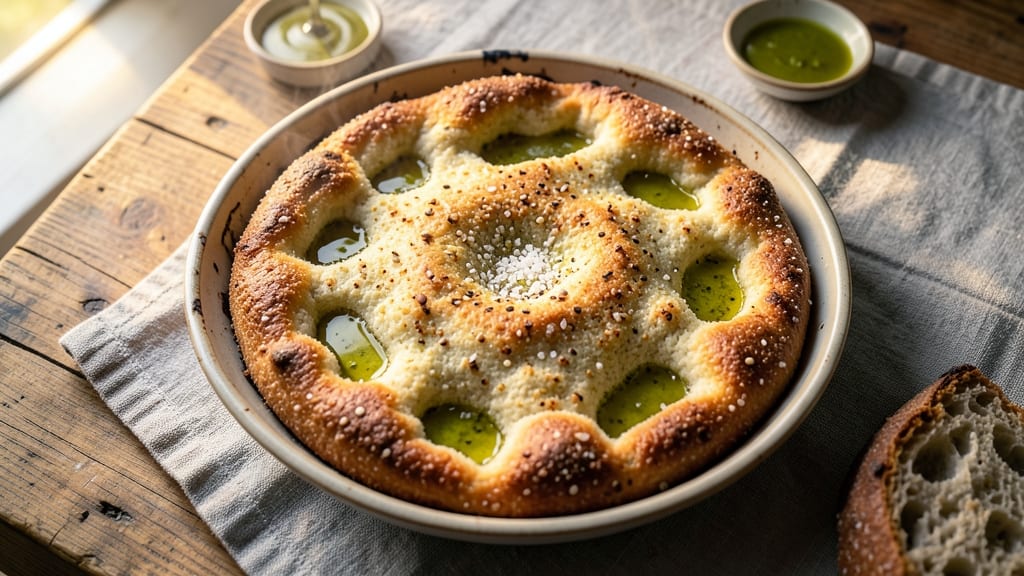
This almond flour focaccia bread recipe delivers the perfect balance of crispy crust and light, airy crumb—all without dairy or eggs. ✨ The secret lies in using aquafaba (chickpea brine) as an egg wash substitute, which creates that signature golden sheen while keeping the texture tender.
I developed this recipe after struggling to find a vegan focaccia that didn't turn dense or dry, and this version consistently delivers restaurant-quality results at home.
The beauty of this almond flour focaccia is its simplicity: just five core ingredients (almond flour, yeast, water, olive oil, and salt) transform into a bread that's both nutty and subtly sweet.
The dough requires minimal handling—no kneading or complicated techniques—and rises beautifully in a 30-minute window, making it ideal for a quick weekend project. The key to that crispy crust is baking at high heat while using a combination of olive oil and aquafaba for the egg wash.
What you'll end up with is a golden, dimpled focaccia with a shatteringly crisp exterior and an interior that's light enough to melt in your mouth. The almond flour adds a delicate nuttiness that pairs perfectly with classic toppings like rosemary, cherry tomatoes, or a drizzle of olive oil.
This bread is versatile enough for breakfast toast, dinner sides, or even as a base for vegan bruschetta.
Once baked, let it cool completely before slicing—this ensures clean cuts and prevents crumbling. Serve warm with a sprinkle of flaky sea salt or a smear of vegan garlic butter. The recipe makes two loaves, so you'll have leftovers to enjoy throughout the week. Let's get started!
Ingredients for almond flour focaccia bread
Five simple ingredients transform into golden, crispy focaccia with zero eggs or dairy.
| Ingredient | Amount | Notes |
|---|---|---|
| Almond Flour 🌰 | 3 cups | Finely ground, unsweetened |
| Active Dry Yeast 🍞 | 1 ½ tsp | Instant yeast works too |
| Warm Water 💧 | 1 ¼ cups | 110°F for optimal yeast activation |
| Extra-Virgin Olive Oil 🫒 | ½ cup | High quality for flavor |
| Fine Sea Salt 🧂 | 1 ½ tsp | Flaky salt preferred for topping |
| Aquafaba 🥄 | ¼ cup | From chickpea brine, whisked |
| Fresh Rosemary 🌿 | 1 tbsp | Finely chopped, optional topping |
| Cherry Tomatoes 🍅 | ½ cup | Halved, optional topping |
Almond flour is the star here—Bob's Red Mill or Anthony's Goods brands give the best texture. If you can't find almond flour, blend whole almonds in a food processor until ultra-fine. The yeast needs to be fresh, so check the date on the package. Warm water is key: too hot kills the yeast, too cold makes it sluggish. 110°F is perfect. For the olive oil, California avocado oil works too if you're out of olive oil, but it won't have that same fruity depth.
No aquafaba? Vegan mayo or flax egg wash (1 tbsp ground flax + 3 tbsp water) works in a pinch. Fresh rosemary is ideal, but dried works at half the amount. Cherry tomatoes can be swapped for sun-dried tomatoes or olives if you prefer. The dough is forgiving—if it feels too dry, add a splash more water. Too sticky? A little more almond flour. The secret to crispy crust is baking at 425°F for 20-25 minutes—don't peek or the bread will deflate.
This bread stays fresh for 3 days at room temperature wrapped in a clean kitchen towel. For longer storage, freeze slices in a bag for up to 3 months. Warm slices in a 350°F oven for 5 minutes to restore crispiness. I always make two loaves—one for breakfast toast, one for dinner sides. The second day? Even better—crust gets extra crispy. Store leftovers in an airtight container if you're not a glutton like me.
Why You'll Love This Recipe
- No-Knead, No-Fuss Magic: I swear by this dough—just mix, let it rise, and bake. The almond flour handles all the heavy lifting while you sip your coffee, no stand mixer or fancy skills required.
- Rich, Nutty Crunch: That first bite? The olive oil keeps it tender, but the almond flour adds this irresistible crunch—like a buttery croissant with a gourmet twist. Honestly, I’ve been called “fancy” for bringing this to potlucks.
- Weeknight Hero: Slice it for toast, tear it over salads, or freeze half for lazy mornings. It’s my go-to when I’m too tired to think, but still want something that feels special.
- Budget-Friendly Luxury: Almond flour’s pricey, but one batch stretches for days—dip in soup, pair with charcuterie, or save crumbs for breading. Between us, it’s the only “fancy” bread that won’t break the bank.
Step-by-step instructions for almond flour focaccia bread
Here's how to make a crispy-crusted, airy focaccia using only almond flour—no wheat, no gluten, just pure flavor.
👨🍳 Step 1: Activate the Yeast and Mix the Dough
In a large mixing bowl, combine the 1.25 cups warm water (about 110°F) with the 1.5 tsp active dry yeast. Let it sit for 5-10 minutes until foamy—this means your yeast is alive and ready to work. If it doesn't foam, your yeast might be dead, and you'll need to start over.
Once foamy, add the 3 cups almond flour and 1.5 tsp fine sea salt. Mix with a wooden spoon until combined, then pour in the 0.5 cup extra-virgin olive oil. Stir vigorously for 3-4 minutes until the dough comes together—it'll be sticky but cohesive. Don't worry if it looks more like batter than dough; almond flour behaves differently than wheat flour.
🍳 Step 2: Whisk in Aquafaba for Structure and Rise
In a separate bowl, whisk the 0.25 cup aquafaba until it forms soft peaks—this mimics egg whites and gives your focaccia structure. Gradually fold the aquafaba into the almond flour mixture, mixing gently until just combined. The dough should be thick but pourable. If it's too stiff, add 1 tablespoon warm water at a time until it reaches a smooth, spreadable consistency.
Here's the thing—aquafaba is your secret weapon. It creates that signature focaccia airiness while keeping the bread gluten-free. Let the dough rest for 10 minutes at room temperature while you prep your pan.
🥘 Step 3: Shape and Bake for Crispy Crust
Preheat your oven to 375°F and line a 9x13-inch baking pan with parchment paper, leaving an overhang for easy removal. Pour the dough into the pan and spread it evenly with a spatula, creating a ¼-inch thick layer. Use your fingers to dimple the top—this creates those classic focaccia pockets while allowing the bread to rise beautifully.
Bake for 25-30 minutes until the edges are deep golden brown and the top looks slightly puffed. The crust should be crispy enough to snap, while the center remains soft and airy. If it browns too quickly, tent with foil to prevent burning.
🔥 Step 4: Finish with Olive Oil and Toppings
Remove the focaccia from the oven and immediately drizzle the top with another 2 tablespoons extra-virgin olive oil, spreading it evenly with a pastry brush. This step is crucial for that authentic focaccia flavor and extra crispiness. While the bread is still warm, press in halved cherry tomatoes and fresh rosemary (if using), creating a beautiful pattern.
Return to the oven for 3-5 minutes to let the toppings soften slightly and the crust set. The tomatoes should be warm but still hold their shape, and the rosemary should release its aromatic oils. Let the focaccia cool for 10 minutes before slicing—this prevents it from falling apart.
⏰ Step 5: Rest and Serve for Maximum Flavor
For the best texture, let the focaccia rest at room temperature for 15-20 minutes before serving. This allows the crust to firm up and the flavors to meld. Slice it into squares and serve warm, drizzled with more olive oil if desired. The crust should be shatteringly crisp, while the interior remains soft and tender—proof that almond flour can deliver restaurant-quality focaccia.
Pro tip: Store leftovers wrapped in foil at room temperature for up to 2 days, or freeze for 1 month. Reheat in a 350°F oven for 5-10 minutes to restore crispiness.
Pro Tips For Making Almond Flour Focaccia Bread
- Mix Yeast with Warm Water First: Almond flour soaks up moisture like a sponge, so if you try to mix the yeast directly into the dry ingredients, it’ll struggle to activate. Instead, dissolve the yeast in warm water (105–110°F) with a pinch of sugar first—let it foam for 5–10 minutes before adding anything else. This guarantees your dough will rise properly, not sit flat like a sad pancake.
- Use a Light Hand with Oil: Drown this focaccia in olive oil, and you’ll end up with a greasy brick. Focus on brushing the top generously (about 2 tablespoons total) and just enough into the dough to make it cohesive—think damp sand, not wet cement. Too much oil = dense, gummy bread. Too little = dry crumb. Aim for that golden, shimmery crust without the soggy bottom.
- Don’t Press the Dough: Almond flour dough is delicate—if you press it into the pan like traditional focaccia, you’ll compact the crumb and lose that airy texture. Instead, gently stretch it to fit the edges, then let it relax for 10 minutes before dimpling. It’ll rise better and stay light, not dense. (Yes, it’ll look uneven. That’s the point.)
- Preheat Pan and Oven Together: Cold pans steal heat, and almond flour focaccia needs every degree to crisp properly. Slide your baking sheet into a cold oven, then crank the heat to 375°F and let it scream hot for 20 minutes. This guarantees a deep, golden crust from the first second in the oven—no waiting for the pan to catch up. (Trust me, your kitchen will smell like heaven faster.)
Essential equipment for this recipe
Mixing Tools
Start with a large mixing bowl (at least 8-quart capacity)—I prefer stainless steel because it doesn’t absorb odors like plastic. A wooden spoon is essential for mixing the dough; its texture helps distribute the sticky almond flour mixture evenly.
For the aquafaba, grab a whisk—a Ball silicone whisk is my go-to because it’s gentle on delicate chickpea brine. 🥄
Baking Essentials
A 9x13-inch baking pan is non-negotiable for this recipe. I recommend Nordic Ware Natural Aluminum because it heats evenly and prevents sticking. Line it with parchment paper—Reynolds Unbleached Parchment works perfectly—and leave an overhang for easy removal.
For crispy results, use an oven thermometer (like OXO Good Grips) to ensure your oven hits 425°F accurately.
Dough Handling Gear
Almond flour dough is sticky, so keep a spatula (I use OXO Good Grips silicone) handy for spreading. A pastry brush (like West Bend Silicone) is crucial for drizzling olive oil after baking.
For shaping, your fingers work best—just wet them slightly to prevent sticking. If you’re nervous about handling, a flexible silicone dough scraper helps too. 🍞
Topping Tools
Fresh toppings like rosemary and cherry tomatoes need a sharp knife (I prefer Victorinox Fibrox) for clean cuts. A small offset spatula (like Ateco 101) helps arrange toppings neatly.
For pressing them into the dough, use the back of a spoon—it creates perfect dimples. A microplane is useful if you want to zest lemon or garlic for extra flavor.
Optional Extras
For a food processor, I recommend Ninja FP101 if you’re grinding whole almonds into flour. A digital kitchen scale (like OXO Good Grips) ensures precise measurements for almond flour, which can vary in density.
For storage, glass airtight containers (like Pyrex) keep the bread fresh longer. Finally, a pizza stone (if you have one) can add extra crispiness to the crust.
Nutrition facts
Frequently asked questions
Why does my almond flour focaccia turn out dense instead of airy?
The most common reason is under-mixing the aquafaba or skipping the 10-minute rest before baking. Aquafaba is what creates that signature lightness—whisk it until soft peaks form and fold it gently into the dough. Also, ensure your yeast is fresh and the water is 110°F (not boiling). Overmixing after adding aquafaba can deflate the air bubbles too.
Can I substitute almond flour with another nut flour?
Yes, but texture will vary. Cashew flour works best as a 1:1 substitute—it's slightly sweeter and creates a tender crumb. Hazelnut flour adds richness but can make the crust denser. Avoid coconut flour (it absorbs too much liquid). If using a different nut flour, reduce water by 1-2 tablespoons since nut flours vary in moisture content.
How do I make this focaccia gluten-free without almond flour?
For a gluten-free alternative, blend 1 cup cooked white rice with 1 cup tapioca starch to mimic almond flour's texture. Add 1 extra tablespoon aquafaba to compensate for the lack of natural oils in almond flour. The crust will be less crispy but still tender. For best results, bake at 375°F for 30-35 minutes with extra olive oil drizzles.
Can I bake this in a different pan shape?
For a 9x9-inch pan, reduce baking time by 5-7 minutes—the focaccia will cook faster. For a round 10-inch pan, spread the dough to ½-inch thickness and bake at 350°F for 25 minutes. The key is maintaining the ¼-inch thickness for even cooking. Just adjust baking time based on your pan's material (glass takes longer than metal).
What’s the best way to reheat stale almond flour focaccia?
For maximum crispiness, wrap slices in foil and reheat at 375°F for 8-10 minutes. For a quicker method, use the broiler on high heat for 2-3 minutes (watch closely to avoid burning). A toaster oven at 350°F for 5 minutes works too. Avoid microwaving—it makes the crust soggy. The best prevention is storing in a paper bag at room temp to retain crispness longer.