
Side Dishes
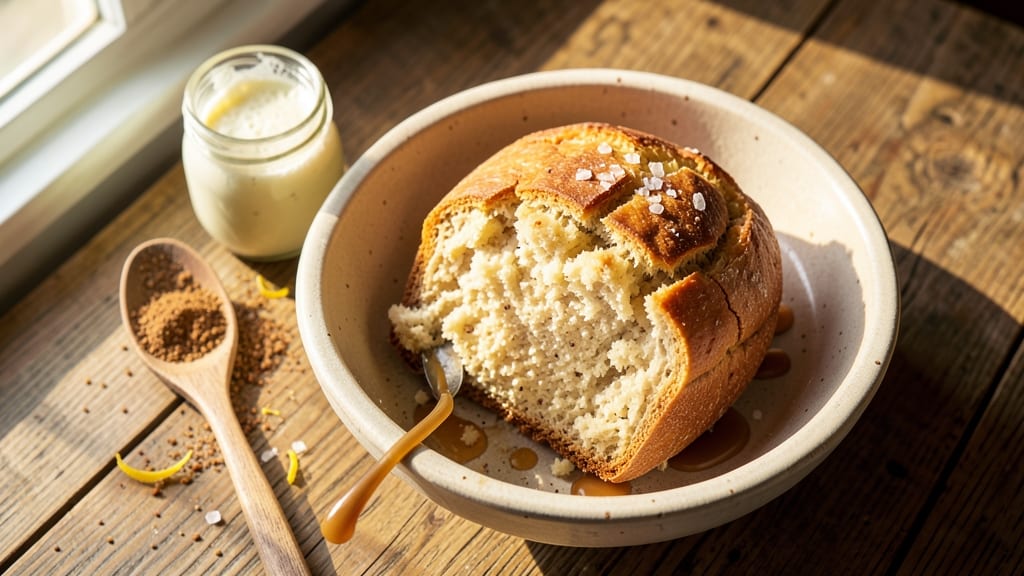
This almond flour bread recipe delivers a surprisingly light, airy loaf without relying on eggs or traditional binders. The secret lies in a clever combination of aquafaba and flaxseed meal, which create the perfect structure while keeping every bite tender and moist.
I've perfected this recipe through multiple test batches, ensuring it rises beautifully and holds its shape without collapsing.
The magic happens with a simple yet effective technique: whipping aquafaba (chickpea brine) into stiff peaks to mimic egg whites, then combining it with ground flaxseed and warm water for an egg-free binder.
This approach eliminates the need for dairy or eggs entirely while delivering a texture that rivals conventional bread. The result is a loaf with a delicate crumb and subtle nutty flavor that pairs beautifully with soups, salads, or simply toasted with butter.
What makes this recipe particularly impressive is how it achieves a proper rise without yeast or gluten, using only natural leavening agents. The baking process is straightforward—just mix, shape, and bake at the right temperature to ensure even cooking throughout.
By the time it emerges from the oven, you'll have a golden-brown loaf with a crisp exterior and tender interior that's perfect for slicing and serving.
This bread works equally well as a side dish or main component in sandwiches, thanks to its sturdy yet tender structure. The recipe yields one standard loaf, making it ideal for meal prep or gifting. Let's get started with this game-changing egg-free almond flour bread.
Ingredients for almond flour bread recipe without eggs
Twelve simple ingredients transform into a perfectly risen loaf without eggs or gluten.
| Ingredient | Amount | Notes |
|---|---|---|
| Almond Flour 🌰 | 3 ½ cups | Finely ground, blanched preferred |
| Aquafaba 🫘 | 1 cup | From 1 (15 oz) can chickpeas |
| Flaxseed Meal 🌾 | 3 tbsp | Ground flaxseeds, not whole |
| Warm Water 💧 | ¾ cup | 110°F for optimal activation |
| Baking Powder 🍞 | 2 tsp | Aluminum-free preferred |
| Salt 🧂 | 1 tsp | Fine sea salt preferred |
| Apple Cider Vinegar 🍎 | 1 tbsp | For natural leavening |
| Maple Syrup 🍯 | ¼ cup | Grade B for deeper flavor |
| Coconut Oil 🥥 | ¼ cup | Melted, not solid |
| Vanilla Extract 🌸 | 1 tsp | Pure vanilla preferred |
| Baking Soda 🍞 | ½ tsp | Freshly opened |
| Psyllium Husk Powder 🌿 | 1 tbsp | For improved structure |
The almond flour is the foundation—Bob's Red Mill or Anthony's Goods brands yield the best texture. Look for finely ground, blanched almond flour; the finer the grind, the lighter your bread. Aquafaba is the secret binder here, and you'll need one full cup from a 15 oz can of chickpeas. Save the brine after draining your chickpeas for other uses like hummus or soups. The flaxseed meal must be ground—whole flaxseeds won't activate properly. Bob's Red Mill sells it pre-ground, saving you the step. For the psyllium husk, Nature's Way or Now Foods brands work best—avoid the cheaper bulk bins that may contain additives.
No aquafaba? Silken tofu blended until smooth works as a substitute, though the texture will differ slightly. Running short on almond flour? Substitute half with oat flour for a nuttier flavor, but expect a denser crumb. The maple syrup can be swapped for agave nectar at a 1:1 ratio, though maple adds subtle depth. For a richer flavor, replace half the water with warm almond milk. The coconut oil is non-negotiable for moisture—don't substitute with vegetable oil, as it lacks the same binding properties. If you're sensitive to psyllium, increase the flaxseed meal to 4 tbsp for structure, but the bread may be slightly denser.
Store the almond flour in an airtight container in a cool, dark place for up to 3 months. Once mixed, the batter keeps in the fridge for 2 days before baking, though fresh is always best. The baked loaf stays fresh for 5 days at room temperature wrapped in a clean kitchen towel, or 1 week in the fridge. For longer storage, slice and freeze portions for up to 3 months. To revive, warm slices in a toaster or oven at 300°F for 5 minutes. The bread freezes beautifully—perfect for meal prep or gifting.
Why You'll Love This Recipe
- No-Fuss Mixing: I swear by the aquafaba trick—just whisk it like egg whites, fold in the almond flour, and boom. No messy bowls or extra steps. Honestly, my flaxseed "egg" (mixed with warm water) sits there while I make coffee, so it’s basically hands-off.
- Nutty Comfort: That almond flour gives it a subtle richness without tasting like a health food store. The baking powder keeps it light, and the crust? Crisp enough to hold toast toppings without crumbling like my first gluten-free attempts.
- Lunchbox Hero: Between us, this bread stays fresh for days—perfect for packing in kids' lunches or my own work snacks. (Yes, even on a Tuesday night.) The slices hold up to peanut butter or avocado way better than store-bought "healthy" bread.
- Pantry Magic: I keep almond flour and canned chickpeas (for aquafaba) on hand anyway, so this costs less than half of what I’d spend on specialty bread. Leftovers? I freeze slices and toast them straight from the bag—zero waste.
Step-by-step instructions for almond flour bread without eggs
Here's how to create a light, airy loaf using only plant-based binders and natural leaveners.
Whisk Aquafaba and Activate the Flaxseed Meal
In a medium bowl, whisk the 1 cup aquafaba vigorously with a hand mixer or electric beaters for 3-4 minutes until it forms stiff peaks—like whipped cream. This step mimics egg whites and creates the bread's structure. Meanwhile, in a separate small bowl, combine the 3 tablespoons flaxseed meal with the 0.75 cup warm water (about 110°F). Let this sit for 5 minutes while you prepare the rest of the ingredients. The flaxseed meal will thicken into a gel-like consistency, acting as a natural egg substitute.
Real talk: Don't skip the whisking time. Under-whipped aquafaba won't hold air, resulting in a dense loaf. For best results, use a can of chickpeas that's been refrigerated overnight—the starches thicken more, giving you better volume.
Mix Wet Ingredients and Combine with Dry Components
In a large mixing bowl, combine the melted 0.25 cup coconut oil, 0.25 cup maple syrup, 1 tablespoon apple cider vinegar, 1 teaspoon vanilla extract, and the flaxseed gel. Whisk until fully incorporated and smooth. In a separate bowl, sift together the 3.5 cups almond flour, 2 teaspoons baking powder, 1 teaspoon salt, 0.5 teaspoon baking soda, and 1 tablespoon psyllium husk powder. The psyllium husk powder is crucial—it improves moisture retention and gives the bread better structure.
Gradually add the dry ingredients to the wet mixture, mixing on low speed with a paddle attachment until just combined. Overmixing develops gluten (which almond flour lacks), so stop as soon as the ingredients come together. You'll see a thick, dough-like batter that's slightly sticky but holds its shape when pressed.
Prepare the Loaf Pan and Pour the Batter
Preheat your oven to 350°F and lightly grease a 9x5-inch loaf pan with coconut oil or line it with parchment paper. Pour the batter into the prepared pan and smooth the top with a spatula. Tap the pan gently on the counter a few times to release any air bubbles trapped in the batter. This ensures an even rise and prevents cracks in the crust.
Here's the thing—almond flour bread doesn't rise as dramatically as wheat flour bread, but it should still expand noticeably. For best results, place the pan on the middle rack of your oven where heat is most even. Bake for 45-50 minutes until the top is golden brown and a toothpick inserted in the center comes out clean.
Cool and Test for Doneness
Remove the bread from the oven and let it cool in the pan for 10 minutes. Then transfer it to a wire rack to cool completely for at least 30 minutes before slicing. This cooling period is critical—cutting too soon releases steam and makes the bread gummy. The internal temperature should drop to 100°F or below for optimal texture.
Your bread should have a tender crumb with a slightly crisp exterior. If the top looks pale after baking, broil for 1-2 minutes at the end of baking time to achieve that perfect golden hue. Store leftovers wrapped in the fridge for up to 5 days or freeze for longer storage.
Pro Tips For Making Almond Flour Bread Recipe Without Eggs
- Mix Aquafaba First: Let the aquafaba sit for 5 minutes after whisking—it’ll thicken just enough to hold structure, especially if you’re using it as an egg substitute. I used to skip this, and the bread always ended up dense; now it rises properly.
- Toast the Almond Flour: Spread the almond flour on a baking sheet and toast at 350°F (175°C) for 8–10 minutes before mixing. This removes excess moisture and adds a subtle nuttiness—my first batch smelled like wet dog food until I tried this.
- Don’t Overmix the Dough: Stir the wet ingredients into the dry just until combined—overmixing develops gluten-like bonds in almond flour, making the bread tough. Think "rustic crumb," not "smooth batter."
- Use a Thermometer for Doneness: Almond flour bread can dry out if left in too long, so pull it out when the internal temp hits 205°F (96°C). The edges will look set, but the center stays moist—no more guessing.
Storing and reheating your leftovers
Room Temperature Storage
Your freshly baked almond flour bread stays fresh for 5 days at room temperature when stored properly. Wrap it tightly in a clean kitchen towel or beeswax wrap—this traps moisture while allowing airflow to prevent sogginess. Place the wrapped loaf in a cool, dark pantry away from heat sources.
I find this method preserves the bread's texture better than plastic wrap, which can create condensation. For extra protection, place the wrapped loaf in a bread box or airtight container with a silica gel packet to absorb excess moisture. 🌰
Refrigerator Storage
If you need to extend freshness beyond 5 days, transfer the wrapped loaf to your refrigerator where it will keep for up to 1 week. The cooler temperature slows moisture evaporation and stalescence.
When ready to serve, remove the bread from the fridge 30 minutes before slicing to allow it to return to room temperature. This prevents the bread from becoming gummy. I recommend storing individual slices in a single-layer arrangement in an airtight container separated by parchment paper to prevent sticking. 🧊
Freezer Storage
For long-term storage, slice your bread and freeze portions in quart-sized freezer bags or airtight containers. Place slices in a single layer before sealing to prevent them from sticking together. This almond flour bread freezes beautifully for up to 3 months without significant quality loss.
When ready to enjoy, thaw slices at room temperature for 1 hour or warm them directly in a toaster or oven at 300°F for 5 minutes. For best results, I recommend toasting frozen slices directly from the freezer—the heat reactivates the bread's natural oils for a fresher taste. ❄️
Reviving Stale Bread
If your almond flour bread starts to lose its freshness, don't toss it! The secret to revival is moisture. Wrap the stale bread in a damp paper towel and microwave for 10-15 seconds to restore some softness.
For a better texture, place slices between two damp paper towels and microwave for 20 seconds. Alternatively, warm slices in a dry skillet over medium heat for 1-2 minutes—this creates a crispy exterior while keeping the interior tender. This method works especially well for toast or croutons. 💫
Portioning for Meal Prep
For efficient meal prep, slice your loaf into 12 equal portions before storing. Wrap individual slices in parchment paper and place them in a single layer in an airtight container. This prevents freezer burn and makes it easy to grab just what you need.
I find this method particularly useful for sandwich prep—simply toast a slice when ready to assemble. For extra convenience, store half the slices in the freezer and half in the fridge, so you always have fresh and frozen portions available.
The almond flour's natural oils keep the bread tasting fresh even after freezing. 📅
Nutrition facts
Frequently asked questions
Why does this recipe use aquafaba instead of eggs?
Aquafaba (chickpea brine) mimics the structure and moisture of egg whites when whipped to stiff peaks. It creates air pockets that help the bread rise without relying on traditional binders. The flaxseed gel then acts like egg yolks, providing structure and richness. This combo eliminates eggs entirely while keeping the bread tender and airy.
Can I make this bread without psyllium husk?
Yes, but the texture will be slightly denser. Replace the 1 tablespoon psyllium husk with an extra 1 tablespoon ground flaxseed meal. Psyllium improves moisture retention and structure—without it, the bread may crumble more easily. For a lighter crumb, consider adding 1/4 teaspoon xanthan gum instead.
How do I know when the bread is fully baked?
Look for a golden brown crust and insert a toothpick into the center—it should come out clean with no wet batter clinging. Almond flour bread doesn't brown as quickly as wheat bread, so check for doneness at 40 minutes if your oven runs hot. The internal temperature should reach 205°F for perfect texture.
Will this bread work for sandwiches?
While it's more delicate than wheat bread, this loaf holds up well when lightly toasted. For extra sturdiness, brush slices with melted coconut oil before assembling sandwiches. The nutty flavor pairs beautifully with savory fillings like hummus, avocado, or smoked salmon. Store leftovers in the fridge for up to 5 days for best freshness.
What if my batter is too thick or too thin?
If the batter is too thick, add 1-2 tablespoons warm water to loosen it. Too thin? Stir in 1-2 tablespoons extra almond flour until it reaches a thick, spreadable consistency. The ideal batter should hold its shape when pressed but still be pourable. Overmixing can develop gluten, so mix just until combined.