Side Dishes
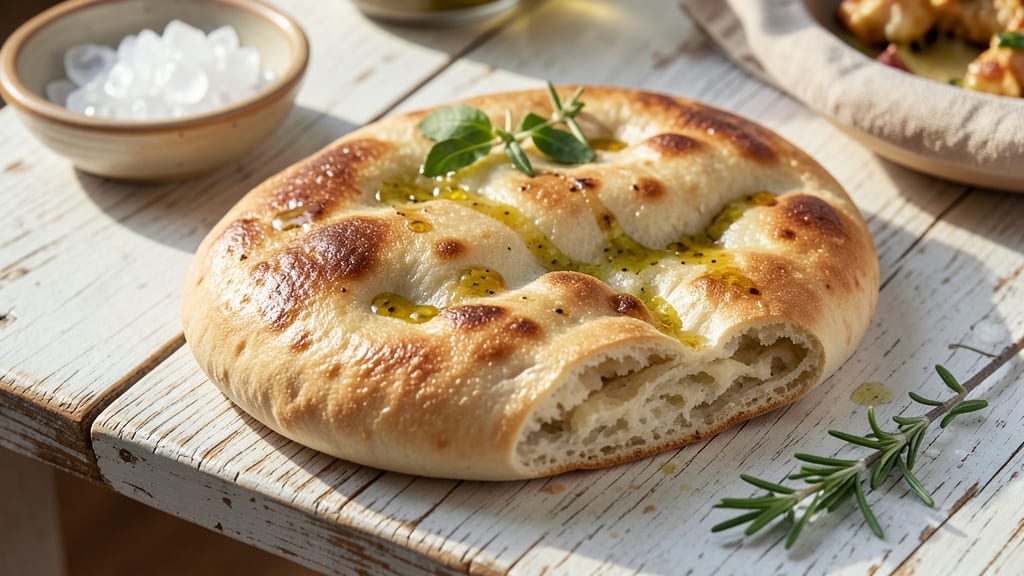
This authentic schiacciata bread recipe brings the heart of Tuscany to your kitchen with its signature olive oil richness and rustic charm. 🌟 The secret lies in a simple dough that transforms into a golden, crisp-edged loaf with a tender crumb—just like Nonna used to make.
Unlike fluffy breads, schiacciata relies on texture: crispy crusts and a soft, airy interior that soaks up olive oil like a sponge.
What makes this recipe truly special is its no-knead simplicity—just flour, water, yeast, and extra-virgin olive oil, the star ingredient that gives schiacciata its signature flavor. The dough rests overnight, developing deep flavor as it ferments slowly, while the shaping technique (pressing, not rolling) creates that signature rustic texture.
This method ensures restaurant-quality results without requiring advanced baking skills.
By the time it emerges from your oven, you'll have a loaf with crispy, golden edges and a soft, airy interior that practically melts in your mouth. The aroma alone—warm olive oil, yeasty warmth, and a hint of crusty crunch—will transport you to a Tuscan countryside kitchen.
Perfect for serving alongside soups, charcuterie, or simply slathered with more olive oil and sea salt.
This recipe captures the authentic soul of Italian baking—no shortcuts, just tradition. The key is patience: letting the dough rise slowly and baking it until the crust crackles with each bite.
Once you try this, you'll understand why schiacciata is a staple in every Tuscan home. Let's get started on creating your own piece of Italy.
Ingredients for authentic schiacciata bread
Four cups flour, half a cup olive oil, and a touch of patience—this is all you need for Tuscan magic.
| Ingredient | Amount | Notes |
|---|---|---|
| All-Purpose Flour 🌾 | 4 cups | Unbleached preferred for authentic texture |
| Extra-Virgin Olive Oil 🫒 | ¾ cup | High-quality, fruity variety |
| Active Dry Yeast 🍞 | ¼ oz | Or 2.5 grams, ensure fresh |
| Granulated Sugar 🍚 | ½ tbsp | Feeds yeast for fermentation |
| Diamond Crystal Kosher Salt 🧂 | 1 ½ tsp | Adjust to taste, not iodized |
| Warm Water 💧 | 1 ½ cups | 105°F-110°F for yeast activation |
| Coarse Sea Salt 🧂 | ½ tsp | For final crust enhancement |
| Semolina Flour 🌾 | ¼ cup | For dusting and crispy crust |
| Cornmeal 🌽 | ¼ cup | Optional for extra crunch |
The olive oil here isn't just an ingredient—it's the soul of schiacciata. Look for extra-virgin with a fruity, peppery finish—California Olive Ranch or Colavita are my go-tos, but any high-quality brand works. Flour matters too: King Arthur or Caputo Tipo 00 elevate texture, but all-purpose in a pinch still delivers. Yeast is non-negotiable—check the expiration date (fresh is critical) and store it in the fridge. For the salt, Diamond Crystal kosher dissolves better than table salt, giving you that authentic Italian flavor without bitterness.
No extra-virgin olive oil? Light olive oil works in a pinch, but the flavor will be milder. Short on semolina? Toasted breadcrumbs or crushed cornflakes create a similar crispy texture. The dough should be tacky but manageable—if it's too sticky, add 1 tbsp more flour. For shaping, use your hands (no rolling pin!) to press the dough gently into a rectangle, then fold and press again for that signature rustic texture. Pro tip: Let the dough rest uncovered at room temp for 30 minutes before shaping—this helps develop gluten for a better crumb.
This dough is a patient's recipe—let it ferment overnight at room temp for maximum flavor. Store any unused dough in an airtight container in the fridge for up to 3 days, or freeze for 3 months. The baked loaf stays fresh for 2-3 days at room temp, wrapped in a clean kitchen towel. For reheating, wrap in foil and warm at 300°F for 10 minutes—nothing beats that fresh-out-of-the-oven crunch. Leftovers? Toast slices for crostini or use in soups—schiacciata disappears fast around here.
Why You'll Love This Recipe
- No-Knead Magic: I swear, the dough comes together in five minutes—just flour, olive oil, and yeast. No standing at the counter, no dough hooks, just a bowl and a spoon. That golden crust? Pure reward for zero effort.
- Olive Oil Luxury: This isn’t your average bread. The extra-virgin olive oil gives it a rich, buttery depth that’s almost sinful—especially when you tear into it fresh from the oven. (Yes, I’ve been known to eat it straight.)
- Weeknight Workhorse: Toss it with tomatoes and mozzarella for a quick lunch, use it to soak up marinara, or serve it warm with jam for breakfast. It’s the one loaf that does everything—no excuses.
- Budget-Friendly Staple: A single batch feeds my family for days. Freeze the leftovers, toast them later, or stash them in the fridge for sandwiches. Five bucks’ worth of flour and oil turns into meals that last. Smart.
Step-by-step instructions for authentic schiacciata bread
Here's the method that brings Tuscany's beloved rustic bread to your kitchen—simple, foolproof, and dripping with olive oil goodness.
👨🍳 Step 1: Activate the Yeast and Mix the Dough
In a large bowl, combine the 1.5 cups warm water (between 105°F-110°F) with the 0.5 tbsp granulated sugar and 0.25 oz active dry yeast. Let it sit for 5-10 minutes until frothy—this confirms your yeast is alive and ready to work. If it doesn't bubble, your yeast might be dead, and you'll need to start over.
Once frothy, add the 4 cups all-purpose flour and 1.5 tsp diamond crystal kosher salt. Mix with a wooden spoon until a shaggy dough forms. Then pour in the 0.75 cup extra-virgin olive oil and mix vigorously until everything comes together. The dough will be sticky—this is normal for schiacciata. Wet your hands slightly and knead for 5 minutes until smooth and elastic. You're not building gluten like with pizza dough; we want a tender, slightly sticky texture.
🥘 Step 2: First Rise and Prepare the Baking Surface
Lightly oil a large bowl, place the dough inside, and cover with a damp towel. Let it rise in a warm spot for 1-2 hours until it's puffy and nearly doubled in size. The dough should feel springy when poked gently—press your finger in and watch it slowly spring back. This is your signal it's ready for shaping.
While the dough rises, prepare your baking surface. Line a half-sheet pan with parchment paper and lightly brush it with olive oil. Sprinkle the 0.25 cup cornmeal evenly over the surface—this prevents sticking and adds that signature crunch. Keep the remaining cornmeal for later.
🔥 Step 3: Shape and Second Rise
Turn the risen dough onto your floured work surface (I use the 0.25 cup semolina flour here for texture). Gently pat it into a 1.5-inch thick rectangle, about 12x8 inches. The goal is to create an even, slightly uneven surface—don't stress about perfect edges. This rustic shape is what makes schiacciata special.
Transfer the shaped dough to your prepared pan, seam-side up. Cover again and let it rise for another 30-45 minutes until puffy. The dough should expand noticeably but not double again. Preheat your oven to 425°F during this final rise—every minute counts for that perfect crust.
🔥 Step 4: Bake to Golden Perfection
Bake the schiacciata for 25-30 minutes until the top is deep golden brown with crispy spots. You'll see it puff up dramatically in the first 10 minutes—this is normal. Rotate the pan halfway through for even baking. The internal temperature should reach 190°F when checked with an instant-read thermometer.
In the last 5 minutes, sprinkle the 0.5 tsp coarse sea salt generously over the top. This enhances the crust and balances the rich olive oil flavor. Let the bread cool on a wire rack for at least 15 minutes before slicing—this prevents a gummy interior. The crust should be crisp, the crumb tender, and every bite should sing with olive oil aroma.
⏰ Step 5: Serve Warm with Olive Oil Magic
Once cooled slightly, slice the schiacciata thickly and serve warm. The real magic happens when you drizzle it with more extra-virgin olive oil—this is traditional! The bread should be slightly sticky from the oil, with a crisp exterior that gives way to a soft, airy interior. Each piece should be substantial enough to make a meal on its own, perfect for soaking up soups or pairing with cured meats and cheeses.
Here's the thing about schiacciata—it's best enjoyed the day it's made. The crust loses its crispness quickly, so plan to bake it when you're ready to eat. Store any leftovers wrapped in a clean kitchen towel to maintain moisture, but honestly? You'll likely devour it all in one sitting.
Pro Tips For Making Authentic Schiacciata Bread
- Use Warm Olive Oil: Schiacciata’s signature flavor comes from the olive oil, but cold oil won’t activate the yeast properly. Heat about ½ cup of your EVOO to room temperature (70°F/21°C) before mixing—just enough to make it slightly slippery to the touch, not hot. I used to skip this, and my dough always took forever to rise. Now it’s ready in under 2 hours.
- Salt the Water First: Dissolve the full 1½ teaspoons of kosher salt in the water before activating the yeast. This ensures even distribution, which is non-negotiable for schiacciata’s balanced flavor. I learned this after tasting a batch where the crust was bland—turns out, the yeast hogged all the salt, and the dough lacked depth.
- Punch Down Twice: After the first rise, punch down the dough once to deflate it, then let it rest 10 minutes before shaping. Do it again after shaping to relax the gluten—this prevents a dense, chewy texture. Yes, it’s an extra step, but it guarantees that airy, pillowy crumb. (Trust me, your knife will thank you too.)
- Preheat the Pan: Schiacciata’s crust forms from residual steam and direct heat, so preheat your baking pan (or baking sheet) for 10 minutes at 425°F (220°C) before adding the dough. I used to skip this, and my bread turned out flat and pale. The pan needs to be hotter than the oven—think of it as a head start for that golden crust.
Common mistakes when making great authentic schiacciata bread
Over-Kneading the Dough
Schiacciata relies on its tender, slightly sticky texture—not dense gluten development. When you knead for more than 5 minutes, you risk creating a tough, chewy loaf instead of the signature soft crumb.
I’ve made this mistake and ended up with bread that felt more like a baguette than the airy Tuscan treasure we want. 🌾
Skipping the Olive Oil
This is a non-negotiable! The 0.75 cup extra-virgin olive oil isn’t just flavor—it’s the soul of schiacciata. Using less (or switching to neutral oil) results in a dry, bland loaf.
The oil keeps the bread moist and adds that rich, fruity depth. Trust me, your taste buds will notice the difference immediately.
Ignoring the Temperature
Water that’s too hot (115°F+) kills the yeast, while water too cold (95°F-) slows fermentation. Aim for 105°F-110°F—test with your finger: it should feel warm but not hot.
Also, preheat your oven to 425°F—any lower, and you’ll get a pale, gummy crust instead of that golden, crispy perfection.
Rushing the Fermentation
This dough needs time—1-2 hours for the first rise and 30-45 minutes for the second. Skipping steps or cutting fermentation short leads to a dense, underproofed loaf.
I’ve learned the hard way: patience is key. The overnight fermentation (if you choose) deepens flavor, but even the basic method requires these rests for the best texture.
Over-Shaping the Dough
Pressing too hard or rolling with a pin creates a compacted loaf. Schiacciata should be 1.5-inch thick with an uneven, rustic shape. Use your hands to gently pat it into a rectangle—think "squished" not "rolled." This technique ensures that signature crispy edges and soft interior we all love.
Baking Without Salt
The 0.5 tsp coarse sea salt sprinkled in the last 5 minutes isn’t optional—it’s essential. It enhances the crust and balances the richness of the olive oil. I’ve baked schiacciata without it, and while it wasn’t bad, it lacked that final touch of authenticity. Don’t skip this step!
Nutrition facts
Frequently asked questions
Why does schiacciata have such a crispy crust but soft interior?
The magic happens through high heat baking (425°F) combined with the dough's high olive oil content. The oil creates steam during baking, keeping the interior moist while the exterior crisps. The 1.5-inch thickness and cornmeal/semolina coating also help develop that signature contrast. Think of it like a Tuscan version of focaccia—rustic, crispy, and impossible to resist!
Can I make schiacciata without a stand mixer?
This recipe requires only 5 minutes of hand-kneading—no mixer needed. The dough's sticky texture actually makes it easier to handle by hand. Just wet your hands slightly to prevent sticking. The shaping is done by pressing with your hands, not rolling, so it's perfect for home bakers.
How do I store schiacciata if I can't eat it all at once?
Wrap cooled loaves in a clean kitchen towel (not plastic) to maintain moisture. Store at room temperature for 2-3 days or freeze for 3 months. To revive, warm at 300°F for 10 minutes wrapped in foil. The crust will soften slightly but still taste amazing. Pro tip: Toast slices for crostini—they make perfect appetizers!
What's the difference between schiacciata and focaccia?
While both are Italian olive oil breads, schiacciata is thicker (1.5-inch) and baked at higher heat for crispier edges. Focaccia is usually thinner with more dimples from fingers. Schiacciata also has a more rustic, uneven shape from hand-pressing rather than rolling. Think of schiacciata as Tuscany's answer to focaccia—simpler, oilier, and more rustic.
Can I add herbs or cheese to this recipe?
The traditional recipe keeps it simple with just olive oil and salt, but you can absolutely customize! Try adding 1 tbsp rosemary or ½ cup grated pecorino to the dough before shaping. For extra flavor, sprinkle fresh rosemary on top before baking. Just remember—less is more with schiacciata. The olive oil should remain the star!