
Side Dishes
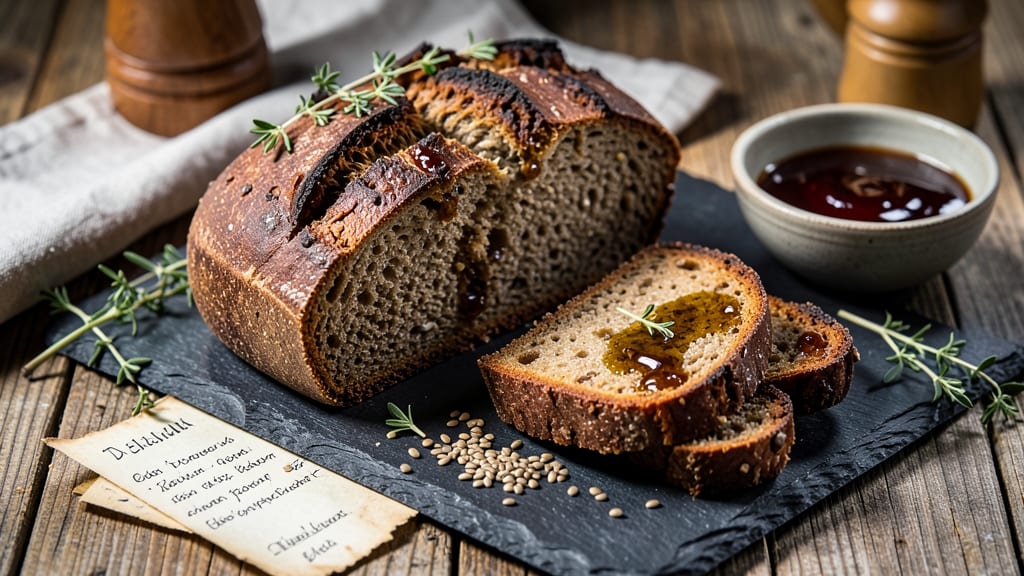
This authentic German pumpernickel bread recipe brings the rustic heart of the Eifel region to your kitchen, where dense rye crumb and deep molasses notes create a bread unlike any other. 🌟 The secret lies in slow fermentation and a precise blend of dark rye flour, molasses, and caraway seeds—each element working together to deliver that signature nutty crunch and rich, earthy flavor that defines German tradition.
What sets this recipe apart is its commitment to authenticity, using traditional methods that transform simple ingredients into something extraordinary. Unlike commercial versions, this bread develops its signature dark color and dense texture through careful fermentation and baking at precise temperatures.
The result? A loaf with a crisp exterior and a moist, hearty interior that crumbles perfectly for sandwiches or toast.
The process requires patience—fermenting the dough overnight allows flavors to meld deeply—but the reward is a bread that tastes like home. Whether you're serving it with German sausages, cheese, or simply enjoying it with butter, this pumpernickel delivers the depth and character that make it a staple in German cuisine.
Let’s get started on creating your own piece of tradition.
For those who prefer a vegan version, simple substitutions like flaxseed oil instead of butter and maple syrup in place of honey preserve the bread’s signature flavor while keeping it plant-based.
The key to success lies in attention to detail, from measuring ingredients precisely to monitoring the oven temperature—every step ensures your loaf turns out as rich and authentic as possible.
Ingredients for authentic german pumpernickel bread
Authentic German flavors start with these carefully measured ingredients, blending rye's earthiness with molasses' depth.
| Ingredient | Amount | Notes |
|---|---|---|
| Dark Rye Flour 🌾 | 4 cups | Stone-ground for authentic texture |
| All-Purpose Flour 🌾 | 1 cup | For structure and lightness |
| Molasses 🍯 | ½ cup | Unsulphured, dark variety |
| Active Dry Yeast 🍞 | 2 ¼ tsp | Freshly measured for fermentation |
| Warm Water 💧 | 2 ½ cups | 105°F for yeast activation |
| Caraway Seeds 🌿 | 1 tbsp | Toasted lightly for aroma |
| Salt 🧂 | 1 ½ tsp | Diamond Crystal preferred |
| Honey 🍯 | 2 tbsp | For fermentation and sweetness |
| Vegetable Oil 🫒 | 2 tbsp | For dough elasticity |
| Coriander Seeds 🌿 | 1 tsp | Ground for complementary flavor |
| Sesame Seeds 🌻 | 1 tbsp | For crust texture and topping |
| Poppy Seeds 🌼 | 1 tbsp | Optional traditional garnish |
| Cornmeal 🌽 | ¼ cup | For baking surface |
The dark rye flour is non-negotiable for that signature dense crumb—King Arthur or Bob’s Red Mill brands excel in authenticity. Caraway seeds should be whole and lightly toasted in a dry pan for 30 seconds to release their aromatic oils. If your local grocery lacks unsulphured molasses, Goya or Wholesome! brands deliver the rich, robust flavor needed. For the yeast, ensure it's fresh; a simple float test in warm water confirms viability. The honey should be dark amber to complement the molasses without overpowering the rye's natural depth.
No dark rye flour? Substitute with a mix of whole wheat and all-purpose (1:1 ratio), though texture will differ slightly. Caraway seeds unavailable? Fennel seeds at half the amount offer a comparable anise note. For a vegan adaptation, replace honey with maple syrup and use flaxseed oil instead of vegetable oil. The coriander seeds can be omitted if unavailable, but the caraway remains essential for authenticity. When measuring flours, use the spoon-and-level method for consistency—packing alters hydration levels.
Fermented dough keeps best in an airtight container at room temperature for 24 hours, developing maximum flavor. Once baked, the loaf maintains freshness wrapped in a clean kitchen towel for 3-4 days. For longer storage, slice and freeze portions on a tray before bagging—prevents sogginess. The crust's crispness peaks when served at room temperature, so plan ahead. Leftover crumbs toast beautifully for breakfast or as a garnish for soups, maximizing every bit of this labor-intensive loaf.
Why You'll Love This Recipe
- No-Knead Magic: I swear by this recipe because it’s actually no-knead—just mix, let it rise, and bake. The molasses and dark rye do all the work while you sip coffee, no stand mixer required.
- Deep, Smoky Richness: That first bite? Molasses caramelizes into a slow-sweet warmth, while the rye flour gives it a hearty, almost chocolatey depth. It’s the kind of bread that makes you close your eyes mid-slice.
- Weeknight & Holiday Star: I keep a loaf in the freezer for lazy mornings—just toast it straight from frozen. But it’s also the showstopper at holiday brunches, especially when you serve it with sharp cheddar and honey.
- Budget-Friendly Staple: A single batch costs pennies (thanks to affordable rye flour) and lasts forever. I’ve fed a crowd with one loaf, and the leftovers? Perfect for French toast or breadcrumbs—zero waste.
Step-by-step instructions for authentic German pumpernickel bread
Master the traditional German technique for dense, flavorful pumpernickel with this precise method.
👨🍳 Step 1: Activate the Yeast and Prepare the Dough Base
In a large mixing bowl, combine the 2.5 cups warm water (tested at 105°F) with the 2.25 tsp active dry yeast and let sit for 5-10 minutes until frothy. This activation ensures your dough rises properly. In a separate bowl, whisk together the 4 cups dark rye flour, 1 cup all-purpose flour, 1 tbsp caraway seeds, 1 tsp coriander seeds, and 1.5 tsp salt. The rye flour's deep color and robust flavor form the bread's signature character.
Add the molasses mixture to the dry ingredients and stir until a shaggy dough forms. The molasses contributes both sweetness and moisture, balancing the rye's earthiness. Here's the thing—don't be tempted to add all the water at once. The rye flour absorbs moisture differently than wheat flour, so we'll add it gradually to achieve the perfect consistency.
🥘 Step 2: Develop the Dough with Honey and Oil
Gradually add the 2 tbsp honey and 2 tbsp vegetable oil to the dough while mixing. The honey feeds the yeast during fermentation while adding subtle sweetness, and the oil creates elasticity in the dense rye structure. Knead the dough on a lightly floured surface for 8-10 minutes until smooth and slightly tacky. You'll know it's ready when it springs back slowly when poked.
Real talk: This dough is heavier than typical bread dough. It should feel dense rather than light and airy. Return the dough to your mixing bowl, cover with a damp towel, and let it rise in a warm place for 1-2 hours, or until doubled in size. The slow fermentation develops those complex flavors that make authentic pumpernickel special.
🔥 Step 3: Shape and Proof the Dough
Once the dough has risen, punch it down gently to release air. Divide it into 4 equal portions (about 1 pound each) and shape each into a 9x5-inch loaf. For authentic texture, place each loaf in a 9x5-inch loaf pan lined with parchment paper. The cornmeal will come into play later—sprinkle 0.25 cup cornmeal evenly over the bottom to prevent sticking.
Cover the pans with damp towels and let the loaves proof for another 1-2 hours until they've risen about 1 inch above the pan. The slow proofing at room temperature allows the flavors to meld without over-fermenting, which could make the bread taste sour. Here's where patience pays off—the longer the proof, the more complex the flavor development.
🔥 Step 4: Bake for Deep, Even Color
Preheat your oven to 350°F with the racks positioned in the middle and lower third. This temperature ensures even baking without burning the top. Bake the loaves for 50-60 minutes until the internal temperature reaches 205°F and the top is deep brown. The molasses and rye create a beautiful mahogany crust that's characteristic of traditional pumpernickel.
Don't be tempted to open the oven door early—steam is crucial for the dense texture. If the tops brown too quickly, tent loosely with foil. The bread should have a dense, slightly crumbly crumb with a crisp exterior. Remove from pans immediately and cool on a wire rack for at least 2 hours before slicing—this prevents gummy slices.
🍽️ Step 5: Finish with Seed Topping
While the bread cools, prepare the seed topping by lightly toasting 1 tbsp sesame seeds and 1 tbsp poppy seeds in a dry skillet over low heat for 2-3 minutes until fragrant. Sprinkle this mixture evenly over the cooled loaves. The seeds add both visual appeal and a delightful crunch that contrasts with the bread's dense interior.
Slice the pumpernickel with a serrated knife for clean cuts. Each slice should reveal the bread's characteristic dense crumb with pockets of air and a rich, molasses-infused flavor. For maximum authenticity, store wrapped in a bread bag at room temperature for up to 5 days or freeze for longer storage. This bread only gets better with age as the flavors deepen.
Pro Tips For Making Authentic German Pumpernickel Bread
- WEIGH YOUR FLOURS: Dark rye flour is dense—don’t eyeball it. Use a kitchen scale for both the rye and all-purpose flour (rye should be 70-80% of the total). I learned this the hard way when my first batch turned out like a brick because I scooped instead of weighed.
- DILUTE THE MOLASSES: Molasses is thick and syrupy—mix it with the warm water first to avoid clumping in the dough. I was skeptical until I tried it: the dough handles better and the flavor distributes evenly instead of pooling in spots.
- STEAM THE LOAF: Place a metal bowl of boiling water in the oven before baking, then cover the loaf with foil. This mimics German bakery conditions and guarantees a dense, moist crumb instead of a dry, cracked top—no fancy equipment needed.
- LET IT RISE LONGER: Pumpernickel dough moves slow—don’t rush the first rise. Give it 1.5 to 2 hours (or until it’s almost doubled) at room temp. Skipping this step means a flat, heavy loaf that tastes more like flour than rye. (Yes, even if you’re impatient like me.)
Flavor customization for authentic german pumpernickel bread
Sweet vs. Savory
Traditional German pumpernickel balances molasses' sweetness with rye's earthiness, but you can adjust ratios to taste. For a sweeter loaf, increase molasses to ⅓ cup—perfect for serving with butter or jam.
For a savory twist, reduce molasses to ¼ cup and add ½ tsp smoked paprika to deepen the flavor profile. I’ve found that 1 tbsp coffee granules (mixed into the dough) adds a subtle bitterness that enhances the rye’s natural depth while keeping it savory. 🌟
Spice Variations
Caraway seeds are non-negotiable for authenticity, but you can layer in complementary spices. Try ½ tsp ground ginger for warmth or ¼ tsp cinnamon for subtle sweetness. For a smoky note, add ½ tsp chipotle powder (reduce molasses slightly to balance).
I once experimented with 1 tsp fennel seeds alongside the caraway—it added a licorice-like complexity that surprised me in a positive way.
Seed Topping Twists
The classic sesame and poppy seed topping is iconic, but don’t be afraid to get creative. Try toasted pumpkin seeds for a nutty crunch or crushed black peppercorns for a bold finish.
For a festive touch, sprinkle coarse sea salt and flaky Maldon salt together—the contrast of textures and flavors elevates the bread. I’ve also seen toasted coconut flakes work beautifully for a tropical-inspired variation.
Vegan Adaptations
Skip the honey and replace it with 2 tbsp maple syrup or agave nectar for vegan-friendly sweetness. Swap vegetable oil for flaxseed oil (which also adds omega-3s) or melted coconut oil for a richer texture.
The molasses remains vegan-friendly as long as it’s unsulphured. For extra binding, add 1 tbsp ground flaxseed mixed with 3 tbsp water to the dough—it mimics the gluten structure lost without eggs. 🌱
Regional German Variations
In Northern Germany, pumpernickel often includes 1 tbsp cracked black pepper for a sharper bite. Southern German versions might feature 1 tsp dried thyme for herbal notes. For a Swabian twist, add 1 tbsp chopped dried apples to the dough—this adds moisture and a subtle fruitiness.
I once made a version with 1 tsp juniper berries (finely ground) for a piney aroma that reminded me of German forest hikes.
Texture Adjustments
Want a lighter crumb? Replace ½ cup dark rye flour with all-purpose flour—this reduces density but keeps some rye character. For an extra-dense loaf, increase the rye flour to 4.5 cups and add 1 tbsp psyllium husk powder (mixed with water) to improve structure.
If your dough feels too sticky, add 1 tbsp vital wheat gluten—it strengthens the gluten network without altering flavor. I’ve also found that chilling the dough for 30 minutes before shaping helps control stickiness while improving oven spring.
Nutrition facts
Frequently asked questions
Why does authentic pumpernickel need such a long fermentation?
The extended fermentation (overnight) is key to developing pumpernickel's signature deep flavor and dense texture. During this time, the rye flour's natural enzymes break down complex carbohydrates into simpler sugars, while the molasses and honey caramelize slightly. This slow process creates the rich, nutty complexity that distinguishes authentic German pumpernickel from commercial versions. Patience pays off with every bite!
Can I make pumpernickel without molasses?
While molasses is traditional, you can substitute ½ cup dark brown sugar or ¼ cup maple syrup for a similar sweetness. However, molasses provides both moisture and that distinctive deep flavor. For a completely different but still delicious result, try 1 tbsp coffee granules mixed into the dough—they add bitterness that complements the rye beautifully.
How do I prevent my pumpernickel from turning out too dense?
If your bread feels too heavy, check your flour ratio—too much dark rye can make it overly dense. Try replacing ½ cup dark rye flour with all-purpose flour for a lighter crumb. Also ensure your yeast is fresh and active, and don't over-knead the dough. The key is finding balance between the rye's earthiness and the structure provided by wheat flour.
What's the best way to store homemade pumpernickel?
Wrap the cooled loaf tightly in a clean kitchen towel or bread bag and store at room temperature for up to 5 days. For longer storage, slice and freeze portions on a tray before bagging. The bread actually improves with age as the flavors deepen—just reheat slices in a 350°F oven for 5 minutes to restore freshness.
Can I use this recipe for sandwiches?
While pumpernickel is traditionally served with butter or cheese, its dense texture makes it perfect for hearty sandwiches. Try it with smoked salmon, corned beef, or even a classic Reuben. For extra flavor, lightly toast the slices before assembling—this enhances the crust's crispness while keeping the interior moist. The molasses sweetness pairs beautifully with savory fillings!