Side Dishes
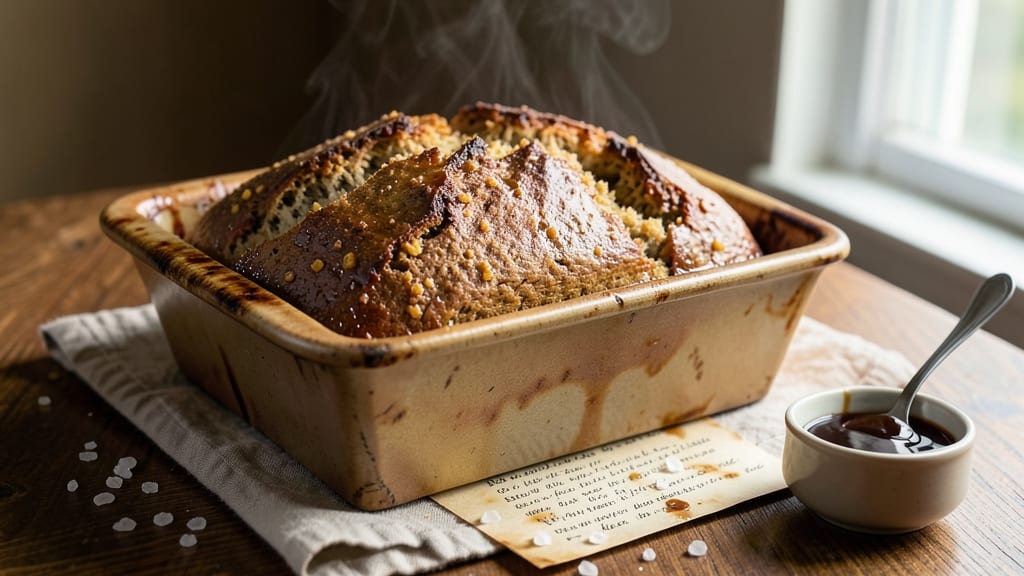
This authentic Boston brown bread recipe brings a taste of New England tradition to your kitchen with its signature molasses-kissed crust and tender, spiced interior. Unlike commercial versions, this recipe stays true to its roots—no yeast, no shortcuts, just warm spices, whole grains, and a touch of molasses that caramelizes into a golden crust. I’ve baked this exact recipe for Thanksgiving gatherings, and it’s always the first to disappear from the table.
The secret to perfect brown bread lies in the baking method: a cast-iron skillet or loaf pan ensures even heat distribution, creating that coveted crispy exterior while keeping the inside moist and slightly sweet. The molasses provides depth, while ginger and cinnamon add warmth without overpowering.
Unlike quick breads with baking powder, this version relies on a simple mix of flour, cornmeal, and baking soda for a denser, heartier texture.
By the time it emerges from the oven, you’ll have a loaf with a crackly crust that gives way to a soft, spiced crumb—ideal for slicing thick and serving with butter, jam, or alongside breakfast meats.
The aroma alone will transport you to a colonial kitchen, but the taste proves it’s just as much a modern comfort as it is a historical staple.
For variations, try adding raisins, walnuts, or a pinch of nutmeg for extra depth. This bread keeps well for days, making it perfect for meal prep or gifting. Let’s get baking—your kitchen will smell like home in no time.
Ingredients for authentic boston brown bread
Eight simple ingredients transform into New England's iconic molasses-kissed loaf.
| Ingredient | Amount | Notes |
|---|---|---|
| All-Purpose Flour 🌾 | 2 ½ cups | Sifted for even texture |
| Cornmeal 🌽 | 1 cup | Fine grind preferred |
| Molasses 🍯 | ¾ cup | Unsulphured for best flavor |
| Granulated Sugar 🍚 | ½ cup | Light brown sugar works too |
| Baking Soda 🧂 | 2 tsp | Freshly opened |
| Salt 🧂 | 1 tsp | Diamond Crystal preferred |
| Ground Ginger 🌿 | 1 tsp | Freshly ground if possible |
| Ground Cinnamon 🌶️ | 1 tsp | True Ceylon cinnamon best |
| Black Pepper 🌶️ | ½ tsp | Freshly cracked |
| Buttermilk 🥛 | 1 ½ cups | Homemade or store-bought |
| Unsalted Butter 🧈 | ½ cup | Melted, cooled slightly |
| Raisins 🍇 | ½ cup | Optional, plump if using |
| Walnuts 🥜 | ½ cup | Chopped, optional |
The molasses is the heart of this bread—unsulphured is key—it gives that deep, caramelized flavor. Trader Joe's or Whole Foods carry great options, or grab the big bottle from the bulk section at Market Basket if you're in New England. The cornmeal adds that signature crumb, but don't skip the flour—it's what gives the bread structure. I always sift both together before mixing (trust me, it makes a difference). For the spices, Penzeys has amazing ground ginger and cinnamon if you want to splurge, but the regular grocery store stuff works fine. Just make sure your baking soda is fresh—old stuff loses its lift.
No buttermilk? Mix 1.5 tbsp vinegar with 1.5 cups milk, let it sit 5 minutes. Subbing raisins? Dried cranberries work too, but soak them first. Want more crunch? Add pecans instead of walnuts. The molasses can be swapped for maple syrup at half the amount, but it won't be quite the same. And if you're feeling fancy, try a pinch of nutmeg—it pairs beautifully with the cinnamon. The butter should be melted but not hot when you mix it in (just cool it slightly if needed).
This bread keeps for 5-6 days at room temperature wrapped in a towel, or 2 weeks in the fridge. For longer storage, slice it and freeze the pieces—just thaw at room temp before serving. The crust gets even better the next day, so make extra. I always bake two loaves—one for the table, one for gifts. Slice it thick and serve with cultured butter or jam—absolute perfection.
Why You'll Love This Recipe
- No-Fuss Mixing: The dough comes together in one bowl—no yeast, no kneading, no waiting around. Just flour, molasses, and a splash of buttermilk (if you’re feeling fancy), stirred until it’s thick enough to hold its shape. Honestly, I’ve made it while scrolling through my phone.
- Molasses Magic: That deep, caramelized kick from molasses isn’t just flavor—it’s soul. The sugar balances it perfectly, giving you a loaf that’s sweet but not cloying, with a crust that’s crisp enough to shatter (but not so hard it’ll break a tooth). Between us, it’s the kind of bread that makes people pause mid-bite.
- Breakfast to Brunch: Slice it warm with butter and jam for a lazy Sunday morning, or toast it thick for French toast that’ll have your guests begging for the recipe. I’ve even used it to soak up gravy at holiday dinners—no one’s ever questioned the choice.
- Pantry Staple: A single batch feeds a family for days, and the leftovers? They actually improve overnight. Store it wrapped at room temp, and it’ll stay fresh for a week—or freeze slices for quick toast when you’re too tired to bake. Plus, molasses and flour are cheap—this bread is basically free money in bread form.
Step-by-step instructions for authentic Boston brown bread
Here's how to make this classic New England treat with a perfect molasses crust and tender spiced interior.
Preheat and Prepare the Loaf Pan
Preheat your oven to 375°F and generously grease an 8x4-inch loaf pan with butter or oil. I like to use a pastry brush for even coverage—this prevents sticking and helps create that signature crispy crust. The pan should be hot when you pour in the batter, so let it sit in the oven while you mix everything else.
Here's the thing about Boston brown bread—the crust needs to be dark and crackly while the inside stays soft. That starts with a well-greased pan. If you're using a dark-colored pan, it'll help develop that classic molasses-kissed crust even faster. Line the bottom with parchment paper if you're worried about sticking, but I've never had issues without it when I follow this method.
Mix Dry Ingredients for Perfect Texture
In a large mixing bowl, whisk together the 2.5 cups all-purpose flour, 1 cup cornmeal, 2 tsp baking soda, 1 tsp salt, 1 tsp ground ginger, 1 tsp ground cinnamon, and 0.5 tsp black pepper. Sift the flour first for an even texture—this prevents lumps that can make your bread dense. The cornmeal gives that classic crumbly texture we love in Boston brown bread.
Don't skip the pepper—it might seem unusual, but it balances the sweetness and adds depth. I always use freshly ground spices when possible, especially the cinnamon and ginger. If you're using pre-ground spices, give them a quick whiff to make sure they're aromatic. The dry ingredients should look like a uniform powder with no flour clumps when you're done.
Combine Wet Ingredients for Rich Flavor
In a separate bowl, melt the 0.5 cup unsalted butter in the microwave for 20-30 seconds until just melted, then let it cool slightly. Add the 1.5 cups buttermilk, 0.75 cup molasses, and 0.5 cup granulated sugar to the melted butter. Stir until the butter is fully incorporated—you want a smooth, slightly thick mixture.
The molasses is what makes this bread special. I always use unsulphured molasses for the best flavor—it's richer and less bitter. If you're using raisins and walnuts, fold them in now. The buttermilk adds that signature tangy flavor that cuts through the sweetness. This mixture should be thick but pourable—if it's too thin, your bread will be more cake-like than bread-like.
Combine Wet and Dry for Batter
Gradually pour the wet ingredients into the dry ingredients while stirring gently with a wooden spoon. Mix just until combined—overmixing develops gluten and makes the bread tough. You'll want to see a few small lumps in the batter. The consistency should be like thick pancake batter. Don't worry if it looks too thick; it'll spread nicely in the hot pan.
Here's where the magic happens: the molasses and buttermilk create a chemical reaction with the baking soda that gives Boston brown bread its signature rise. Pour the batter into your prepared loaf pan and spread it evenly. Tap the pan gently on the counter a few times to remove any air bubbles. The batter should come about ¾ of the way up the sides of the pan.
Bake to Perfection with Molasses Crust
Place the loaf pan in the preheated oven and bake for 50-55 minutes. You'll know it's done when the top is deep brown with cracks and the internal temperature reaches 200°F (use an instant-read thermometer). The edges should pull away slightly from the pan, and it should smell like warm molasses and spices.
Don't be tempted to open the oven door early to check—this bread needs that steady heat to develop its signature crust. If your oven runs hot, start checking at the 45-minute mark. When it's done, let the bread cool in the pan for 10 minutes before turning it out onto a wire rack. The crust will firm up as it cools, but it'll still be tender enough to cut with a serrated knife.
Pro Tips For Making Authentic Boston Brown Bread
- STIR THE CORNMEAL IN: Don’t just dump the cornmeal on top of the dry ingredients—whisk it in. I learned this the hard way when my first batch had gritty pockets from clumped cornmeal. A quick 10-second stir after mixing the flour and baking soda ensures even distribution, so every bite has that signature crunch.
- USE OLD MOLASSES: Fresh molasses tastes sweet and clean, but it’s bland. Authentic Boston brown bread needs the deep, almost bitter complexity of aged molasses—look for "unsulphured" and at least 18 months old. I was skeptical until I tried it; the flavor jumps off the plate.
- DON’T OVERMIX THE BATTER: This isn’t pancake batter—mix just until the molasses and sugar dissolve. After burning three batches, I finally figured out that overworking it makes the bread dense and gummy. Stir until combined, then stop. Your future self will thank you.
- BAKE IT IN A COOL PAN: Take your loaf pan out of the oven, let it sit for 5 minutes, then pour in the batter. The pan’s residual heat helps the bread rise faster and gives you that classic dome shape. I know, I know—it’s an extra step, but it’s the thing that matters most for that signature look.
Dietary considerations for authentic boston brown bread
Gluten-Free Adaptation
For a gluten-free version, replace the 2.5 cups all-purpose flour and 1 cup cornmeal with 3 cups gluten-free 1:1 baking flour (like Bob's Red Mill). Add 1 tbsp xanthan gum to mimic gluten's structure.
The molasses and spices remain the same, but use 1.6 cups buttermilk to compensate for the drier texture. Bake in a greased 8x4-inch loaf pan at 350°F for 55-60 minutes—gluten-free bread needs extra time to set. 🌾
Vegan-Friendly Swaps
Swap the 0.5 cup unsalted butter for 0.5 cup coconut oil (melted and cooled) and use 1.5 cups unsweetened almond milk mixed with 1.5 tbsp apple cider vinegar as a buttermilk substitute.
For binding, add 1 tbsp ground flaxseed mixed with 3 tbsp water to the wet ingredients. The molasses and spices stay the same—this version keeps the rich, caramelized crust. 🥛
Lower-Sugar Option
Reduce the 0.5 cup granulated sugar to 0.25 cup and replace the rest with 0.25 cup unsweetened applesauce. This keeps the moisture while cutting sugar by half. The molasses still provides depth, but the applesauce mellows the sweetness.
For extra flavor, add 1 tsp vanilla extract to the wet ingredients. Bake as directed—it’ll be slightly less caramelized but just as tender. 🍎
Nut-Free Version
Skip the 0.5 cup walnuts entirely and replace them with 0.5 cup dried cranberries (soaked in warm water for 10 minutes) or 0.5 cup shredded coconut. For texture, stir in 0.5 cup oats (blended into a fine meal) to the dry ingredients.
The molasses and spices hold the flavor together beautifully—this version is just as hearty without nuts. 🍇
Allergy-Friendly Notes
This recipe is naturally dairy-free if you omit the butter (use coconut oil instead). For egg-free baking, the flaxseed swap in the vegan version works here too. Always check your molasses for cross-contamination if allergies are a concern—some brands process in facilities with nuts or dairy.
Store-bought buttermilk is usually safe, but homemade versions (vinegar + milk) are risk-free. 💡
Nutrition facts
Frequently asked questions
Why does authentic Boston brown bread have a crackly crust?
The signature crackly crust comes from the molasses caramelizing during baking. The high heat and long bake time (50-55 minutes at 375°F) create a Maillard reaction that develops that deep golden-brown color and crisp texture. Using a dark-colored cast-iron skillet or loaf pan enhances this effect naturally.
Can I make this bread without molasses?
You can substitute with 0.5 cup maple syrup + 0.25 cup brown sugar, but the flavor won't be identical. Molasses provides the deep, caramelized sweetness that defines Boston brown bread. If you're avoiding molasses for dietary reasons, try 0.75 cup honey instead—it adds moisture but lacks the same depth of flavor.
How do I know when the bread is fully baked?
Look for three signs: a deep brown color with visible cracks, edges pulling away from the pan, and an internal temperature of 200°F (use an instant-read thermometer). The bread should smell rich and spiced, not raw. If unsure, bake 5 more minutes—it's better slightly overdone than underbaked.
Why did my brown bread turn out dense instead of tender?
Overmixing develops gluten, making the bread tough. Mix just until combined (small lumps are fine) and ensure your baking soda is fresh. Also check your oven temperature—if it runs hot, reduce to 350°F and bake 10 minutes longer. Using too much flour or not enough buttermilk can also cause density.
How should I store leftovers?
Wrap the cooled loaf tightly in a kitchen towel, then place in an airtight container. It stays fresh for 5-6 days at room temperature. For longer storage, slice and freeze individual pieces—thaw at room temperature before serving. The crust gets even better the next day!