
Side Dishes
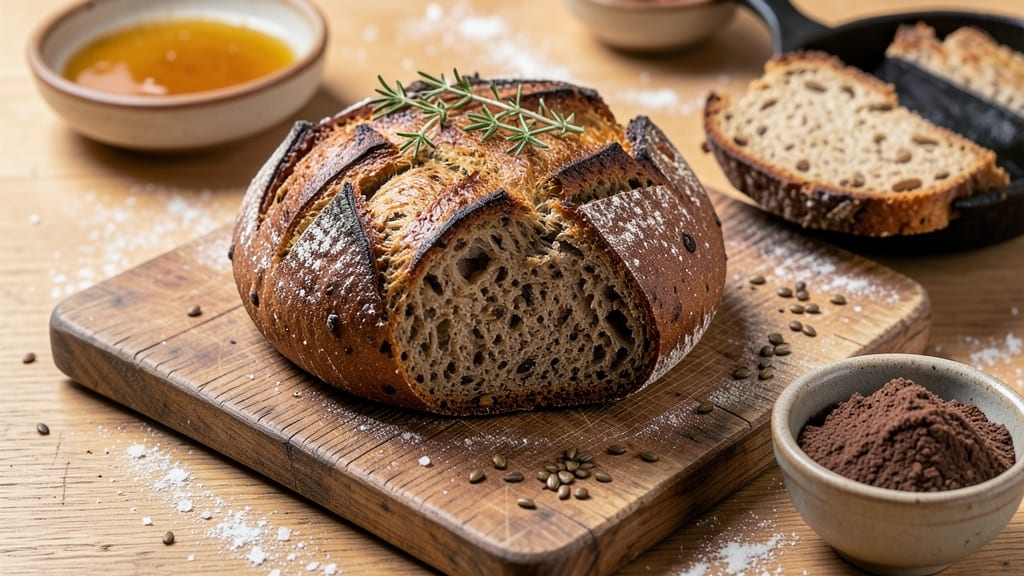
This Austrian rye bread recipe delivers the deep malty flavor and dense texture that makes it a staple across Central Europe. 🌟 The secret lies in combining dark rye malt with caraway seeds for that authentic Austrian taste, while modern techniques ensure success even for home bakers.
What sets this apart is the perfect balance of hydration and fermentation time, resulting in a crust that's beautifully dark and slightly crisp, with a tender interior studded with seed swirls.
The traditional Austrian method calls for a long fermentation period, which develops complex flavors and gives the bread its signature tangy depth. Unlike lighter breads, rye requires patience - the dough needs time to develop its structure and flavor.
I've streamlined the process without sacrificing authenticity, so you can achieve professional-quality results in your home oven.
What you'll end up with is a loaf that's dense yet tender, with a rich malty aroma that fills your kitchen as it bakes. The crust develops a beautiful dark color from the rye malt, while the interior remains moist and hearty.
Each slice offers a perfect balance of earthy rye flavor and subtle sweetness from the malt, with caraway seeds adding a distinctive aromatic note.
Perfect for sandwiches, open-faced meals, or simply enjoyed with butter and jam. The recipe yields one large loaf that freezes beautifully for up to three months, making it ideal for meal prep and gifting. Let's get started on creating your own authentic Austrian rye bread.
Ingredients for austrian rye bread
Nine essential ingredients for that authentic Austrian rye flavor and texture you crave.
| Ingredient | Amount | Notes |
|---|---|---|
| Dark Rye Flour 🌾 | 4 cups | High-protein, dark rye preferred |
| All-Purpose Flour 🌾 | 2 cups | For lighter texture balance |
| Dark Rye Malt Powder 🍺 | ½ cup | For authentic malty flavor |
| Active Dry Yeast 🍞 | 2 ¼ tsp | Or 1 packet instant yeast |
| Granulated Sugar 🍚 | 1 tbsp | Feeds yeast fermentation |
| Carway Seeds 🌿 | 2 tbsp | Whole, for authentic flavor |
| Coarse Sea Salt 🧂 | 1 ½ tsp | Kosher or sea salt preferred |
| Warm Water 💧 | 3 cups | 110°F (43°C) for activation |
| Honey 🍯 | 2 tbsp | For subtle sweetness |
| Olive Oil 🫒 | 2 tbsp | For dough elasticity |
| Sesame Seeds 🌰 | 1 tbsp | For decorative topping |
| Poppy Seeds 🌻 | 1 tbsp | For decorative topping |
The rye flour is non-negotiable here—King Arthur or Bob's Red Mill dark rye are my go-tos, but any high-protein rye will work. Rye malt powder gives that signature malty depth, and you can find it at baking stores or online (I get mine from Amazon or King Arthur's site). Caraway seeds add that distinctive Austrian aroma—buy whole seeds and toast them lightly before using for maximum flavor. The yeast should be fresh—if it smells old or looks past its prime, toss it. For the water, 110°F is key—too hot kills the yeast, too cold slows fermentation. No thermometer? Test with your elbow—should feel warm but not hot.
No dark rye malt powder? Substitute with 1 tbsp molasses for depth, though it won’t be identical. Whole caraway seeds too strong? Toast and grind half for milder flavor. Running low on sesame seeds? Sunflower or pumpkin seeds work beautifully—just adjust the amount to match. The honey can be swapped for maple syrup if you prefer, but it’ll tweak the flavor slightly. Olive oil is ideal, but vegetable or canola oil in a pinch won’t ruin the dough. For the flours, if you’re missing all-purpose, whole wheat flour is the closest substitute, though the texture will shift slightly. Pro tip: Measure your flours by weight if possible—grams are more accurate than cups for baking.
This dough is a patience game—it needs at least 8 hours of cold fermentation for that authentic tang. Divide the dough into two loaves for easier handling, and cover tightly with plastic wrap. The seeds on top? Toast them first—just 2 minutes in a dry pan—to deepen their flavor. Bake at 375°F until internal temp hits 205°F, about 45-50 minutes. Cool completely on a wire rack before slicing—trust me on this one. The bread freezes beautifully for up to 3 months, so make extras for gifts. Slice with a serrated knife for clean cuts, and toast before serving for maximum crust crunch.
Why You'll Love This Recipe
- No-Knead Nightmare Solved: I swear by this recipe because the dough barely needs handling—just mix, rest, and bake. That rye malt powder does the heavy lifting, giving you a deep, malty flavor without the fuss of kneading for hours.
- Crusty Yet Crumbly Magic: Honestly, the contrast is what makes it special: a shatteringly crisp crust from the dark rye flour, but a tender, almost cakey interior. Spread some butter on it fresh from the oven, and you’ll understand why I keep a loaf on hand.
- Breakfast to Dinner Star: Here’s what sold me—this bread is my go-to for toast in the morning, but it’s also the perfect side for hearty stews or charcuterie boards. The rye malt powder’s caramel notes even make it a sneaky upgrade for sandwiches.
- Budget-Friendly Staple: Between us, this recipe stretches my grocery budget and my fridge. A single batch lasts me a week—freeze half for lazy mornings, and the rest? Toasted with jam or paired with soup. It’s the kind of bread that makes you feel like you’re eating fancy, even when you’re not.
Step-by-step instructions for Austrian rye bread
This is how you get that signature dark malty crust and hearty seed swirls—every time.
👨🍳 Step 1: Activate the Yeast and Mix the Dough
In a large mixing bowl, combine the 3 cups warm water (about 110°F—it should feel warm to your wrist but not hot) with the 2.25 tsp active dry yeast and 1 tbsp granulated sugar. Let this sit for 5-10 minutes until it becomes frothy and bubbly—this confirms your yeast is alive and ready to work. If it doesn't bubble, your yeast might be dead, and you'll need to start over.
Once bubbly, add the 4 cups dark rye flour, 2 cups all-purpose flour, 0.5 cup dark rye malt powder, 1.5 tsp coarse sea salt, 2 tbsp honey, and 2 tbsp olive oil. Mix with a wooden spoon or dough whisk until a shaggy dough forms—it'll look messy, but that's okay. The rye flour is heavy and dense, so don't worry if it doesn't come together perfectly yet.
🍳 Step 2: Knead and Develop the Dough
Turn the dough out onto a lightly floured surface and knead for 8-10 minutes until smooth and elastic. I like to use the "windowpane test" to check for readiness—stretch a small piece of dough thin enough to see light through it. If it tears, knead a little longer. The rye dough will be stickier than wheat-based dough, so wet your hands occasionally to prevent sticking.
Here's the thing—rye dough doesn't need to be perfectly smooth. It should be cohesive but still slightly rough. Once kneaded, place it back in the bowl, cover with a damp towel, and let it rise in a warm place for 1-2 hours or until doubled in size. The warm environment (like near your oven with the light on) helps speed up fermentation and develops those deep, malty flavors we love in Austrian rye.
🥘 Step 3: Shape and Add the Seed Swirls
Punch down the risen dough to release air, then divide it into 8 equal portions (about 6 oz each). Roll each portion into a 12-inch log, sealing the seams tightly. This is where the magic happens—take one log and place 1 tsp each of sesame seeds and poppy seeds along the center. Roll it up tightly, then pinch the ends to seal.
Arrange the logs in a single layer in a 9x13-inch loaf pan, seam-side down. Cover with a damp towel and let them rise again for 30-45 minutes until they've puffed up noticeably. The seeds should peek out slightly from the sides—this ensures they'll be visible and delicious when baked.
🔥 Step 4: Bake to Perfection
Preheat your oven to 375°F. Bake the loaves for 40-45 minutes until the crust is deep brown and the internal temperature reaches 190-200°F. The bread should sound hollow when tapped on the bottom. For that authentic Austrian crust, I like to spray the loaves with water right before baking—this creates steam that helps develop that beautiful dark, crackly exterior.
Let the bread cool in the pan for 10 minutes before transferring to a wire rack. The crust will firm up as it cools, and the malty aroma will fill your kitchen. Slice while still warm for the best texture—each bite should have a crisp crust, a soft yet dense crumb, and those delightful seed swirls bursting with flavor.
Pro Tips For Making Austrian Rye Bread
- Bloom the Yeast First: Skip mixing yeast directly into the dry ingredients—it’s lazy and unreliable. Instead, dissolve the yeast, sugar, and a splash of warm water (about 110°F) in a small bowl first, then wait 5-10 minutes until it’s frothy. This guarantees your yeast is active before committing to the full dough, especially important with rye’s dense, stubborn nature.
- Hydrate the Rye: Dark rye flour absorbs moisture like a sponge. Mix the dry ingredients first, then add water gradually—about 2/3 cup at a time—while stirring vigorously. You’ll need roughly 1 1/2 to 1 3/4 cups total, but don’t guess. The dough should cling to the bowl but not be gluey; if it’s too stiff, add water sparingly.
- Don’t Over-Knead: Austrian rye dough is finicky. Knead just until the ingredients come together—about 3-4 minutes by hand or 2 minutes in a stand mixer. Overworking it develops too much gluten, making the bread dense instead of light and airy. Rye’s flavor and texture win when you keep it gentle.
- Steam the Loaf: Place a metal tray on the oven rack below your baking stone or pan, then pour 1/2 cup hot water into it just as you slide the dough in. The steam mimics a bakery’s environment, helping the crust develop that signature crispness without burning. Works every time—no fancy equipment needed.
Make-ahead tips for this recipe
Cold Fermentation
This is my secret weapon for developing deep flavor without the long wait. After your initial rise, place the shaped dough in the fridge for 12-16 hours before baking. The cold slows fermentation, creating a more complex, tangy profile.
I wrap mine tightly in plastic wrap and place it on the middle rack—this keeps temps consistent. The longer it ferments, the more pronounced the malty notes become. 💫
Freezing for Later
Rye bread freezes beautifully, so bake an extra loaf for future meals. Let it cool completely, then wrap tightly in plastic wrap followed by foil. Label with the date and store for up to 3 months.
When ready to use, thaw at room temperature overnight, then reheat wrapped in foil at 350°F for 10 minutes to restore freshness. The texture stays dense and moist—no soggy bread here!
Make-Ahead Seed Mix
Prep your seed swirls ahead of time to save effort. Mix 2 tbsp sesame seeds, 2 tbsp poppy seeds, and 1 tbsp caraway seeds in a small bowl. Store in an airtight container at room temperature for up to 2 weeks.
Toast the seeds together for 2 minutes in a dry pan before using—this intensifies their flavors dramatically. I keep a pre-toasted batch ready in my pantry for quick baking days. ✨
Bulk Dough Prep
Double the recipe and freeze half the dough as a pre-shaped log. After shaping but before the second rise, wrap each log tightly in plastic and freeze for up to 2 months.
To bake, thaw overnight in the fridge, then proceed with the second rise and baking as directed. This is perfect for meal prep Sundays—just pull out what you need when ready to bake. 🍞
Storage Tips
For maximum freshness, store your baked rye bread in a paper bag at room temperature. The paper allows the crust to dry slightly while keeping the interior moist. If you prefer airtight storage, place a slice of bread in the container with the loaf to prevent staling.
Slice only what you need—exposed surfaces dry out faster. For longer storage, freeze individual slices wrapped in foil for 1-2 months. 💡
Gift-Worthy Packaging
When gifting, wrap cooled loaves in brown kraft paper tied with twine for an authentic Austrian feel. Add a sprig of fresh rosemary or a cinnamon stick for extra presentation. Include a handwritten note with care instructions: "Best enjoyed within 3 days or frozen for up to 3 months."
This makes your homemade bread feel like a luxury bakery treat. 🎁
Nutrition facts
Frequently asked questions
Why does Austrian rye bread have caraway seeds?
Caraway seeds are a traditional Austrian flavor that adds a warm, slightly sweet, and anise-like aroma to the bread. They've been used for centuries in Central European baking to complement the deep, earthy taste of rye. The seeds not only enhance flavor but also provide a nice textural contrast when baked into the swirls.
How do I know when the dough is properly kneaded?
For rye dough, aim for 8-10 minutes of kneading until it becomes cohesive and slightly elastic. Use the "windowpane test"—stretch a small piece thin enough to see light through it. If it tears easily, knead a little longer. Remember, rye dough will always be stickier than wheat dough, so wet your hands occasionally to prevent sticking.
Can I make this without a loaf pan?
Shape the dough into a free-form loaf or round boule instead. Place it on a baking sheet lined with parchment paper, then score the top with a sharp knife before baking. For extra crust development, bake at 450°F for 10 minutes before reducing to 375°F to finish.
What if my bread turns out too dense?
Over-kneading or insufficient fermentation are common culprits. For next time, reduce kneading to 5-7 minutes and extend the cold fermentation to 16-24 hours. Also ensure your yeast is fresh and your water is at 110°F—too hot or cold water can affect fermentation.
How should I store leftovers?
Wrap cooled slices in plastic wrap or store in an airtight container with a slice of bread inside to prevent staling. For longer storage, freeze slices for up to 2 months. Toast before serving to revive freshness—never microwave rye bread as it makes the crust soggy.