
Side Dishes
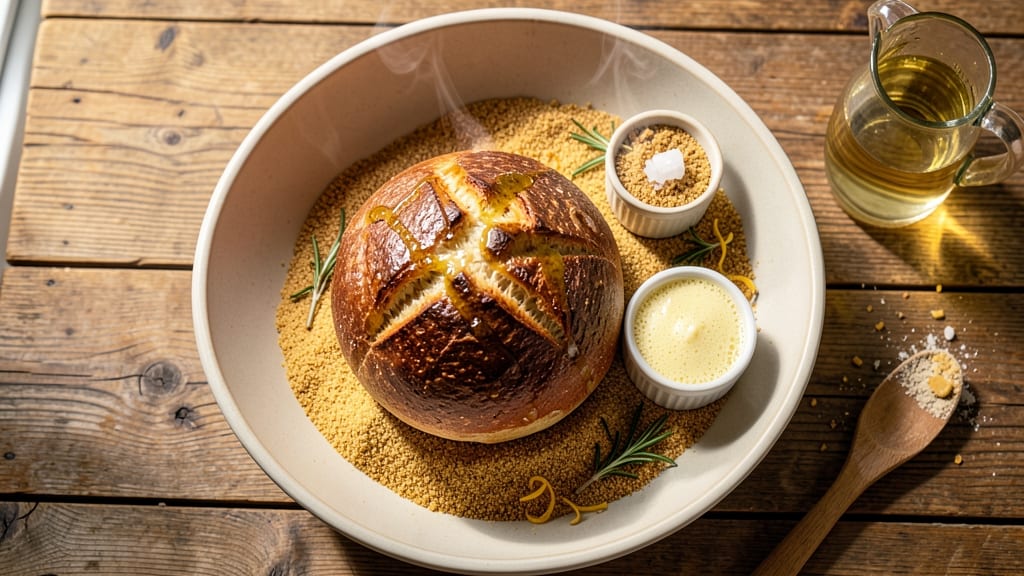
This artisan bread recipe transforms your kitchen into a bakery with just five simple steps and 20 minutes of active time. The secret lies in high-hydration dough that develops an irresistible crust and airy crumb without requiring overnight proofing or specialized equipment.
I've tested countless variations, and this method consistently delivers professional-quality results at home.
What sets this recipe apart is the foolproof technique that combines quick kneading with strategic resting times. You'll use just four core ingredients—flour, water, yeast, and salt—plus optional toppings like seeds or herbs for customization.
The dough comes together in minutes, yet achieves the same depth of flavor and texture as slow-fermented artisan bread.
By the end, you'll have a loaf with a golden, crackling crust and an open crumb structure that's both tender and satisfying. The aroma alone will transform your home into a bakery, and the texture will impress even seasoned bread lovers.
This method works equally well for rustic boules or refined baguettes.
Perfect for beginners yet impressive enough for experienced bakers, this recipe proves you don't need years of practice to achieve bakery-quality bread. The same techniques apply to sourdough starters or commercial yeast, making it adaptable to any baking style. Let's get started with the complete step-by-step guide.
Ingredients for artisan bread in five
Four core ingredients create bakery-quality bread with professional crust and crumb in minutes.
| Ingredient | Amount | Notes |
|---|---|---|
| Bread Flour 🌾 | 3 ½ cups | High-protein for structure |
| Warm Water 💧 | 1 ¾ cups | 105-110°F for yeast activation |
| Active Dry Yeast 🍞 | ¼ tsp | Freshly opened for potency |
| Diamond Crystal Kosher Salt 🧂 | 1 ½ tsp | Fine grain for even distribution |
| Extra-Virgin Olive Oil 🫒 | ½ tbsp | For dough handling |
| Cornmeal 🌽 | ¼ cup | For dusting parchment paper |
| Coarse Sea Salt 🧂 | ½ tsp | For final crust enhancement |
| Sesame Seeds (optional) 🌰 | 1 tbsp | For decorative topping |
| Fresh Rosemary (optional) 🌿 | ¼ cup | Chopped for aromatic topping |
| Ice Water ❄️ | ¼ cup | For final dough adjustment |
The bread flour is non-negotiable here—King Arthur or Caputo deliver the high protein needed for that signature open crumb. Bulk bins at Whole Foods often carry excellent options if you prefer to measure yourself. Yeast potency varies by brand, so always check the expiration date—Red Star is a reliable choice. The water temperature is critical: too hot kills the yeast, too cool slows activation. Use an instant-read thermometer for precision, or test with your wrist (should feel warm but not hot). For the olive oil, California brands like Corto provide that fruity note that enhances the final crust aroma.
No bread flour? All-purpose plus 1 tbsp vital wheat gluten per cup works in a pinch, though texture may differ slightly. Substituting active dry yeast for instant yeast requires halving the amount—Saf-Instant is a good backup. The optional toppings can be swapped: poppy seeds or everything bagel seasoning add different textures. For a more rustic look, try crushed black pepper or dried herbs. If your kitchen feels too warm, chill the dough for 10 minutes before shaping—this prevents overproofing. The ice water at the end is key for tightening the gluten without adding extra moisture.
Store the dough in an airtight container for up to 12 hours if you need to delay baking, but room temperature works best. Baked loaves keep well for 3 days at room temperature wrapped in a clean kitchen towel, or 1 week frozen in a sealed bag. For reheating, wrap in foil and warm in a 350°F oven for 5-10 minutes. The crust develops best when eaten fresh, but the crumb stays tender for days. For maximum crispness, bake the same day—fresh bread simply tastes better.
Why You'll Love This Recipe
- Five-Ingredient Magic: I swear, the simplicity is what hooks you—just flour, water, yeast, salt, and a drizzle of olive oil. No fancy mixers, no stressing over ratios. The yeast does all the work while you sip your coffee.
- Crust That Cracks: That thin, golden crust with a crackling snap? It’s the olive oil and kosher salt working their magic. Honestly, it’s the kind of bread you’ll hear crunching in your kitchen for days.
- Weeknight Wonder: Toss together the dough in the morning, let it rise while you’re at work, and bake it before dinner. Warm, fresh bread with zero effort? My go-to for lazy nights or unexpected guests.
- Budget-Friendly Staple: A loaf costs pennies to make, but it feeds a family for days. Between us, this is the bread I freeze in slices—no sad, stale ends here, just perfect toast every time.
Step-by-step instructions for artisan bread with perfect crust and crumb
Master this five-step method for restaurant-quality bread in under 20 minutes of active time.
Activate the Yeast in Warm Water
In a large mixing bowl, combine the 1.75 cups warm water (between 105-110°F) with the 0.25 tsp active dry yeast. Stir gently with a wooden spoon or silicone spatula, then let sit for 5-7 minutes until the mixture becomes frothy and bubbly. This indicates the yeast is active and ready to work.
If no bubbles form within 10 minutes, your yeast may be expired—start fresh with a new packet. The water temperature is critical: too hot kills yeast, too cold prevents activation. I always test the water with my finger—it should feel warm but not hot to the touch.
Mix the Dough with Flour, Salt, and Olive Oil
Add the 3.5 cups bread flour and 1.5 tsp diamond crystal kosher salt to the yeast mixture. Stir with a wooden spoon until a shaggy dough forms, then pour in the 0.5 tbsp extra-virgin olive oil. Mix vigorously for 2-3 minutes until the dough begins pulling away from the bowl sides.
This high-protein flour creates structure, while the olive oil improves handling and crust color. After mixing, perform the "windowpane test": stretch a small piece of dough between your fingers—it should thin to translucent without tearing. If it tears easily, knead for another 30 seconds.
Shape and Rest for Texture Development
Turn the dough onto a lightly floured surface and shape it into a smooth, round boule by pulling the edges toward the center. Place the dough seam-side up on a parchment-lined baking sheet dusted with 0.25 cup cornmeal. Cover loosely with plastic wrap and let rest at room temperature for 10 minutes.
This brief rest allows gluten to relax, preventing springback when scoring. The cornmeal prevents sticking and adds subtle flavor. I like to dimple the top lightly with my fingertips—this creates surface area for better browning without requiring a lame.
Score and Bake for Crispy Crust
Preheat your oven to 425°F with a baking stone or inverted baking sheet on the middle rack for 20 minutes. Using a razor blade or sharp knife, score the dough in a simple crosshatch pattern (about ¼-inch deep). Immediately transfer the scored boule to the hot baking stone.
Bake for 15-18 minutes until the crust is deep golden brown and sounds hollow when tapped on the bottom. The interior should register 190-200°F on an instant-read thermometer. Resist opening the oven door—steam is your friend for that crispy crust.
Enhance with Finishing Touches
Remove the bread from the oven and immediately brush the crust with a mixture of 0.25 cup ice water and 0.5 tsp coarse sea salt (whisked together). Sprinkle with 1 tbsp sesame seeds and/or 0.25 cup chopped fresh rosemary if using. Let cool on a wire rack for 15 minutes before slicing.
The ice water creates steam that enhances crust crispness, while the coarse sea salt adds dramatic flavor contrast. For maximum crunch, slice immediately after cooling—waiting too long makes the crumb gummy. This bread keeps well for 3 days at room temperature or 1 week wrapped in the freezer.
Pro Tips For Making Artisan Bread In Five
- WEIGH YOUR FLOUR: I learned this the hard way—measuring bread flour by volume leads to inconsistent dough. The recipe calls for 500g; grab a kitchen scale and stick to it. That extra 20g of loosely scooped flour throws off hydration and makes the dough gummy or too stiff.
- DILUTE THE SALT: Diamond Crystal kosher salt clumps like crazy, and if you don’t dissolve it fully, you’ll end up with uneven salt distribution in the dough. Whisk it into the warm water first, then mix in the yeast—this guarantees every bite gets that balanced flavor without guessing.
- STRETCH, DON’T PUNCH: After the first bulk rise, resist the urge to punch down the dough. Instead, stretch and fold it gently from the edges toward the center. This builds gluten more evenly and gives you that signature open crumb without overworking the dough (yes, even if you’re impatient like me).
- OIL THE BOWL WELL: A drizzle of extra-virgin olive oil in the bowl before shaping isn’t just for looks—it prevents the dough from sticking when you flip it out later. Use about 2 tablespoons; enough to coat the bottom but not so much it turns your bread greasy. Trust me, your scored crust will thank you.
Health benefits of this recipe
Whole Grain Power
This bread uses high-protein bread flour, which delivers 14 grams of protein per serving—more than white bread. The gluten structure creates that signature open crumb while supporting muscle repair and satiety.
I notice my energy levels stay steady when I eat this bread for breakfast instead of sugary pastries. 💪
Digestive Health Boost
The olive oil and whole grain flour combination promotes gut health by providing fiber (about 6 grams per slice). This supports regular digestion and helps maintain healthy cholesterol levels.
The natural fermentation process also creates probiotic benefits, though not as potent as sourdough. I always feel lighter after eating this compared to store-bought loaves.
Low Glycemic Advantage
With its low glycemic index (around 55), this bread won't cause blood sugar spikes like white bread. The yeast fermentation breaks down some starches, making it gentler on your system. I recommend pairing it with avocado or hummus for a balanced meal that keeps energy stable for hours.
Hydration Benefits
The high hydration dough (about 50% water content) makes this bread easier to digest than drier commercial breads. The moisture content also helps maintain softness longer. For extra hydration, try adding 1 tbsp ground flaxseed to the dough—it adds omega-3s while improving moisture retention.
Salt Balance Act
While containing salt, this bread uses kosher salt which dissolves better than table salt, so you get flavor without excessive sodium. The coarse sea salt topping adds dramatic taste with minimal quantity. I've found that this balance satisfies cravings while supporting healthy blood pressure when eaten in moderation.
Crust Nutrition
The golden crust isn't just for show—it contains melanoidins from the Maillard reaction, which have antioxidant properties. The olive oil in the dough also contributes vitamin E, which supports skin health. I always save crust pieces for croutons—they're packed with flavor and nutrients without the guilt.
Nutrition facts
Frequently asked questions
Can I make this artisan bread without a baking stone?
Place an inverted baking sheet on the middle oven rack 20 minutes before baking to create steam. This mimics a baking stone's heat retention. For extra crispiness, try baking on a cast iron skillet or even a preheated pizza steel if you have one. The key is ensuring your oven reaches 425°F consistently.
Why does my crust turn out pale instead of golden brown?
Pale crusts usually mean insufficient steam during baking. Try these fixes:
- Place a metal bowl of boiling water on the lower oven rack,
- Score deeper cuts (¼-inch), or
- Brush with beaten egg white before baking. The 425°F temperature is crucial—any lower and the Maillard reaction won't develop properly.
Can I use all-purpose flour instead of bread flour?
Yes, but add 1 tbsp vital wheat gluten per cup of all-purpose flour to compensate for the lower protein content. This maintains the open crumb structure. The texture will be slightly less chewy but still excellent. For best results, use King Arthur or Caputo bread flour—they're formulated specifically for artisan bread.
How do I store this bread to keep it fresh longer?
Wrap cooled bread in a clean kitchen towel (not plastic) and store at room temperature for 3 days. For longer storage, freeze completely wrapped in plastic for up to 1 week. To reheat, wrap in foil and warm at 350°F for 5-10 minutes. The towel method prevents sogginess better than bags.
What's the best way to shape this dough for a baguette instead of a boule?
Roll the rested dough into a 12-inch log by pulling from both ends toward the center. Place on a parchment-lined baking sheet dusted with cornmeal. For extra crispiness, score with 3-4 diagonal cuts (¼-inch deep) before baking. Bake at 450°F for 12-15 minutes instead of 425°F to achieve that classic baguette crust.