
Side Dishes
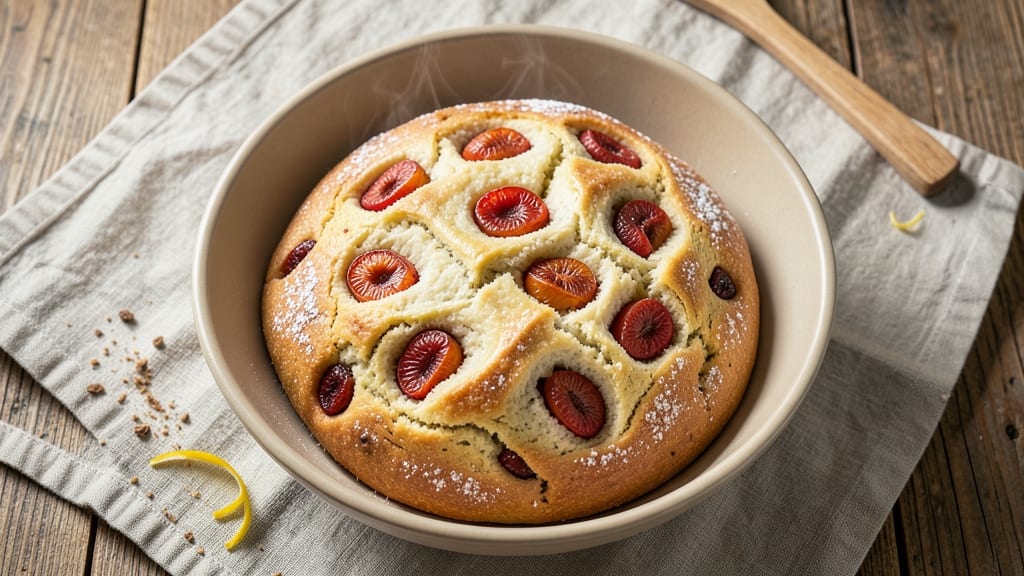
This apricot yeast bread recipe transforms simple dough into a golden loaf with bursts of sweet-tart fruit throughout. The secret lies in balancing tender crumb and crispy crust, while dried apricots add natural sweetness that caramelizes beautifully as it bakes.
I developed this recipe during summer fruit season when I wanted to preserve the harvest while creating something special for breakfast or dessert.
The process begins with a straightforward yeast dough that gets its magic from proper kneading and proofing—critical steps for achieving that light, airy texture. Fresh or dried apricots can be used, though dried ones concentrate flavor beautifully.
After shaping the loaf, a simple egg wash creates that perfect golden-brown crust we all crave, while scoring the top before baking ensures even rising and a professional finish.
What you'll end up with is a fragrant loaf that's perfect for slicing thick or serving warm with butter. The apricot swirls create pockets of sweet-tart contrast that make each bite satisfying, while the crust offers satisfying crunch.
This bread keeps well for days, making it ideal for meal prep or gifting.
The best part? This recipe delivers restaurant-quality results at home without requiring advanced techniques. With just a few simple ingredients and patience for the proofing process, you'll create a bread that's both impressive and comforting. Let's get started on making this perfect loaf.
Ingredients for apricot yeast bread
Sweet-tart apricots and golden crust transform simple dough into a showstopper loaf.
| Ingredient | Amount | Notes |
|---|---|---|
| All-Purpose Flour 🌾 | 5 cups | Sifted for light texture |
| Active Dry Yeast 🍞 | 2 ¼ tsp | Fresh yeast preferred |
| Granulated Sugar 🍚 | ¼ cup | For yeast activation |
| Large Eggs 🥚 | 2 whole | Room temperature |
| Unsalted Butter 🧈 | ½ cup | Cold for dough |
| Warm Water 💧 | 1 ¼ cups | 110°F for yeast |
| Salt 🧂 | 1 ½ tsp | Kosher or sea salt |
| Dried Apricots 🍑 | 1 cup | Chopped, unsulfured |
| Orange Zest 🍊 | 1 tbsp | Freshly grated |
| Orange Juice 🍊 | ¼ cup | Freshly squeezed |
| Honey 🍯 | 2 tbsp | For sweetness |
| Milk 🥛 | ¼ cup | For egg wash |
| Poppy Seeds 🌿 | 1 tbsp | Optional for topping |
The apricots make this bread special—unsulfured dried apricots from Trader Joe's or bulk bins have the best flavor. Chop them into small pieces (about 1/4-inch) so they distribute evenly. Fresh apricots work too, but dried concentrate that caramelized sweetness. The orange zest is what really elevates this—use a microplane for fine, fragrant strips. If you can't find fresh oranges, bottled orange juice works in a pinch, but fresh is always better. The yeast? Fresh yeast from the refrigerated section beats those tiny packets—it's more reliable for this delicate dough.
No dried apricots? Fresh peaches or plums chopped into small pieces work beautifully. Short on orange zest? Lemon zest gives a bright alternative. The honey can be swapped for maple syrup if you prefer. For the dough, if you don't have a kitchen scale, spoon flour into measuring cups and level off—packing it down makes the bread dense. The butter should be cold but soft enough to mix easily—press it between your fingers to test. And if you're worried about the yeast, proof it in warm water (110°F) for 5-10 minutes before mixing into the dough to make sure it's active.
This bread keeps for 3-4 days at room temperature, wrapped in a clean kitchen towel. For longer storage, freeze slices wrapped in plastic—toast straight from frozen for the best texture. The crust stays crisp for about 2 hours after baking, so slice it then if you're serving immediately. Leftovers reheat beautifully in a 350°F oven for 5-7 minutes to restore that fresh-baked warmth. I always make a double batch—one loaf for breakfast, one for gifting to neighbors. The aroma alone makes your kitchen feel like a bakery.
Why You'll Love This Recipe
- No-Knead Magic: I swear by this—just mix the dough, let it rise overnight, and wake up to a golden loaf with zero effort. The yeast does all the work while you sleep.
- Sweet Butter Bliss: That rich, caramelized butter folded into the dough? It turns every slice into a little flavor party. Honestly, the first bite makes you want to bake another batch immediately.
- Breakfast to Brunch: This bread is my go-to for toast in the morning or a fancy charcuterie board at brunch. The apricot swirl adds just enough sweetness to balance savory pairings—no one will guess it’s as simple as it is delicious.
- Leftovers That Last: A single batch keeps well for days, so you’re never scrambling for bread. I’ll often freeze half and pull it out for toast or sandwiches when I’m short on time—still tastes fresh.
Step-by-step instructions for sweet apricot yeast bread
Ready to bake golden loaves with hidden apricot swirls? Here's how to create tender crumb and crispy crust.
Activate the Yeast for Maximum Rise
In a small bowl, combine the 1.25 cups warm water (about 110°F—test with your finger, it should feel like bathwater), 0.25 cup granulated sugar, and 2.25 tsp active dry yeast. Let it sit for 5-10 minutes until foamy and bubbly. This proves your yeast is alive and ready to work its magic.
I always give the yeast this little sugar party first—it kickstarts fermentation and ensures your bread rises properly. If it doesn't bubble after 10 minutes, your yeast might be dead (happens if it's old or stored in the fridge too long). In that case, start fresh with new yeast.
Mix the Dough to Perfect Consistency
In the bowl of a stand mixer fitted with the dough hook, combine the 5 cups all-purpose flour and 1.5 tsp salt. Mix on low speed to distribute evenly. Add the yeast mixture, 2 whole large eggs, 0.5 cup cold unsalted butter, 2 tbsp honey, 0.25 cup orange juice, and 1 tbsp orange zest.
Mix on medium speed for 5-7 minutes until the dough comes together and pulls away from the sides of the bowl. Here's the thing—your dough should be slightly sticky but manageable. If it's too dry, add 1 tbsp warm water at a time until it reaches the perfect consistency. Too wet? Add 1 tbsp flour and mix again.
Knead for Gluten Development and Texture
Continue kneading on medium speed for another 5-7 minutes until the dough is smooth and elastic. You'll know it's ready when it forms a windowpane—stretch a small piece and it should thin out without tearing. This step builds the gluten structure that gives your bread its chewy texture.
I press down gently on the dough during kneading to ensure even gluten development. If the dough starts sticking to the hook, lightly coat it with flour—but don't overdo it, or you'll dry it out. Once kneaded, transfer the dough to a lightly floured surface and shape it into a smooth ball.
First Rise for Fluffy Layers
Place the shaped dough in a lightly greased bowl, cover with a damp kitchen towel, and let it rise in a warm place for 1-1.5 hours or until doubled in size. The kitchen towel keeps it from drying out while it puffs up beautifully. This first rise develops those air pockets that create that light, airy texture we all love.
I like to place my dough near a slightly warm oven with the light on—this creates a cozy environment that encourages even rising. Poke the dough gently with your finger; if it springs back slowly, it's ready. If it springs back quickly, give it a little more time.
Prepare the Apricot Filling
While the dough rises, prepare the apricot filling by chopping the 1 cup dried apricots into small pieces. In a small bowl, combine the chopped apricots with 1 tbsp honey and 1 tbsp orange juice. Let this mixture sit for 5 minutes to soften slightly—this ensures the apricots stay moist during baking.
I always give the apricots a little soak in the honey and orange juice because dried fruit can be tough. This step makes them plump and juicy, creating those delicious pockets of sweet-tart flavor in every bite. The orange juice also helps balance the apricot's natural sweetness.
Shape and Swirl the Dough
Once the dough has risen, punch it down to release air, then roll it out on a lightly floured surface into a 12x16-inch rectangle. Spread the apricot mixture evenly over the dough, leaving a ½-inch border around the edges. Starting from the long side, tightly roll the dough into a log, sealing the seam.
Here's where it gets fun—gently coil the log into a spiral shape and place it seam-side down in a 9x5-inch loaf pan that's been lightly greased. This creates those beautiful swirls of apricot throughout the bread. Press the dough gently into the pan to help it hold its shape during the final rise.
Second Rise and Bake to Golden Perfection
Cover the loaf pan with a damp towel and let the dough rise for another 45-60 minutes until it's puffed and just about overflowing the pan. Preheat your oven to 375°F while the dough rises—this ensures it goes straight into a hot oven for even baking.
Brush the top of the dough with a mixture of 1 egg and 0.25 cup milk for a beautiful golden crust. Sprinkle the 1 tbsp poppy seeds evenly over the top for added texture and visual appeal. Bake for 35-40 minutes until the bread is golden brown and sounds hollow when tapped on the bottom.
Cool and Enjoy Your Creation
Remove the bread from the pan and let it cool on a wire rack for at least 30 minutes before slicing. This resting period allows the bread to set properly, preventing it from falling apart when you cut into those delicious apricot swirls.
Slice into 8 equal portions and serve warm with butter or jam. The crust should be crispy and golden, while the interior should be soft with pockets of sweet, juicy apricot throughout. Each bite delivers that perfect balance of sweet, tart, and buttery goodness—worth every minute of the process!
Pro Tips For Making Apricot Yeast Bread
- Soften Butter First: Take that cold butter straight from the fridge and cut it into small cubes—then let it sit at room temperature for 30 minutes. I learned this the hard way when my dough turned out greasy and refused to hold shape. Warm butter mixes better and gives you that tender crumb without fighting you.
- Proof Yeast in Warm Milk: Skip the dry yeast straight into flour and hope for the best. Instead, mix it with a splash of warm milk (or water) and a pinch of sugar first—let it bubble for 5 minutes. This guarantees your yeast is alive and ready to work, not just sitting there like a lazy guest.
- Don’t Overmix the Dough: Once you add the flour, stop mixing the second everything comes together. Overworking the dough makes the bread dense and tough—like chewing on a brick. A few lumps are fine; just fold them out gently. Your bread will thank you with a lighter texture.
- Brush with Egg Wash: Whisk one egg with a splash of water, then brush it on the loaf right before baking. That golden crust? Not just luck—it’s the egg’s magic. Skip it, and you’ll get a dull, dry top. (Pro move: Save the leftover wash for toast later.)
Flavor customization for this dish
Citrus Variations
Swap the orange zest and juice for lemon or lime to brighten the flavor profile. Use 1 tbsp lemon zest and 0.25 cup lemon juice for a zesty twist that pairs beautifully with the apricots.
For a tropical touch, try grapefruit zest and juice—just reduce the sweetener to 1 tbsp honey since grapefruit is naturally bitter. 🍋
Spiced Apricot Twist
Infuse the dried apricots with warmth by adding ½ tsp ground cinnamon and ¼ tsp cardamom to the filling mixture. Warm spices like these complement the fruit’s natural sweetness while adding depth.
For extra richness, fold in 1 tbsp chopped toasted almonds or walnuts into the apricot mixture before rolling it into the dough.
Herbal Enhancements
Brighten the dough with fresh herbs like rosemary or thyme. Finely chop 1 tbsp fresh rosemary and mix it into the dough during Step 2 for an aromatic twist.
Alternatively, add 1 tsp dried lavender (sparingly!) to the apricot filling for a floral note that pairs surprisingly well with the fruit’s tartness.
Savory-Sweet Balance
For a unique twist, reduce the honey to 1 tbsp and add 1 tbsp balsamic vinegar to the apricot filling. The tangy contrast creates a sophisticated flavor that works beautifully with sharp cheeses like aged gouda or blue cheese when serving. This variation is perfect for pairing with charcuterie boards.
Seasonal Fruit Swaps
When apricots are out of season, use dried peaches, figs, or dates for a similar caramelized sweetness. For summer versions, try fresh peaches or plums, chopped into small pieces and lightly tossed with 1 tbsp lemon juice to prevent browning.
Adjust the sweetener to taste—fresh fruit often needs less sugar.
Gluten-Free Adaptation
Replace the all-purpose flour with a 1:1 gluten-free baking flour blend (like King Arthur Measure for Measure) and add ½ tsp xanthan gum to improve texture. The dough will be stickier, so use a silicone scraper to handle it.
Reduce the honey to 1 tbsp and increase the orange juice to 0.35 cup to balance the denser crumb. Proofing times may extend to 2 hours for the first rise. ✨
Nutrition facts
Frequently asked questions
Can I use fresh apricots instead of dried?
Fresh apricots work beautifully—just chop them into small pieces (about 1/4-inch) and toss with 1 tbsp lemon juice to prevent browning. Reduce the honey to 1 tbsp since fresh fruit is naturally sweeter. The texture will be juicier, so you might want to pat them dry slightly before mixing into the dough.
Why did my bread turn out dense instead of light?
Dense bread usually means the yeast didn't activate properly or the dough wasn't kneaded enough. First, check your yeast—it should foam within 5-10 minutes in warm water. If not, start fresh. Also, knead for the full 10 minutes to develop gluten properly. Cold dough or insufficient proofing time can also cause density—ensure your kitchen is warm (around 75°F) for rising.
How do I store leftovers to keep them fresh?
Wrap cooled slices in plastic wrap or store in an airtight container at room temperature for 3-4 days. For longer storage, freeze slices wrapped individually—they'll stay fresh for 3 months. To revive, toast straight from frozen for 5-7 minutes at 350°F until crispy again. The crust stays fresh for about 2 hours after baking, so slice it then if serving immediately.
Can I make this bread without a stand mixer?
Yes! Mix the dough by hand in a large bowl, using a wooden spoon first to combine ingredients, then kneading on a floured surface for 10-12 minutes until smooth and elastic. Press down firmly during kneading to develop gluten. The dough will be slightly stickier, so wet your hands occasionally to prevent sticking. Transfer to a greased bowl for rising as directed.
What's the best way to reheat slices?
For crispy crust and soft interior, wrap slices in foil and warm at 350°F for 5-7 minutes. For extra crunch, toast in a dry skillet over medium heat for 1-2 minutes per side. Microwaving works in a pinch (10-15 seconds), but it softens the crust. The key is quick, even heat to restore that fresh-baked texture.