
Desserts
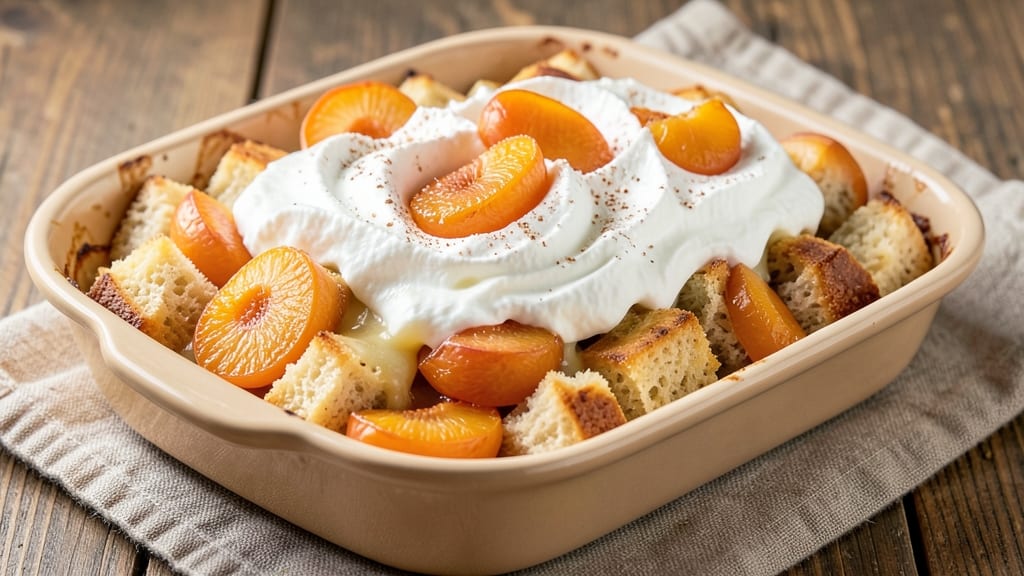
This apricot bread pudding recipe transforms simple ingredients into a dessert that feels like a warm hug—spiced, fruity, and rich with vanilla cream.
The secret lies in soaking sturdy bread cubes in a custard mixture infused with cinnamon and nutmeg, then layering them with plump apricots that caramelize beautifully during baking. Every bite delivers tender bread, juicy fruit, and a velvety custard that balances sweetness perfectly.
The process is straightforward yet rewarding: bread is soaked in a vanilla custard base, then combined with halved apricots in a baking dish. Baking at 350°F for about 45 minutes creates a golden crust while keeping the interior moist and custardy.
The apricots release their natural juices, creating pockets of fruity sweetness throughout.
What makes this dessert truly special is its versatility—serve it warm with a drizzle of caramel or a scoop of vanilla ice cream for an elegant finish.
The spiced custard and tender bread create a satisfying texture contrast, while the apricots add a bright, summery note that pairs beautifully with the warm vanilla flavors.
Perfect for brunch gatherings, holiday desserts, or a cozy weeknight treat, this recipe delivers restaurant-quality results with minimal effort. The combination of textures and flavors makes it a crowd-pleaser that feels both comforting and sophisticated.
Ingredients for apricot bread pudding
Six simple ingredients transform into a dessert that feels like a warm embrace—spiced custard, tender bread, and juicy apricots.
| Ingredient | Amount | Notes |
|---|---|---|
| Sturdy White Bread 🍞 | 6 cups | Cubed into 1-inch pieces |
| Large Eggs 🥚 | 6 whole | Room temperature preferred |
| Heavy Cream 🥛 | 2 cups | Full-fat for richness |
| Whole Milk 🥛 | 1 cup | Warmed slightly for custard |
| Granulated Sugar 🍚 | 1 ½ cups | Adjust to taste |
| Vanilla Extract 🍯 | 2 tbsp | Pure extract preferred |
| Ground Cinnamon 🌿 | 1 ½ tsp | Freshly ground preferred |
| Ground Nutmeg 🌿 | ½ tsp | Freshly grated for depth |
| Salt 🧂 | ½ tsp | Kosher or sea salt |
| Fresh Apricots 🍑 | 3 cups | Pitted and halved |
| Unsalted Butter 🧈 | ½ cup | Melted for topping |
| All-Purpose Flour 🌾 | 2 tbsp | For thickening custard |
The bread is the foundation—sturdy white loaves like sourdough or French bread hold up best to soaking. Trader Joe's and Whole Foods carry excellent options, or use day-old bread from your freezer. Apricots should be plump and firm; fresh or frozen work equally well. For the custard, full-fat heavy cream ensures a rich texture, while vanilla extract adds depth. If you're using frozen apricots, thaw and pat dry to prevent excess moisture in the baking dish.
No vanilla extract? Vanilla bean paste works beautifully, or scrape seeds from a vanilla bean. Substitute heavy cream with half-and-half for a lighter version, though texture will differ. For a spice swap, cardamom at half the amount adds a unique twist. If you can't find fresh apricots, dried apricots rehydrated in warm water work in a pinch—just reduce the sugar slightly to balance the sweetness. The flour is optional but helps stabilize the custard if you prefer a thicker texture.
This dessert reheats beautifully—350°F for 10-15 minutes restores its warmth. Store leftovers in an airtight container for 3-4 days in the fridge, or freeze for up to 2 months. For make-ahead convenience, assemble the pudding a day in advance and bake just before serving. The flavors deepen overnight, making it perfect for brunch prep. Garnish with a sprinkle of cinnamon or a drizzle of caramel for an elegant finish.
Why You'll Love This Recipe
- No Chopping Needed: I swear by this—just tear that stale bread into chunks. No knives, no fuss, and honestly? The texture comes out better when it’s irregular. That’s the magic of bread pudding right there.
- Caramelized Apricot Magic: Between us, the moment those apricot halves get baked into the custard? Pure satisfaction. The sugar in the fruit melts into the custard, turning every bite into a little burst of jammy sweetness. It’s like dessert sneaked into breakfast.
- Weeknight Crowd-Pleaser: I make this when my in-laws visit because it’s foolproof and always gets seconds. The eggs and cream make it rich enough for brunch, but the bread soaks up just enough to keep it light. Even my picky son asks for it.
- Leftovers? Better Than Fresh: Here’s what sold me—this tastes better the next day. The custard thickens just right, and the bread gets even more tender. I’ll often bake a double batch because it’s the easiest way to feed a houseful without stressing. Budget-friendly too—uses pantry staples.
Step-by-step instructions for apricot bread pudding
This method delivers a rich, custardy bread pudding with tender bread and juicy apricots.
Prepare the Bread and Apricot Base
Preheat your oven to 350°F and grease a 9x13-inch baking dish with the 0.5 cup unsalted butter, reserving 2 tablespoons for later. Cut the 6 cups sturdy white bread into 1-inch cubes and arrange them evenly in the prepared dish. You want the bread to fit snugly but not overcrowded.
Spread the 3 cups fresh apricots, pitted and halved, evenly over the bread cubes. The apricots should nestle between the bread pieces, releasing their juices as they bake. This layering ensures every bite has both bread and fruit in perfect harmony.
Make the Custard Mixture
In a large mixing bowl, whisk together the 6 whole large eggs, 1.5 cups granulated sugar, 2 cups heavy cream, 1 cup whole milk, 2 tablespoons vanilla extract, 1.5 teaspoons ground cinnamon, 0.5 teaspoon ground nutmeg, and 0.5 teaspoon salt. The mixture should be smooth and well combined, with no visible streaks of flour or sugar.
I like to whisk vigorously for about 2 minutes to fully emulsify the eggs and sugar. This creates a stable custard that won't curdle during baking. The warm spices will infuse throughout, giving the pudding its signature aromatic depth.
Combine and Bake
Pour the custard mixture evenly over the bread and apricot layer in the baking dish. Gently press down on the bread cubes to help them soak up the custard. This step is crucial for preventing a watery center—you want the bread to absorb as much custard as possible.
Bake for 45-50 minutes until the top is golden brown and the custard has set but remains slightly jiggly in the center. The edges should pull away cleanly from the pan, and a toothpick inserted should come out with just a few moist crumbs.
Finish and Serve
Remove the bread pudding from the oven and let it rest for 10 minutes. This resting period allows the custard to fully set while retaining its creamy texture. While it rests, melt the reserved 2 tablespoons unsalted butter with the 2 tablespoons all-purpose flour in a small saucepan over low heat, stirring constantly until smooth.
Pour this butter mixture evenly over the top of the bread pudding and return it to the oven for 5-7 minutes to create a golden, buttery crust. The contrast between the crisp top and creamy interior is what makes this bread pudding truly special. Serve warm, with a dusting of powdered sugar if desired.
Pro Tips For Making Apricot Bread Pudding
- Soak the Bread Right: Tear the bread into 1.5-inch chunks and pour the warm custard (eggs, milk, cream, sugar) over them in a single bowl—don’t mix yet. Let it sit for at least 20 minutes (30 if you’re impatient like me), stirring once halfway. This guarantees even moisture without turning the bread into mush.
- Whisk Eggs Like a Pro: Beat the eggs and sugar until pale and thick—about 3 minutes with a whisk. Stop when the mixture coats the back of a spoon but isn’t frothy. Over-whisking incorporates too much air, which can make the pudding dense instead of light.
- Skip the Overmixing: Once you add the soaked bread to the custard, fold it in just until combined. Lumps are fine—overmixing breaks down the bread’s structure, and you’ll end up with a gluey mess instead of a custardy bite.
- Bake Low and Slow: Start at 350°F (175°C) for the first 30 minutes, then drop to 325°F (160°C) for the remaining 40–50 minutes. This prevents a crusty top while ensuring the center sets properly—no more undercooked goo or burnt edges.
Make-ahead tips for this recipe
Prep Ahead Strategy
Assemble the bread pudding the night before for deeper flavor development. Soak the bread cubes in the custard mixture and refrigerate overnight in an airtight container. The bread absorbs more custard, and the spices meld beautifully.
When ready to bake, transfer to a greased dish and bake as directed—just add 5-10 minutes to account for the cold start. 📅
Freezer-Friendly Method
For maximum convenience, bake the bread pudding first, then freeze it for up to 2 months. Wrap tightly in plastic wrap followed by aluminum foil to prevent freezer burn.
Thaw overnight in the fridge before reheating. To restore freshness, cover with foil and warm at 350°F for 15-20 minutes until heated through.
Portion Control Tips
Divide the custard mixture into individual ramekins for single servings. Place ½ cup bread cubes and ½ cup apricot halves in each ramekin, then pour the custard over.
Bake at 350°F for 30-35 minutes—these smaller portions reheat quickly and are perfect for brunch gatherings. Use 6-ounce ramekins for consistent results.
Make-Ahead Garnishes
Prepare garnishes ahead of time for a polished presentation. Whisk together ½ cup powdered sugar with 2 tablespoons heavy cream for a quick drizzle. Store in a small jar in the fridge.
For extra flair, toast ½ cup sliced almonds in a dry pan until golden—sprinkle over warm pudding just before serving. 🌟
Caramel Drizzle Prep
Make a simple caramel drizzle the day before by combining ½ cup granulated sugar, ¼ cup heavy cream, and 1 tablespoon unsalted butter in a saucepan. Cook over medium heat until bubbly, then cool completely.
Store in a sealed jar in the fridge—it keeps for 5 days and adds a luxurious finish when drizzled over warm pudding.
Bread Soaking Hack
Speed up soaking by using a blender: pulse 2 cups bread cubes with ½ cup custard mixture until finely ground. This creates a bread "paste" that soaks instantly. Mix back into the remaining custard, then layer with apricots. The texture remains tender, and the bread absorbs custard evenly throughout. ⚡
Nutrition facts
Frequently asked questions
Can I use dried apricots instead of fresh?
Yes, but you'll need to rehydrate them first! Soak 1 cup dried apricots in warm water for 20 minutes, then drain and pat dry. Reduce the sugar in the custard by 1-2 tablespoons since dried apricots are much sweeter than fresh.
Why did my bread pudding turn out watery?
This usually happens when the bread doesn't soak up enough custard or the baking time is insufficient. Try pressing down on the bread cubes after adding custard to help absorption, and ensure you bake until a toothpick comes out with just a few moist crumbs (not wet). For extra insurance, add 2 extra tablespoons of flour to the custard mixture.
How can I make this recipe gluten-free?
Replace the regular bread with gluten-free bread or a gluten-free bread substitute like gluten-free bread crumbs. Use a 1:1 ratio, but expect the texture to be slightly denser. For the custard, ensure your flour is gluten-free if using it to thicken the butter topping. Always check labels to avoid hidden gluten sources.
Can I make this bread pudding in a smaller dish?
For a 6-8 serving version, use a 9x9-inch baking dish instead. Reduce all ingredients by about 30% (including bread, apricots, and custard). Bake at 350°F for 35-40 minutes instead of 45-50 minutes, as smaller dishes cook faster. This is perfect for individual portions!
What's the best way to reheat leftovers?
For the best results, cover the bread pudding with foil and reheat at 350°F for 15-20 minutes. This restores warmth without drying it out. If you prefer a crispy top, remove the foil for the last 5 minutes. For quick reheating, microwave on 50% power for 45-60 seconds, then cover with a damp paper towel to keep it moist.