
Desserts
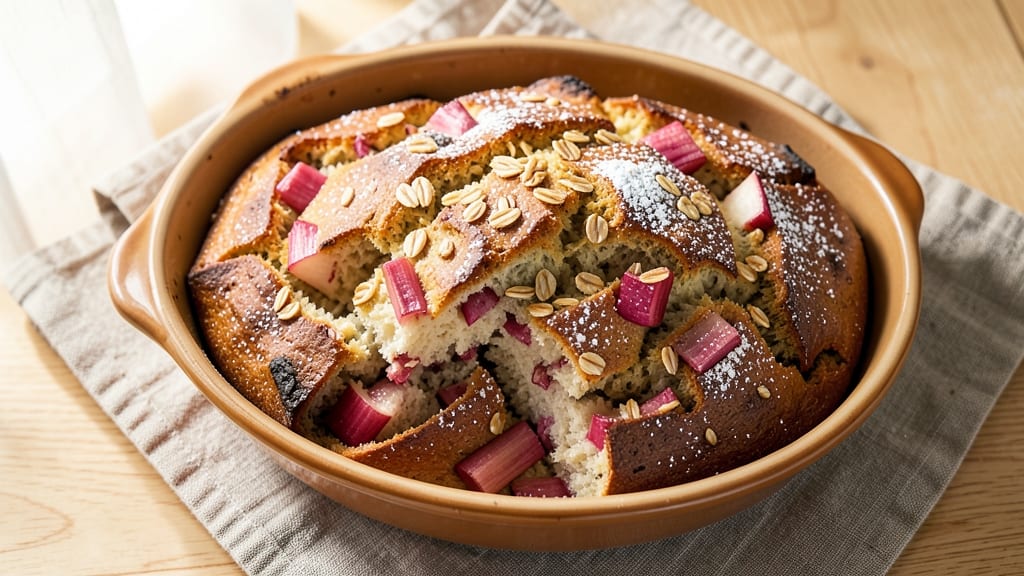
This apple rhubarb bread recipe transforms spring's brightest flavors into a tender, fragrant loaf that bakes up with golden crust and juicy fruit pockets.
The no-knead dough makes it effortless—no stand mixer required—while the perfect balance of tart rhubarb and sweet apples creates a texture that's both moist and slightly crisp.
I developed this during peak harvest season when fresh fruit was abundant, and it quickly became my go-to recipe for weekend breakfasts and holiday gifts.
The secret lies in the fruit preparation: chopping rhubarb and apples into even pieces ensures they distribute throughout the dough without sinking to the bottom. A simple streusel topping adds that irresistible crunch, while the yeast-based dough rises just enough to create a light, airy crumb.
Baking at 350°F for 45-50 minutes yields a loaf with a caramelized top and a tender interior where every bite reveals bursts of fruit.
What makes this recipe truly special is its versatility—serve it warm with butter straight from the oven, or drizzle with a simple glaze for a restaurant-worthy finish. The aroma alone fills the kitchen with comfort, and the flavor profile works equally well for breakfast or dessert.
Perfect for spring and summer, this bread captures the essence of seasonal produce while delivering foolproof results.
Whether you're a seasoned baker or new to fruit breads, this recipe delivers professional-quality results with minimal effort. The no-knead method saves time, while the fruit combination creates a balance of sweet and tart that keeps everyone reaching for seconds.
Let's get started on a loaf that's as beautiful as it is delicious.
Ingredients for apple rhubarb bread
Spring's brightest flavors need just 12 ingredients to create this foolproof fruit loaf.
| Ingredient | Amount | Notes |
|---|---|---|
| All-Purpose Flour 🌾 | 4 cups | Spooned and leveled |
| Granulated Sugar 🍚 | ¾ cup | White or light brown |
| Active Dry Yeast 🍞 | 2 ¼ tsp | Freshly opened package |
| Salt 🧂 | ½ tsp | Diamond Crystal preferred |
| Unsalted Butter 🧈 | ½ cup | Cold, cubed |
| Milk 🥛 | ¾ cup | Warm (110°F) |
| Rhubarb 🍎 | 1 ½ cups | Chopped into 1/2-inch pieces |
| Apples 🍎 | 1 ½ cups | Granny Smith, chopped small |
| Brown Sugar 🍚 | ½ cup | Packed, for streusel |
| Old-Fashioned Oats 🥣 | ½ cup | Quick or rolled |
| Ground Cinnamon 🍃 | 1 tsp | Freshly ground |
| Vanilla Extract 🍯 | 1 tsp | Pure almond extract optional |
The fruit makes or breaks this bread. Rhubarb should be firm and vibrant, not slimy or overripe—pick up a bunch at your local farmers market in spring for the best flavor. Apples need to be tart (Granny Smith works perfectly), and chopping them small ensures even distribution. Whole Foods or Trader Joe's usually carry pre-washed apples, but I always peel and chop mine myself for better texture. The yeast is non-negotiable—check the expiration date, and if it's past its prime, Arm & Hammer is my go-to brand for reliable results. Store flour in a cool, dark place to prevent rancidity, and keep yeast in the fridge for maximum freshness.
No Granny Smith apples? Honeycrisp or Fuji work too, but add an extra 1/4 cup sugar to balance tartness. Running short on rhubarb? Substitute with chopped pears or peaches, but reduce sugar by 2 tablespoons. The streusel topping can be made with crushed graham crackers if you're out of oats. For the butter, European-style brands like Plugrá add extra richness. And if you're worried about the dough being too sticky, add 1 tablespoon more flour—this bread is forgiving, but not magic.
This bread keeps beautifully for 3 days at room temperature wrapped in a clean kitchen towel, or 1 week in an airtight container. For longer storage, freeze the baked loaf for up to 3 months. I always slice mine before freezing—just wrap individual slices in parchment and store in a ziplock bag. Reheat slices in a 350°F oven for 5-7 minutes to restore that fresh-from-the-oven warmth. The aroma alone makes the kitchen feel like spring, so don't skip the optional vanilla extract—it ties everything together.
Why You'll Love This Recipe
- No-Knead Magic: The dough comes together in five minutes—just toss the flour, sugar, and yeast, then let it rise while you chop rhubarb and apples. Honestly, I’ve made this on lazy mornings when I couldn’t be bothered with kneading, and it still turns out tender and golden.
- Tart-Sweet Perfection: That balance? Chef’s kiss. The rhubarb’s sharp tang cuts through the apples’ natural sweetness, while the butter keeps every slice rich and moist. Between us, it’s the kind of flavor that makes people ask, “What’s in this?”—then beg for the recipe.
- Breakfast or Snack Star: Slice it warm with butter for breakfast, pack it in lunchboxes for kids, or serve it at brunch with honey. I’ve even used it as a base for French toast—yes, even on a Tuesday night—because it’s that versatile.
- Leftovers That Last: A single loaf keeps for days in the fridge (toast it for crunch) or freezes beautifully for when you’re too tired to bake. My freezer’s always stocked with these—because why bake when you can reheat something this good?
Step-by-step instructions for apple rhubarb bread
This no-knead method delivers tender crumb, perfect fruit distribution, and a crispy crust every time.
Activate the Yeast and Mix the Dough
In a small bowl, combine the 0.75 cup warm milk (about 110°F) with the 2.25 tsp active dry yeast and let sit for 5-10 minutes until frothy. This ensures your yeast is active and ready to work. The mixture should bubble vigorously—if it doesn't, your yeast may be old or your milk too hot.
In a large mixing bowl, whisk together the 4 cups all-purpose flour, 0.75 cup granulated sugar, 0.5 tsp salt, and 1 tsp vanilla extract. Cut in the 0.5 cup cold cubed butter using a pastry cutter or your fingers until the mixture resembles coarse crumbs. This creates pockets for the yeast to rise properly.
Add the yeast-milk mixture to the dry ingredients and mix with a wooden spoon until just combined. The dough will be sticky—don't overwork it. Fold in the 1.5 cups chopped rhubarb and 1.5 cups chopped apples, distributing them evenly. This ensures sweet-tart fruit bursts in every bite.
First Rise and Prepare the Streusel
Cover the dough bowl with plastic wrap and let rise in a warm place for 1-1.5 hours until doubled in size. The dough should puff noticeably and pull away from the bowl edges. This rise develops flavor and lightens the crumb.
While the dough rises, prepare the streusel topping by combining the 0.5 cup brown sugar, 0.5 cup old-fashioned oats, and 1 tsp ground cinnamon in a small bowl. Mix until uniformly coated—this ensures even sweetness and crunch on top.
Real talk: If your kitchen isn't warm enough, place the bowl over a pot of barely simmering water to create a proofing box. The dough needs consistent warmth to rise properly without drying out.
Shape and Second Rise
Lightly grease a 9x5-inch loaf pan and transfer the risen dough to it. Gently press down to remove air bubbles, then sprinkle half of the streusel mixture evenly over the top. This creates the signature crunchy-sweet contrast.
Cover the pan with a damp towel and let the dough rise for another 30-45 minutes until it domes slightly above the pan. The streusel should look slightly pressed in, but that's normal—the weight will settle as it bakes. Avoid over-rising here, or your bread will collapse.
Here's the thing—if your dough rises too quickly, it may overproof. Gently press a finger into the dough; it should spring back slowly, not immediately. This test ensures perfect texture after baking.
Bake to Golden Perfection
Preheat your oven to 375°F. Bake the loaf for 45-50 minutes until the top is deep golden brown and a toothpick inserted in the center comes out clean. The bread should smell sweetly fruity and slightly caramelized.
During the last 10 minutes of baking, sprinkle the remaining streusel over the top for extra crunch. Watch carefully—this is when the bread develops its signature crust. If it browns too quickly, tent with foil to prevent over-browning.
I press down gently on the loaf during the first minute after removing it from the oven. This prevents the bread from becoming too dome-shaped and ensures even cooling. Let it cool in the pan for 15 minutes before transferring to a wire rack.
Rest and Serve
Allow the bread to cool completely for at least 1 hour before slicing. This resting period lets the crumb set properly, preventing a gummy texture. The internal temperature should drop to below 100°F for clean slices.
Slice with a serrated knife for clean cuts that showcase the tender crumb and fruit distribution. Serve warm with butter or jam, or enjoy at room temperature for up to 3 days. The flavors deepen as it cools, making each bite even more satisfying.
Pro Tips For Making Apple Rhubarb Bread
- Weigh Your Butter: I used to eyeball the butter for this bread, and it always came out either too dense or greasy. For apple rhubarb bread, stick to the gram measurement—1 stick of butter is exactly 113g, not "about 8 tablespoons." The butter content here is what makes the crumb tender, so don’t skimp or guess.
- Prep Rhubarb First: Chop the rhubarb into even ½-inch chunks before mixing it into the dough—no need to peel unless it’s woody. If you wait until later, the sharp edges will tear the gluten strands, making the bread gummy instead of tender. Do this step right after measuring the flour, while your hands are already sticky.
- Proof Until Puffy: The dough will take longer to rise than you expect, especially if your kitchen is chilly. Stop checking at 45 minutes—wait until the dough has visibly doubled in size and springs back slowly when you poke it with a finger. Rushing this step means a dense loaf, and nobody wants a sad apple-rhubarb brick.
- Use Cold Egg Wash: Brush the top with a mix of 1 cold egg yolk and 1 tablespoon water before baking—this gives that glossy finish without making the crust too thick. Skip the warm egg wash, or you’ll end up with a sticky mess that burns before the bread is done. Trust me, the cold yolk makes all the difference in the final look.
Troubleshooting great apple rhubarb bread
Dense Fruit Sinking
If your rhubarb and apples sink to the bottom during baking, toss the chopped fruit in 1 tablespoon flour before folding it into the dough. This light coating prevents sinking and ensures even distribution throughout the loaf.
I also recommend chopping both fruits into ¼-inch pieces or smaller—larger chunks tend to fall faster. For extra insurance, gently press the dough down after adding fruit to help them stay suspended. 💡
Pale Crust or Underbaked Center
Your oven might be running cooler than the thermometer reads, or the loaf pan could be too large. First, verify your oven's accuracy with an oven thermometer—many run 25-50°F cooler than set.
If your pan is larger than 9x5 inches, reduce the baking time by 5-10 minutes to prevent a pale center. For extra browning, brush the top with milk or egg wash before baking. I swear by this trick for that perfect golden crust! 🌟
Dough Not Rising Properly
Cold milk or old yeast are the most common culprits. Always use milk warmed to 110°F—too hot kills yeast, too cold slows activation. If your dough isn't doubling after 1.5 hours, test your yeast: mix 1 tsp yeast with 2 tbsp warm water and 1 tsp sugar.
It should foam within 5-10 minutes. If not, toss it and use fresh Arm & Hammer yeast. For faster rises, place the dough bowl in a 250°F oven with the light on—this creates an instant proofing box. ⏰
Streusel Too Dry or Clumpy
Streusel texture depends on proper mixing and moisture balance. Pulse the oats, brown sugar, and cinnamon in a food processor for 10-15 seconds to break up any lumps, then mix with a fork to distribute oils evenly.
If your streusel seems too dry, add 1 tbsp melted butter to the mixture. For extra moisture, sprinkle 1 tsp lemon juice over the streusel before baking—this keeps it crisp but not crumbly. 🍃
Collapsed Loaf After Baking
Overproofing or opening the oven too soon are the usual suspects. The dough should dome slightly above the pan before baking—if it's flat, it's overproofed. For a second rise, use a 30-minute window and check frequently.
Never open the oven door during the first 25 minutes of baking, as the temperature drop causes collapse. If your loaf does flatten, don't panic—slice it horizontally and toast the bottoms for a crispy finish. 🔥
Gummy Texture When Sliced
This happens when the bread cools too quickly or isn't rested properly. Always let the loaf cool in the pan for 15 minutes before transferring to a wire rack, then wait at least 1 hour before slicing.
For extra insurance, brush warm slices with melted butter—this helps set the crumb. If you're in a hurry, reheat slices in a 300°F oven for 5 minutes to restore moisture balance. The wait is worth it for that perfect texture! ✨
Nutrition facts
Frequently asked questions about apple rhubarb bread
Can I make this bread without yeast?
Yes! For a quick bread version, replace the yeast with 2 teaspoons baking powder and 1 teaspoon baking soda. Mix the dry ingredients first, then fold in the wet ingredients and fruit. Bake at 350°F for 40-45 minutes in a greased loaf pan. The texture will be denser but still delicious, perfect for busy mornings.
How do I store leftover apple rhubarb bread?
Wrap cooled slices in plastic wrap and store at room temperature for 2-3 days, or keep the whole loaf in an airtight container for 3 days. For longer storage, freeze slices wrapped in parchment paper for up to 3 months. To refresh, reheat frozen slices in a 300°F oven for 5 minutes until warm. The flavors actually improve overnight!
What's the best way to serve this bread?
Warm slices make the perfect breakfast with butter or cream cheese, or toast with cinnamon sugar for extra flavor. For dessert, drizzle with vanilla glaze (powdered sugar + milk + vanilla) or serve with whipped cream. The tart-sweet balance pairs beautifully with coffee or tea too.
Can I substitute other fruits?
Try peaches, pears, or berries instead of rhubarb, but reduce sugar by 2 tablespoons since they're naturally sweeter. For extra tartness, add 1 teaspoon lemon zest to the dough. The key is balancing sweet and tart flavors—experiment with what you have on hand!
Why does my bread turn out dense?
Overmixing the dough or underbaking are common culprits. Mix just until combined (the dough will be sticky), and bake until a toothpick comes out clean. Also ensure your yeast is active—test it in warm water with sugar before starting. If the dough rises too quickly, it may overproof, leading to density. Let it rise until just doubled, not tripled.