
Side Dishes
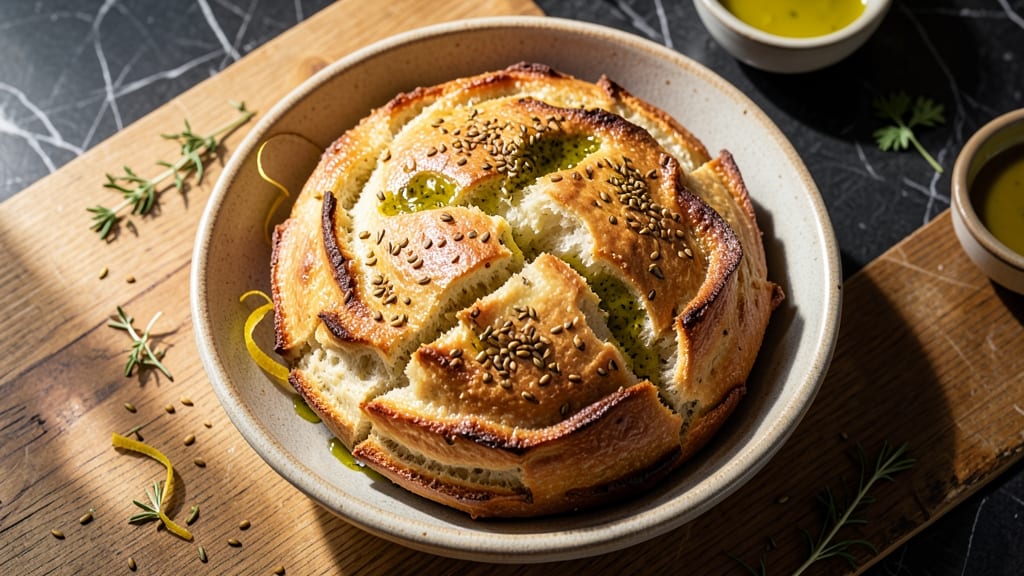
Ana's fasting bread recipe delivers light, airy loaves without yeast, perfect for sacred fasting traditions. This recipe honors centuries-old customs while delivering a bread that's tender, flavorful, and free from animal products.
The secret lies in a simple yet effective chemical leavening method that creates that signature airy texture without yeast or eggs.
Traditionally prepared during Lent and Ash Wednesday, this bread reflects the simplicity and humility of fasting periods. Using just flour, olive oil, and a touch of baking soda, it captures the essence of traditional fasting breads while being completely vegetarian and often vegan.
The dough develops naturally through the chemical reaction, eliminating the need for lengthy proofing times.
What you'll achieve is a loaf with a delicate crumb and subtle olive oil richness that pairs beautifully with soups, stews, or simply on its own. The bread remains moist for days, making it ideal for meal prep and perfect for sharing during communal fasting meals.
This recipe preserves tradition while adapting to modern kitchens.
The process is straightforward: mix, shape, and bake in just 30 minutes of active time, with minimal cleanup. Each loaf carries the spiritual significance of fasting while delivering exceptional taste. Here's how to create this meaningful tradition in your own kitchen.
Ingredients for ana's fasting bread
Nine essential ingredients transform into sacred, airy loaves without yeast or eggs.
| Ingredient | Amount | Notes |
|---|---|---|
| All-Purpose Flour 🌾 | 3 cups | Sifted for optimal texture |
| Extra-Virgin Olive Oil 🫒 | ½ cup | High-quality, fruity variety |
| Water 💧 | 1 ¼ cups | Room temperature preferred |
| Baking Soda 🧂 | 1 ½ tsp | Pure, fine-grained preferred |
| Fine Sea Salt 🧂 | ½ tsp | Diamond Crystal preferred |
| Ground Fennel Seed 🌿 | ½ tsp | Optional, for traditional flavor |
| Ground Anise Seed 🌿 | ¼ tsp | Substitute for fennel if unavailable |
| Sesame Seeds 🌱 | 1 tbsp | Toasted for garnish and crunch |
| Poppy Seeds 🌱 | 1 tbsp | Optional traditional garnish |
| Cornmeal 🌽 | 2 tbsp | For dusting baking pans |
The flour forms the foundation of this bread, so King Arthur or Caputo Tipo 00 yield exceptional results for their protein content. Whole Foods or specialty Italian markets carry these premium options, though all-purpose flour works in a pinch. Fennel and anise seeds—traditional in fasting breads—can be found in the spice aisle at Penzeys or Whole Foods. For the olive oil, California-based brands like Corto or Filippo Berio offer the fruity profiles that elevate this bread's subtle richness. Always measure baking soda by weight if possible—spoon measurements can vary dramatically.
No fennel seeds? Anise seed at equal measure delivers similar warmth. Substitute avocado oil for olive oil if preferred, though the flavor profile shifts slightly. For a gluten-free adaptation, King Arthur gluten-free flour blend works well with a 1:1 ratio, though texture will differ. The cornmeal dusting prevents sticking—stone-ground cornmeal adds a subtle nuttiness. Store-bought sesame and poppy seeds should be toasted in a dry pan for 30 seconds before using to enhance their flavor. Baking soda loses potency over time, so check the date—it should be fresh for optimal rise.
This bread stays moist for 4-5 days when wrapped in a linen cloth at room temperature. For longer storage, freeze individual loaves wrapped in parchment for up to 3 months. The chemical leavening means no refrigeration is needed—unlike yeast breads, this maintains its delicate crumb at room temperature. For serving, brush warm loaves with a thin layer of olive oil and sprinkle with toasted seeds immediately after baking. The seeds can also be mixed into the dough for a nutty crunch throughout each slice.
Why You'll Love This Recipe
- No-Fuss Mixing: I swear by this recipe because it’s just three ingredients plus water—no yeast, no kneading, no waiting around. Honestly, the only tools I use are a bowl and a spoon. That’s it. The olive oil keeps it tender without needing butter, and the baking soda gives it a light lift that’s almost magical.
- Salted Simplicity: Between us, this bread is ridiculously good for how little it takes. The fine sea salt isn’t just for flavor—it cuts through the richness of the olive oil, making every bite crisp at the edges and soft inside. I’ll be real: I’ve made it plain, toasted it, even dipped it in olive oil like a quick bruschetta. It’s that good.
- Meal Prep MVP: This bread stays fresh for days—no sad, stale slices here. I bake a big batch on Sundays, and it’s perfect for sandwiches, toast, or even crumbled over salads. Here’s what sold me: it’s the only bread I can freeze without it turning into a hockey puck. Just thaw and enjoy.
- Budget Hero: All-purpose flour, olive oil, and salt? That’s it. No fancy ingredients, no markup—just real, affordable basics. I make a loaf for under $2, and it feeds my family for days. Plus, the olive oil adds richness without needing expensive add-ins. My secret weapon for stretching groceries without sacrificing taste.
Step-by-step instructions for ana's fasting bread
This no-yeast method delivers a light, airy loaf in under an hour with minimal effort.
Combine Wet Ingredients for Perfect Texture
In a large mixing bowl, whisk together the 0.5 cup extra-virgin olive oil and 1.25 cups water until fully emulsified. The oil should break into tiny droplets that disappear into the water, creating a smooth base. This step ensures even moisture distribution throughout the batter, which is critical for that signature light crumb structure.
Next, add the 1.5 teaspoons baking soda and 0.5 teaspoon fine sea salt. Stir vigorously for 30 seconds until completely dissolved. The baking soda will begin to react immediately—you'll notice tiny bubbles forming on the surface. This chemical reaction is what creates the bread's signature lift without yeast. Let the mixture sit for 2 minutes while you prepare the dry ingredients.
Incorporate Dry Ingredients with Precision
In a separate bowl, sift together the 3 cups all-purpose flour, 0.5 teaspoon ground fennel seed, and 0.25 teaspoon ground anise seed. Sifting prevents clumping and ensures even distribution of those aromatic seeds. Gently fold this dry mixture into the wet ingredients using a rubber spatula, cutting through the center and folding from the bottom up.
Mix just until combined—you should still see some flour streaks. Overmixing develops gluten, which would make the bread dense rather than light and airy. The batter should be thick but pourable, similar to pancake batter. If it's too stiff, add 1-2 tablespoons of water; if too thin, add 1 tablespoon of flour. This balance is crucial for the bread's final texture.
Prepare the Pan for Optimal Rise
Preheat your oven to 375°F. Lightly grease a 9x5-inch loaf pan with olive oil, then sprinkle in the 2 tablespoons cornmeal. Tap the pan gently to distribute the cornmeal evenly—this prevents sticking and creates a crisp bottom crust. The cornmeal also adds a subtle nutty flavor that complements the anise and fennel notes.
Pour the batter into the prepared pan and smooth the top with a spatula. Tap the pan firmly on the counter 3-4 times to eliminate any air pockets. This step ensures even rising and prevents a dense center. The batter should reach about ¾ full of the pan—don't overfill, as the bread will rise significantly during baking.
Bake to Golden Perfection
Bake for 45-50 minutes until the top is deep golden brown and a toothpick inserted in the center comes out clean. The bread is done when it springs back slightly when pressed in the center—this indicates proper doneness. If the top browns too quickly, tent loosely with aluminum foil after 30 minutes to prevent over-browning while allowing the bread to continue rising.
During the last 5 minutes of baking, toast the 1 tablespoon sesame seeds and 1 tablespoon poppy seeds in a dry skillet over medium heat until fragrant. Immediately sprinkle them over the hot bread as it comes out of the oven. These seeds add texture contrast and visual appeal, while their toasted aroma enhances the bread's overall flavor profile.
Cool and Serve for Maximum Flavor
Allow the bread to cool in the pan for 10 minutes, then transfer to a wire rack. This gradual cooling prevents the bread from becoming gummy in the center. For best results, serve the bread at room temperature—this allows the flavors to fully develop and the crumb to reach its optimal texture.
The bread should have a crisp exterior with a tender, slightly chewy interior. Each slice should reveal an open, airy crumb with visible pockets from the baking soda reaction. Store any leftovers wrapped in a clean kitchen towel at room temperature for up to 3 days, or freeze for longer storage. The seeds will maintain their crunch even after reheating.
Pro Tips For Making Ana'S Fasting Bread
- Measure Flour by Weight: This recipe demands precision—don’t scoop flour from the bag or pack it into cups. Use a kitchen scale for 350g (or 2¾ cups lightly spooned and leveled). I learned this the hard way when my bread came out dense and gummy; the extra flour absorbs more water, making the texture lighter and more consistent.
- Whisk the Baking Soda: Sprinkle the baking soda directly into the flour, then give the dry ingredients a quick whisk before adding liquids. This ensures even distribution—no clumps means no random pockets of flatness in your bread. I used to just dump it in, and half the time, I’d get a sad, uneven rise.
- Let the Dough Rest: After mixing, let the batter sit for 10 minutes before baking. This gives the baking soda time to fully activate and the flour to hydrate properly. I was skeptical until I tried it—now my bread has a better crumb and stays moist longer. (Yes, even if you’re impatient like me.)
- Use Warm Water: The water should be warm (around 85°F/30°C)—not hot, not cold. Too cold and the baking soda won’t activate; too hot and the bread will taste off. I keep a thermometer handy now, but if you don’t, just dip your finger in—it should feel like a warm bath, not a sauna.
Essential equipment for great ana's fasting bread
Mixing Essentials
Your first must-have is a large mixing bowl with a capacity of at least 5 quarts—I prefer Le Creuset stoneware for its heat retention and non-reactive surface.
A whisk with a 12-inch handle ensures thorough emulsification of the olive oil and water, while a rubber spatula (like OXO Good Grips) prevents scratching your bowl during folding.
For precision, a small digital scale (I use Escali Primo) helps measure the baking soda accurately—spoon measurements can vary wildly. 🌾
Baking Tools
A 9x5-inch loaf pan is non-negotiable—Nordic Ware Natural Aluminum is my go-to for even heat distribution and easy release. For dusting, keep stone-ground cornmeal in a small jar near your baking station.
A lightweight silicone spatula helps smooth the batter without leaving marks. For toasting seeds, a small nonstick skillet (like Calphalon Classic) prevents burning while enhancing their flavor. 🔥
Precision Measuring
Invest in gram-scale measuring cups for dry ingredients—Weigh Scale Kitchen offers affordable options that fit in your pantry. A fine-mesh sifter (I use OXO Good Grips) ensures even distribution of flour and seeds, preventing clumps that ruin texture.
For liquid measurements, a clear glass measuring cup with milliliter markings helps track water and oil ratios precisely. The baking soda should be measured by weight if possible—1.5 teaspoons by volume can vary by up to 0.3 grams between brands. 🧂
Optional Upgrades
For seed enthusiasts, a small cast-iron skillet (like Lodge) gives the best toasted aroma to sesame and poppy seeds. A wire cooling rack (I love OXO’s collapsible design) prevents soggy bread by allowing airflow.
For storage, a linen bread bag keeps loaves fresh longer than plastic—Amazon Basics offers affordable options. If you bake frequently, a digital oven thermometer (like Thermoworks Oven Thermometer) ensures your oven hits 375°F accurately, critical for even rising. ✨
Nutrition facts
Frequently asked questions
Why does this fasting bread use baking soda instead of yeast?
This recipe relies on baking soda for a chemical reaction that creates lift without yeast, aligning with traditional fasting practices. The baking soda reacts with the acidic water and olive oil to produce carbon dioxide bubbles, giving the bread its signature airy texture in just 45-50 minutes—perfect for sacred fasting periods where quick preparation matters.
Can I make this bread without olive oil?
Yes, but the flavor will change slightly. Use avocado oil or light vegetable oil in equal amounts. For a more traditional fasting version, some cultures use rendered vegetable oil instead. The key is maintaining 0.5 cup total of fat for proper texture.
What makes this bread suitable for fasting traditions?
This recipe contains no animal products, yeast, or eggs—key components excluded during many fasting periods. The simple ingredients (flour, olive oil, water, baking soda) reflect the humility of fasting traditions while delivering excellent flavor and texture. It's also naturally vegan and gluten-free when using appropriate flour substitutes.
How do I prevent my bread from tasting flat or dense?
Overmixing is the #1 cause of dense bread. Mix just until combined (about 10-12 strokes with a spatula). Also ensure your baking soda is fresh—old baking soda loses potency. For extra lift, add 1 teaspoon apple cider vinegar to the water before mixing to enhance the chemical reaction.
Can I make this bread in a different shape?
Shape the batter into free-form rounds for focaccia-style bread or divide into small portions for bun-sized rolls. For a traditional fasting shape, try forming into a cross-topped loaf (common in Ash Wednesday breads). Just reduce baking time by 5-10 minutes for smaller shapes.