
Side Dishes
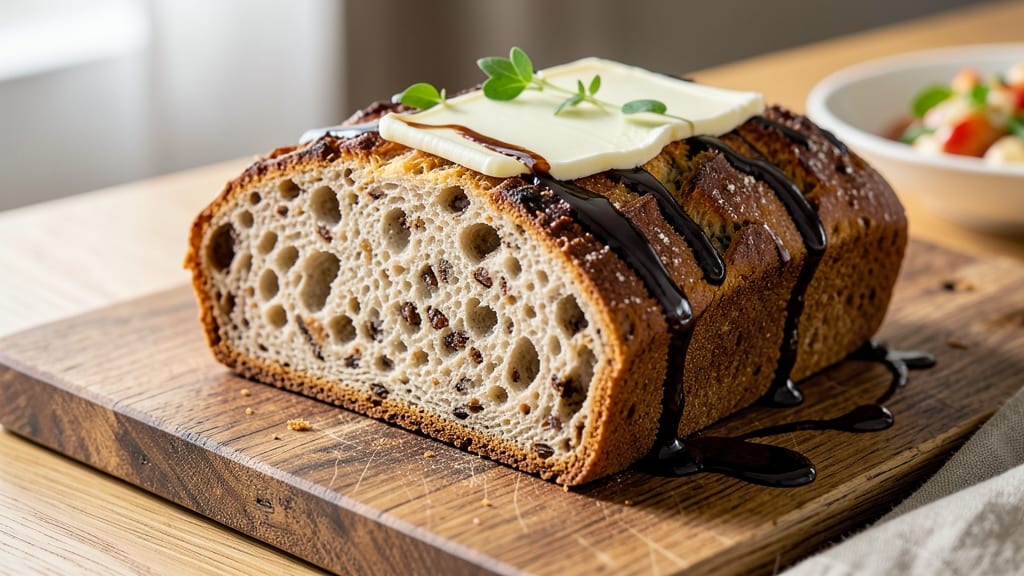
American rye bread delivers that perfect balance of hearty texture and deep molasses caramel flavor that makes every slice unforgettable. 🔥 The secret lies in a proper sour rye starter that builds complexity over time, paired with a crust that develops a satisfying crunch while keeping the interior tender.
This recipe bridges traditional techniques with modern convenience, ensuring you get authentic flavor without spending hours in the kitchen.
The process begins with creating a robust rye starter—this is where the bread develops its signature tang and depth. From there, we incorporate whole grains and seeds for texture while keeping the dough manageable for home baking.
The key to success is patience: letting the dough rest and proof properly ensures a light, airy crumb that doesn't compromise on that signature rye density.
What you'll end up with is a loaf of bread with a dark, crackling crust that gives way to a moist, slightly sweet interior infused with molasses caramel notes.
The aroma alone will have everyone gathering around the table, and each slice offers that perfect combination of chewiness and tenderness that defines great rye bread.
Whether you're serving it with corned beef, using it for sandwiches, or simply enjoying it with butter, this recipe delivers restaurant-quality results at home. The best part? You can adapt it with optional seeds or caraway for extra authenticity while keeping the process straightforward enough for any home baker.
Ingredients for american rye bread
Get ready to transform simple pantry staples into a loaf of rye bread with that signature molasses caramel depth and perfect crunch.
| Ingredient | Amount | Notes |
|---|---|---|
| Rye Sour Starter 🍞 | 1 cup | Active, bubbly starter |
| All-Purpose Flour 🌾 | 2 cups | For structure and lightness |
| Dark Rye Flour 🌾 | 1 ½ cups | For deep flavor and color |
| Unsalted Butter 🧈 | ½ cup | Cold, cubed for flavor |
| Molasses 🍯 | ¼ cup | Unsulphured for richness |
| Active Dry Yeast 🍄 | 2 tsps | Or 1 packet instant yeast |
| Granulated Sugar 🍬 | 1 tbsp | Feeds yeast for rise |
| Warm Water 💧 | 1 ¼ cups | 110°F for yeast activation |
| Sea Salt 🧂 | 1 ½ tsps | Diamond Crystal preferred |
| Sunflower Seeds 🌻 | ¼ cup | Optional for texture |
| Sesame Seeds 🌿 | 1 tbsp | Optional for crunch |
| Caraway Seeds 🌱 | 1 tsp | Optional for authenticity |
| Cornmeal 🌽 | 2 tbsp | For dusting baking sheet |
The rye sour starter is where the magic happens—this is what gives your bread that signature tang and complexity. If you don't have one already, start one 3-5 days ahead using equal parts dark rye flour and water. Look for King Arthur or Bob's Red Mill for the best quality rye flour. The starter should be bubbly and smell tangy before using. For extra flavor, I always add 1 tsp of molasses to my starter when feeding it. If you're short on time, a store-bought sourdough starter works too, but it won't have that same deep rye flavor.
No dark rye flour? Pumpernickel rye flour is a great substitute, though it'll be slightly lighter in color. Short on molasses? Maple syrup or honey (if not vegan) works in a pinch, but molasses gives that authentic caramel note. The sunflower and sesame seeds are totally optional but add amazing texture—Trader Joe's has great bulk bins for these. If you want to go all-out for authenticity, caraway seeds are a must, but they're optional if you prefer a simpler flavor. For the yeast, make sure it's fresh—if it doesn't foam when mixed with warm water, toss it and open a new packet.
This dough needs patience—let it rise until it's 50% larger, which could take 1-2 hours. For the molasses and butter, keep them cold until the last possible moment to prevent the dough from getting too sticky. Once baked, let the loaf cool completely on a wire rack—at least 2 hours—before slicing, or it'll turn gummy. Store wrapped in a clean kitchen towel for 3-4 days at room temperature, or freeze slices for up to 3 months. Trust me, the flavor only gets better the next day as the molasses caramelizes further.
Why You'll Love This Recipe
- No-Knead Magic: I swear by this dough—just mix, wait, and bake. The rye sour starter does all the heavy lifting while you sip coffee.
- Molasses-Kissed Crust: That dark rye flour and molasses combo? Deep, caramelized sweetness with every bite. It’s the kind of flavor that makes you slow down.
- Weeknight Workhorse: Slice it for sandwiches, toast it for breakfast, or pack it for lunch. Honestly, I’ve even used it as a pizza crust when I’m lazy.
- Budget-Friendly Staple: A loaf costs pennies to make and lasts days. The butter keeps it rich without breaking the bank—my wallet thanks me every time.
Step-by-step instructions for American rye bread with molasses crunch
This dough is a flavor powerhouse—let's build it with patience and precision for that perfect balance of sweet, tangy, and crusty.
👨🍳 Step 1: Activate the Rye Sour Starter
In a medium bowl, combine the 1 cup Rye Sour Starter with 1.25 cups warm water (110°F) and 1 tbsp granulated sugar. Stir gently until everything dissolves completely—you want a smooth, bubbly mixture that looks like thick honey. Let this sit at room temperature for 30 minutes while you prepare the rest.
Here's the thing—your starter should be active with visible bubbles rising to the surface. If it's sluggish, give it another 10 minutes of warmth (place the bowl near a warm oven with the light on). The starter is the soul of this bread, so don't rush this step. You'll know it's ready when it's doubled in size and has that effervescent, almost frothy texture.
👨🍳 Step 2: Mix the Dough Base
In a large stand mixer fitted with the dough hook, combine the 2 cups all-purpose flour, 1.5 cups dark rye flour, 2 tsps active dry yeast, and 1.5 tsps sea salt. Mix on low speed for 30 seconds to blend the dry ingredients evenly. This creates a uniform base before we add the wet components.
Add the activated starter mixture, 0.5 cup cold cubed unsalted butter, and 0.25 cup molasses to the mixer. Mix on medium speed for 3-4 minutes until the dough begins to pull away from the sides of the bowl and forms a shaggy mass. The molasses will make this dough sticky—don't panic, that's normal. If it's too wet, add 1 tablespoon all-purpose flour at a time until it comes together.
🥘 Step 3: Knead and Develop Gluten
Continue mixing on medium speed for another 5-7 minutes until the dough becomes smooth and elastic. You'll see it stretch and snap back when you poke it—this is gluten development in action. The dough should feel slightly tacky but not sticky to the touch. If it's still too wet, add 1 more tablespoon flour and knead for another minute.
This is where the magic happens—the gluten network forms that will give your bread its structure. Real talk: I've learned the hard way that under-kneaded rye dough leads to dense bread. Press the dough gently with your finger—it should spring back slowly rather than immediately. Once it passes this test, you're ready for the next stage.
⏰ Step 4: First Rise and Seed Prep
Shape the dough into a loose ball and place it in a lightly oiled bowl. Cover with a damp kitchen towel and let it rise in a warm place for 1-2 hours, or until it has nearly doubled in size. The warm environment helps the yeast work efficiently—your kitchen counter near the oven (with the light on) works perfectly.
While the dough rises, toast the sunflower seeds, sesame seeds, and caraway seeds in a dry skillet over medium heat for 2-3 minutes until fragrant. Let them cool completely before using—this enhances their flavors and prevents them from cooking in the oven. Keep them in a small bowl nearby for the final step.
🔥 Step 5: Shape, Proof, and Bake
Turn the risen dough onto a lightly floured surface and gently shape it into a 9x5-inch loaf pan. Press the toasted seeds into the top of the dough, creating a beautiful textured crust. Dust the pan generously with 2 tbsp cornmeal to prevent sticking—this creates that classic crusty bottom we all love.
Cover the loaf with the damp towel again and let it proof for another 30-45 minutes until it rises about 1 inch above the pan. Preheat your oven to 375°F while the dough proofs. When ready, bake for 40-45 minutes until the top is deep golden brown and the internal temperature reaches 190°F. The crust should sound hollow when tapped on the bottom.
Let the bread cool in the pan for 10 minutes, then transfer to a wire rack. The crust will continue to crisp up as it cools—this is when those beautiful caramelized molasses notes develop. Slice it thick and enjoy the perfect balance of sweet, tangy, and crusty goodness that makes this American rye bread so special.
Pro Tips For Making American Rye Bread
- STIR THE STARTER LONG: The rye sour starter’s tang comes from oxygen, not just time—give it a 10-minute vigorous stir with a wooden spoon before measuring. I used to just scoop it in, and the bread always tasted flat; this step wakes up the wild yeast hiding in the depths.
- WEIGH THE DARK RYE: Scooping dark rye flour leads to inconsistent batches—pack it lightly into the measuring cup and level it off, then weigh it. That dense, coarse flour clumps like crazy, and you’ll end up with either a brick or a crumbly mess. (Yes, even if you’re impatient like me.)
- DON’T SKIP THE COLD FERMENT: Let the shaped loaf chill in the fridge overnight—this isn’t optional. The gluten relaxes, the flavors meld, and the oven spring becomes predictable. I learned this the hard way after a batch collapsed into a sad, dense pancake. (Your future self will thank you.)
- BUTTER IN LAYERS, NOT LUMPS: Cut the cold butter into small cubes and fold them into the dough early, letting them distribute evenly. Dumping in softened butter at the end guarantees pockets of richness and a gummy texture. Sounds weird, but it works: the butter melts just enough to coat the flour without disappearing.
Dietary considerations for this dish
Gluten-Free Adaptations
For gluten-free bakers, replace the all-purpose and dark rye flours with a 1:1 gluten-free flour blend like Bob's Red Mill or King Arthur. Use 1 cup gluten-free blend plus 1.5 cups dark rye flour substitute (such as certified gluten-free rye flour from Schar or Caputo).
Add 1 extra tablespoon of xanthan gum to improve elasticity. The molasses and butter ratios stay the same, but expect a denser texture—this is normal with gluten-free rye. 🌱
Vegan-Friendly Swaps
To make this bread vegan, replace the unsalted butter with ½ cup vegan butter (like Miyoko's or Earth Balance) or ½ cup coconut oil, solidified. For the yeast activation, use 1 tbsp maple syrup instead of granulated sugar.
The molasses remains the same, but check labels to ensure it's vegan (unsulphured is typically fine). The flavor will still be rich and caramelized, just without dairy. 🥥
Low-Sugar Options
Reduce the molasses to 1 tablespoon and replace the remaining 1.5 tablespoons with unsweetened applesauce or mashed banana for moisture. Cut the granulated sugar to ½ tablespoon and add ½ teaspoon stevia powder if you want to maintain some sweetness.
The bread will be less sweet but still retain its deep, tangy rye character. 🍎
Allergen Considerations
For nut-free kitchens, omit the sunflower and sesame seeds or use poppy seeds instead. If you're avoiding gluten and nuts, double-check all flour blends for cross-contamination warnings. For soy-free versions, ensure your butter and seeds are soy-free (many brands use soy lecithin as an emulsifier).
Always verify labels, especially for dark rye flour and seeds. 🚫
Keto-Friendly Version
This recipe isn't naturally keto, but you can create a low-carb version by replacing the flours with 1.5 cups almond flour and ½ cup coconut flour. Reduce the molasses to 1 tablespoon and use 1 egg white (whisked) instead of yeast for rise.
The texture will be more cake-like than bread-like, but it will satisfy keto cravings with its molasses depth. 🥜
Storage Adjustments
Gluten-free and keto versions stay fresh for only 2-3 days at room temperature due to their denser texture. For longer storage, slice and freeze portions in airtight containers for up to 2 months.
Reheat gluten-free slices at 300°F for 5 minutes to restore crispness, while keto versions reheat best in a toaster oven for 2-3 minutes. 🧊
Nutrition facts
Frequently asked questions
What makes American rye bread different from European rye?
American rye typically uses a mix of rye and wheat flours for a lighter crumb, while European versions rely more on dark rye flour for a denser, tangier texture. This recipe balances both with 1.5 cups dark rye flour and 2 cups all-purpose flour for a perfect sweet-tangy profile. The molasses adds that signature caramel depth found in American-style loaves.
Can I make this without a rye sour starter?
Yes! Use 1 cup active sourdough starter instead, though the flavor won't be as authentic. For a quick fix, add 1 tbsp vinegar to the dough for tanginess, but the starter is key for that deep rye character. If you're short on time, 1.5 tsps instant yeast can work, but expect less complexity.
Why did my bread turn out dense?
Under-kneading or skipping the 1-2 hour rise are common culprits. Rye dough needs time to develop gluten—knead until it springs back slowly when poked. Also, ensure your yeast is fresh and the water is 110°F (not hot). Overmixing or underproofing can also cause density. Try shaping into a round boule next time for better oven spring.
How do I store leftover rye bread?
Wrap cooled slices in a clean kitchen towel and store at room temperature for 3-4 days. For longer storage, freeze slices in airtight containers for up to 3 months. Toast frozen slices directly from the freezer for best texture. The crust stays crispy when reheated in a 350°F oven for 5 minutes.
Can I add other seeds besides sunflower and sesame?
Try flaxseeds for nuttiness or pumpkin seeds for extra crunch. Toast them first to enhance flavor. For a savory twist, add 1 tsp dried rosemary to the dough. Just reduce other seeds by 1 tbsp to maintain texture balance. Always toast seeds before using to prevent sogginess.