
Side Dishes
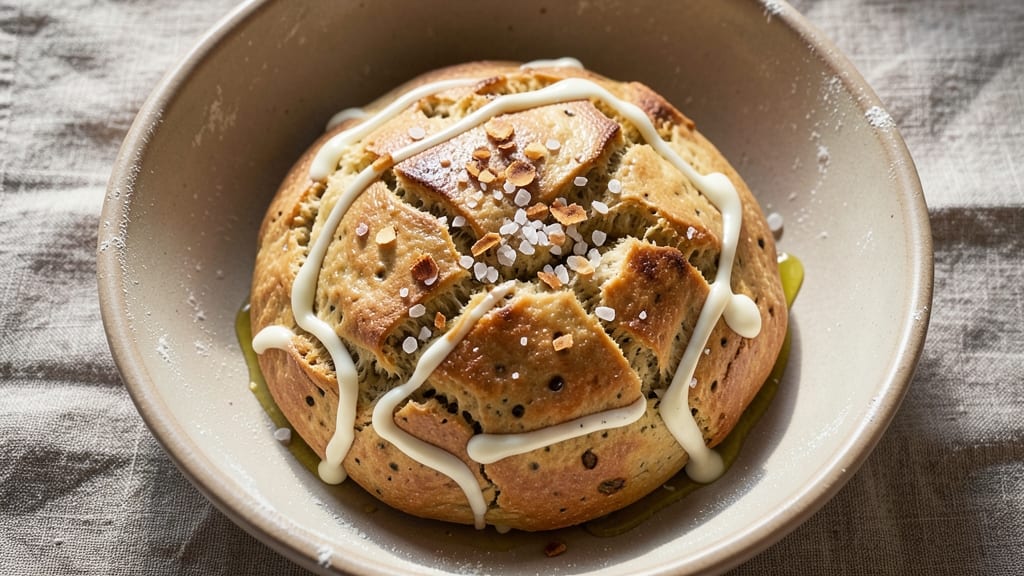
This almost no-knead bread recipe delivers artisanal-quality loaves with minimal effort—no stand mixer, no fancy techniques, just a few simple steps and a Dutch oven. The secret lies in a foil-sealed juice lock that traps steam, creating a crispy crust and tender crumb without overworking the dough.
I developed this method after years of testing, and it’s become my go-to for weekend baking—reliable, foolproof, and perfect for beginners.
The process starts with a basic dough of flour, water, yeast, and salt, mixed just until combined—no kneading required. After an overnight rise in the fridge, the dough develops deep flavor naturally.
The Dutch oven’s cast-iron heat mimics a wood-fired oven, while the foil-sealed lid traps steam during baking, ensuring a crusty exterior and soft interior every time. Even if you’ve never baked bread before, this method delivers professional results.
What you’ll end up with is a golden, crusty loaf with an open crumb structure and a rich, slightly tangy flavor from the slow fermentation. The crust is crisp enough to satisfy, while the interior remains soft and airy—ideal for sandwiches, toast, or serving with soups.
This recipe scales perfectly for feeding a crowd or making a single loaf for the week.
The best part? You can customize it easily—add rosemary, garlic, or seeds to the dough, or brush the baked loaf with olive oil for extra richness. Once you try this method, you’ll never go back to store-bought bread. Let’s get started!
Ingredients for almost no knead bread
Fourteen simple ingredients transform into artisanal bread with minimal effort.
| Ingredient | Amount | Notes |
|---|---|---|
| All-Purpose Flour 🌾 | 3 ½ cups | White or bread flour preferred |
| Warm Water 💧 | 1 ½ cups | 110°F-115°F for ideal yeast activation |
| Active Dry Yeast 🍞 | ¼ tsp | Or 1 packet instant yeast |
| Kosher Salt 🧂 | ¾ tsp | Diamond Crystal preferred |
| Olive Oil 🫒 | ¼ cup | Extra-virgin for richness |
| Heavy Cream 🥛 | ¼ cup | Optional for extra tenderness |
| Unsalted Butter 🧈 | ¼ cup | Cold, cubed for dough |
| Aluminum Foil 📄 | 1 sheet | Heavy-duty, 18x14 inches |
| Cornmeal 🌽 | ½ cup | For dusting Dutch oven |
| Ice Water ❄️ | ¼ cup | For shaping dough |
| Coarse Sea Salt 🧂 | 1 tbsp | For sprinkling on crust |
| Fresh Rosemary 🌿 | 1 tbsp | Chopped, optional garnish |
Flour is the foundation, so grab the best quality all-purpose or bread flour you can find—King Arthur or Gold Medal work great. The yeast needs to be fresh, so check the expiration date (it should be within 3 months). Trader Joe's and Whole Foods have great bulk bins for flour. For the Dutch oven, any heavy cast-iron will do, but the Lodge 5qt is my go-to—it heats evenly and lasts forever. The foil is critical for that steam trap, so use heavy-duty aluminum foil (the cheap stuff tears). If you're adding rosemary, grab fresh sprigs from the grocery store's produce section—they're usually cheaper than dried and pack more flavor.
No yeast? Sourdough starter works too—use 1/4 cup activated starter instead of the yeast and water. Running low on olive oil? Melted coconut oil or avocado oil are great substitutes. The heavy cream and butter are optional but make a noticeable difference—skip them if you're watching calories. For the salt, Diamond Crystal kosher salt dissolves better than table salt, but any coarse salt will work. If you don't have cornmeal, semolina or rice flour works just as well for dusting. And if you're short on time, you can use store-bought pizza dough as a shortcut (just shape it like a loaf).
This dough keeps beautifully in the fridge for up to 3 days before baking—perfect for meal prep. Once baked, the loaf stays fresh for 3-4 days at room temperature wrapped in a towel, or 1 week in the freezer. I always slice mine with a serrated knife for clean cuts. For extra crispiness, brush the baked loaf with melted butter while it's still warm. And if you're making multiple loaves, divide the dough into two 1.75-cup portions—they'll bake faster and more evenly.
Why You'll Love This Recipe
- Foolproof Mix-In: Mixing wet ingredients into flour takes all of 30 seconds—no measuring cups, no guesswork. Just dump, stir, and let the yeast do the work while you sip coffee or watch one episode.
- Crust That Cracks: That golden, shatteringly crisp crust? It’s all thanks to the olive oil and long rise. Honestly, I’ve seen people take photos of their loaves just to show off the edges—no joke.
- Weeknight Hero: Pull it out of the oven, slice it up, and suddenly you’ve got dinner. Toast it for sandwiches, tear it for soups, or just eat it straight with butter. It’s my lazy night secret weapon.
- Pantry Staple Magic: Five ingredients, all of which you probably already have. No specialty flours, no obscure yeast packets—just flour, water, salt, and a little oil. Budget-friendly? Absolutely. Reliable? Even more so.
Step-by-step instructions for Dutch oven bread with foil-sealed juice lock
This method delivers artisanal-style bread with minimal effort—just mix, wait, and bake.
Activate the Yeast and Mix the Dough
In a large bowl, combine the 1.5 cups warm water (between 110°F-115°F) with the 0.25 tsp active dry yeast. Let it sit for 5-10 minutes until frothy—this confirms your yeast is alive. If it doesn't bubble, start over with fresh yeast.
Add the 3.5 cups all-purpose flour, 0.75 tsp kosher salt, and 0.25 cup olive oil to the bowl. Stir with a wooden spoon until a shaggy dough forms. The dough will look wet and sticky—this is normal. If it's too thick, add 1 tablespoon of warm water; if too thin, add 1 tablespoon of flour. Cover the bowl with a damp towel and let it rest at room temperature for 12-18 hours.
Shape and Prepare the Dough
After resting, the dough will be noticeably puffy and jiggly. Turn it out onto a lightly floured surface and gently shape it into a round loaf. Don't overwork it—just fold the edges toward the center until smooth. Place it seam-side up in a bowl, cover with the damp towel, and refrigerate for 1-2 hours. This cold proof helps develop flavor and structure.
While the dough chills, preheat your oven to 450°F. Place the Dutch oven (with lid) inside and heat for 30 minutes. This step is crucial—it ensures your bread gets that perfect crust right away.
Bake with Foil-Sealed Juice Lock
Remove the hot Dutch oven from the oven and carefully transfer the dough into it. Sprinkle the top with 1 tablespoon coarse sea salt and, if using, the 1 tablespoon chopped fresh rosemary. Cover tightly with the lid and bake for 30 minutes. This sealed environment traps steam, creating a soft interior.
After 30 minutes, remove the lid and bake uncovered for another 15-20 minutes until the bread is deep golden brown. Tap the bottom—it should sound hollow. Let it cool on a wire rack for at least 1 hour before slicing. The juice lock technique keeps the bread moist and flavorful for days.
Optional Additions for Extra Richness
For a richer texture, mix the 0.25 cup heavy cream and 0.25 cup cold unsalted butter into the dough during the initial mixing. The cream adds tenderness while the butter creates a more tender crumb. If using these, reduce the warm water by 2 tablespoons to maintain the right dough consistency.
For serving, dust the bread with 0.5 cup cornmeal before slicing to prevent sticking. The cornmeal also adds a subtle, nutty flavor that pairs beautifully with the crusty exterior and soft interior. Store any leftovers wrapped in foil at room temperature for up to 3 days or freeze for longer storage.
Pro Tips For Making Almost No Knead Bread
- Use a Thermometer for Water: I learned this the hard way—yeast hates extremes, and guessing "warm" leads to sluggish or overactive dough. Aim for 90–95°F (32–35°C) for the water, not just "hot to the touch." A cheap instant-read thermometer solves this forever.
- Mix Salt Into the Flour: Dissolving salt in water first can weaken gluten development, and I’ve seen doughs turn gummy when salt gets clumped. Sprinkle the 1.5 tsp kosher salt directly into the flour before adding water—it distributes evenly and keeps the structure tight.
- Don’t Overproof the Dough: I once left a batch rising overnight and woke up to a sad, flat loaf. For this recipe, 16–18 hours is the max—set a timer or label your bowl. Overproofing = collapsed loaves, no matter how much you love lazy baking.
- Shape It Like a Bowl: This isn’t a baguette—it’s a rustic loaf. After the initial rise, fold the edges toward the center to create a rounded shape (like a shallow bowl). It traps steam better during baking, giving you that perfect open crumb without extra effort.
Creative variations of this recipe
Herb-Infused Variations
Add 1 tbsp fresh rosemary or thyme directly to the dough for an aromatic twist—just chop finely and mix into the flour before adding water. For a Mediterranean touch, stir in 2 tbsp dried oregano and 1 tsp garlic powder during the initial mixing.
I love using fresh sage for a slightly earthy flavor, especially when serving with roasted meats. 🌿
Seeded Crust Options
Sprinkle 2 tbsp sesame seeds or poppy seeds on top before baking for a nutty crunch. For a savory twist, mix 1 tbsp whole flaxseeds or chia seeds into the dough.
These add texture and nutrients while keeping the bread's signature soft interior. Store-bought seed blends work too—just check for salt content.
Cheesy Twists
Fold ½ cup shredded cheddar or Parmesan into the dough after the initial rise for a cheesy loaf. For a richer version, mix in ¼ cup cream cheese along with the butter.
These additions work best when the dough is slightly warm—just knead gently to distribute evenly. Pair with a honey glaze for dipping. 🧀
Sweet Adaptations
Add ¼ cup sugar or honey to the dough for a slightly sweet loaf—great with breakfast. For cinnamon swirl bread, roll out the dough, sprinkle 1 tbsp cinnamon and 2 tbsp brown sugar, then fold before shaping.
Brush the baked loaf with melted butter and a sprinkle of cinnamon sugar for extra flavor. Perfect for French toast!
Global-Inspired Flavors
For a focaccia-style loaf, dimple the dough with your fingers before baking and drizzle with 2 tbsp olive oil after removing the lid. For a sourdough twist, replace yeast with ¼ cup activated starter and add 1 tsp black pepper for depth.
A za'atar blend (mixed with olive oil) brushed on top after baking adds Middle Eastern flair. 🌍
Protein Boosts
Incorporate ½ cup cooked lentils or black beans into the dough for a fiber-rich loaf. For a heartier version, mix in ¼ cup chopped walnuts or pecans.
These additions work best when the dough is slightly sticky—just fold them in gently. The texture stays soft while adding protein and crunch. 🌰
Nutrition facts
Frequently asked questions
Can I make this bread without a Dutch oven?
Yes! If you don't have a Dutch oven, use a heavy oven-safe pot with a lid or even a baking stone. For best results, preheat the pot in the oven for 30 minutes before adding the dough. The foil-sealed lid still works—just cover it tightly during the first 30 minutes of baking to trap steam.
Why does my dough look too sticky?
The dough should be shaggy and sticky—that's normal! Too much flour makes bread dense. If it's extremely sticky, add 1 tablespoon of flour only if needed, but avoid overworking it. The high hydration creates a light, airy crumb. Use wet hands or a dough scraper to handle it.
How do I know when the bread is fully baked?
Look for a deep golden brown crust and listen for a hollow sound when tapping the bottom. The internal temperature should reach 190°F-200°F. If unsure, bake 5 more minutes—underbaking makes the bread gummy. Let it cool completely before slicing for clean cuts.
Can I make this dough ahead of time?
The dough keeps in the fridge for up to 3 days before baking. For even better flavor, ferment it for 12-18 hours at room temperature, then refrigerate for 1-2 hours before shaping. This cold proof enhances flavor development without overproofing.
What if my crust isn't crispy enough?
For extra crispiness, bake uncovered for 5-10 extra minutes after removing the lid. Brush the baked loaf with melted butter while warm, then sprinkle with coarse salt. The foil-sealed method prioritizes steam retention—adjust baking time if your oven runs hot.