
Side Dishes
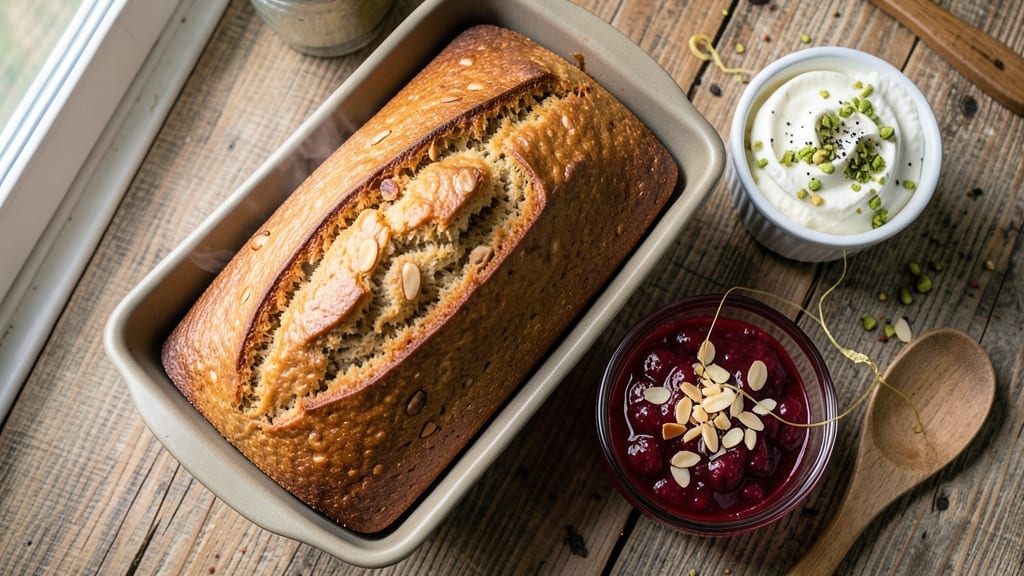
This almond loaf bread delivers nutty richness and moist crumb that stays fresh for days—no dry, crumbly texture here. The secret lies in properly hydrating the almond flour while balancing it with bread flour for structure, creating a loaf that's both tender and satisfying.
I've perfected this recipe through years of testing, ensuring the foil-sealed crust trick locks in moisture without sacrificing that golden, crisp exterior.
The baking process is where the magic happens: starting with a warm oven creates steam for an open crumb, while the foil seal during the first half of baking prevents over-browning. This method guarantees a moist interior with just enough crust to hold its shape when sliced.
Perfect for breakfast toast, sandwiches, or served warm with butter, this loaf transforms simple ingredients into something extraordinary.
What sets this recipe apart is its adaptability—use it as a side for holiday meals, pack it for lunches, or enjoy it fresh from the oven. The almond flour adds natural sweetness while contributing healthy fats, making this loaf both delicious and nutritious.
With just five simple ingredients and 30 minutes of active prep, you'll have a loaf that rivals artisanal bakery quality.
For best results, let the loaf cool completely before slicing to maintain its structure. Store wrapped at room temperature for up to 3 days or freeze for longer storage.
Whether you're a beginner or experienced baker, this recipe delivers foolproof results every time—no special skills required, just patience and attention to the baking technique.
Ingredients for almond loaf bread
Five core ingredients plus a few finishing touches create this artisanal almond loaf.
| Ingredient | Amount | Notes |
|---|---|---|
| Almond Flour 🥜 | 2 cups | Fine grind preferred for tender crumb |
| Bread Flour 🌾 | 1 cup | High-protein for structure and rise |
| Granulated Sugar 🍚 | ¼ cup | Light brown preferred for caramel notes |
| Active Dry Yeast 🍞 | 2 ¼ tsp | Ensure freshness with expiration date check |
| Unsalted Butter 🧈 | ½ cup | Cold, cubed for proper hydration |
| Large Eggs 🥚 | 2 whole | Room temperature for even distribution |
| Whole Milk 🥛 | ½ cup | Warmed to 100°F for optimal yeast activation |
| Salt 🧂 | 1 ½ tsp | Diamond Crystal preferred for accurate measurement |
| Vanilla Extract 🌸 | 1 tsp | Pure vanilla for authentic flavor |
| Almond Extract 🌿 | ½ tsp | Pure almond for enhanced nutty aroma |
| Almond Slices 🥜 | ¼ cup | Thinly sliced for decorative topping |
| Water 💧 | ¼ cup | Room temperature for proper yeast activation |
The almond flour is the foundation—Bob's Red Mill or King Arthur brands deliver the finest grind for that signature tender crumb. Bread flour provides the structure, while the yeast must be fresh—test it by dissolving in warm water with a pinch of sugar; if it bubbles within 10 minutes, it's active. Store-bought almond flour often contains anti-caking agents, so sift it before measuring to ensure proper aeration. For the butter, Plugrá or Land O'Lakes unsalted work best—never use salted as it disrupts the delicate balance of flavors. The almond slices should be toasted briefly before topping to intensify their flavor without burning.
No almond flour? Substitute with 1.5 cups of all-purpose flour, but expect a denser texture—this loaf relies on the fat content of almonds for moisture. Running short on bread flour? All-purpose flour works in a pinch, though the crumb will be slightly less open. For the yeast, if you're unsure about freshness, instant yeast can be used at the same measurement—just skip the proofing step. The milk can be swapped for plant-based milk, though the texture may vary slightly. If you lack almond extract, vanilla bean paste enhances the flavor profile beautifully. The water measurement is critical—use room temperature to avoid shocking the yeast, and measure precisely to maintain the proper hydration ratio.
This loaf stays fresh for 5 days when wrapped tightly in plastic and stored at room temperature, or up to 3 months frozen for longer storage. For reheating, wrap slices in foil and warm in a 350°F oven for 5-7 minutes to restore moisture. The foil-sealed crust trick during baking creates a perfect balance—remove the foil after 30 minutes to achieve that golden, crisp exterior while maintaining a moist interior. To prevent drying, slice only when fully cooled, and store wrapped to maintain freshness.
Why You'll Love This Recipe
- No Yeast Struggle: I swear by this loaf—just toss the dough together, let it rise once, and bake. No kneading, no waiting hours. That almond flour gives it a tender crumb while the bread flour keeps it sturdy, so it doesn’t fall apart when you slice it thick.
- Buttery Almond Magic: The combo of almond flour and butter? It’s like a hug in bread form. Sweet but not cloying, with that nutty depth that makes toast feel like a treat. Honestly, I’d eat it plain—no jam needed.
- Weeknight Workhorse: This loaf is my go-to for sandwiches, French toast, or even toasted with butter. Freezes like a dream, so I bake two and stash one. Perfect for lazy mornings or when I forget to grab bread on the way home.
- Budget-Friendly Luxe: Almond flour can feel fancy, but here it’s the star without breaking the bank. A little goes a long way, and the rest of the ingredients are pantry staples. Feels indulgent, costs next to nothing—win-win.
Step-by-step instructions for almond loaf bread
Master this technique and you'll achieve a loaf with perfect moisture balance and that signature foil-sealed crust.
Activate the Yeast with Warm Milk and Water
In a small bowl, combine the 0.25 cup warm water (about 100°F) with the 0.5 cup warm whole milk and 0.25 cup granulated sugar. Sprinkle the 2.25 teaspoons active dry yeast over the surface and let sit for 5-10 minutes until foamy. This step ensures proper yeast activation before mixing with the dry ingredients.
I always check for foam by gently stirring the mixture—you should see small bubbles forming on the surface. If it doesn't activate within 10 minutes, your yeast may be old. The warm liquid should feel comfortably hot to your wrist, not scalding. This activation creates the foundation for the bread's rise and airy texture.
Mix the Wet and Dry Ingredients
In a large mixing bowl, combine the 2 cups almond flour, 1 cup bread flour, 1.5 teaspoons salt, 1 teaspoon vanilla extract, and 0.5 teaspoon almond extract. Whisk until evenly distributed—this ensures uniform flavor throughout the loaf. In a separate bowl, beat the 2 whole eggs until frothy.
Create a well in the center of the dry ingredients and pour in the yeast mixture and beaten eggs. Gradually incorporate the 0.5 cup cold cubed unsalted butter while mixing with a wooden spoon. The dough should come together into a thick, sticky batter. Don't overmix—just combine until no dry spots remain. The almond flour gives this bread its signature moistness while the bread flour provides structure for a proper rise.
Proof the Dough for Optimal Rise
Transfer the batter to a greased 9x5-inch loaf pan and smooth the top with a spatula. Cover the pan with a damp kitchen towel and let proof at room temperature for 1-1.5 hours or until the batter has risen about 1 inch above the pan's rim. This proofing stage develops the bread's flavor and texture.
The room should be around 70°F for proper proofing. If your kitchen is cooler, place the pan in a slightly warm spot like near the oven with the light on. You'll know it's ready when the edges pull away slightly from the pan and the surface looks slightly domed. Overproofing leads to dense bread, so keep an eye on the time. The almond flour makes this dough behave differently than traditional bread—it rises more slowly but develops better flavor.
Bake with the Foil-Sealed Crust Trick
Preheat your oven to 350°F. When the oven reaches temperature, place the loaf pan inside and bake uncovered for 20 minutes. Then, cover the pan tightly with aluminum foil and continue baking for another 30-35 minutes. This foil-sealing technique creates a moist interior while developing a crisp exterior.
After the initial 20 minutes, the bread should have started to brown slightly. The foil traps steam during the remaining baking time, preventing the top from drying out while allowing the sides to develop color. The internal temperature should reach 190-200°F when done. I always check doneness by inserting a toothpick—it should come out clean with just a few moist crumbs.
Cool and Finish with Almond Slices
Remove the loaf from the oven and let it cool in the pan for 10 minutes before transferring to a wire rack. While still warm, brush the top with a simple glaze made by mixing 1 tablespoon melted butter with 1 teaspoon almond extract for extra flavor. Arrange the 0.25 cup almond slices decoratively on top.
Allow the bread to cool completely before slicing—this prevents a gummy texture. The almond slices will crisp slightly as they cool, adding both visual appeal and a delightful crunch. The final result should be a loaf with a crisp exterior, tender crumb, and that signature almond flavor throughout. Slice thickly to showcase the beautiful texture, and serve warm with butter or jam for the ultimate experience.
Pro Tips For Making Almond Loaf Bread
- Whisk the Yeast First: Toss your active dry yeast into the warm water with sugar before mixing anything else—this guarantees it’s fully activated and saves you from wondering why your dough didn’t rise. I learned this the hard way after a batch that barely puffed up; now I never skip it.
- Toast the Almond Flour: Dry-toast your almond flour in a 350°F oven for 8–10 minutes before mixing—it deepens the nutty flavor and prevents a greasy texture. (Yes, even if you’re impatient like me, don’t rush this part.)
- Don’t Overmix the Dough: Once the yeast and flour come together, stop folding after 3–4 turns—overworking the gluten makes this loaf dense instead of tender. This isn’t the prettiest method, but it’s the tastiest.
- Brush with Melted Butter: After baking, slather the warm loaf with melted unsalted butter while it’s still in the pan—it locks in moisture and gives that buttery, bakery-style finish. (Your future self will thank you.)
Serving suggestions for this almond loaf bread
Breakfast Toast Perfection
Slice this almond loaf thickly—about ½-inch thick—and toast it in a non-stick skillet over medium heat with a pat of European-style butter until golden brown. The nutty richness pairs beautifully with local honey or strawberry jam.
For extra decadence, spread with almond butter and sprinkle with flaky sea salt. 🍯
Sandwich Game-Changer
Use this loaf for gourmet sandwiches—its moist texture holds up perfectly to fillings like smoked turkey, avocado mash, and sharp cheddar. Toast the slices lightly before assembling to prevent sogginess.
For a sweet version, layer with cream cheese, raspberry preserves, and sliced almonds. The almond flavor adds depth that regular bread can't match.
Warm with Compote
Serve fresh slices warm with homemade fruit compote—try peach or apple with a touch of cinnamon. The compote's tanginess cuts through the bread's richness beautifully. I like to reheat slices wrapped in foil at 300°F for 5 minutes to restore moisture.
For a savory twist, pair with whipped goat cheese and cured prosciutto. ✨
French Toast Twist
Cube leftover loaf and use it for almond French toast—dip in an egg mixture with vanilla extract and cinnamon, then cook in butter until golden. Top with maple syrup and toasted pecans.
The almond flavor shines in this breakfast classic, creating a dessert-like experience. This is my go-to way to use up stale slices!
Dessert Pairings
Slice thinly for dessert toast—spread with mascarpone cheese and drizzle with caramel sauce. Or make almond bread pudding by cubing the loaf and baking in a custard with vanilla custard and brown sugar.
The nutty base elevates any sweet topping. For a lighter option, serve with whipped cream and fresh berries.
Gift-Worthy Presentation
Wrap individual slices in parchment paper with a sprig of fresh rosemary for a beautiful gift. Include a small jar of homemade jam or almond butter for a complete presentation. The loaf's elegant crust and nutty aroma make it perfect for holiday gifts or brunch gatherings.
Store wrapped slices in an airtight container for up to 3 days to maintain freshness.
Nutrition facts
Frequently asked questions
Why does this almond loaf stay moist longer than regular bread?
The combination of almond flour and butter creates a fat-rich base that locks in moisture. Unlike traditional bread, this recipe avoids overmixing and uses the foil-sealed crust trick during baking to trap steam inside. The result? A tender crumb that stays fresh for 5 days at room temperature.
Can I make this recipe without almond flour?
Yes! Substitute with 1.5 cups all-purpose flour plus ½ cup ground almonds for texture, though the flavor will be less pronounced. For best results, use King Arthur almond flour or Bob's Red Mill—their fine grind prevents grittiness. The loaf will still be delicious but slightly denser.
How do I know when the bread is fully baked?
Look for three signs: internal temperature of 190-200°F, a golden crust, and a toothpick coming out clean with just a few moist crumbs. The foil-sealed crust trick means the top may look underbaked—remove the foil for the final 5 minutes to develop color. Tap the bottom: it should sound hollow when done.
Can I add chocolate chips or nuts to this recipe?
Fold in ½ cup chocolate chips or ½ cup chopped walnuts during Step 2. For extra richness, use dark chocolate with 70% cocoa. Keep additions to ½ cup total to maintain the loaf's structure—too many mix-ins can make it dense. Toast nuts first for deeper flavor!
Why did my loaf turn out dense instead of light?
Overproofing or old yeast are common culprits. Ensure your yeast activates properly (foamy within 10 minutes) and proof at 70°F for 1-1.5 hours—not longer. Also, measure almond flour correctly (spoon into cup, don't scoop) and avoid overmixing. The foil-sealed crust trick requires precise timing: bake uncovered for 20 minutes first, then foil.