
Side Dishes
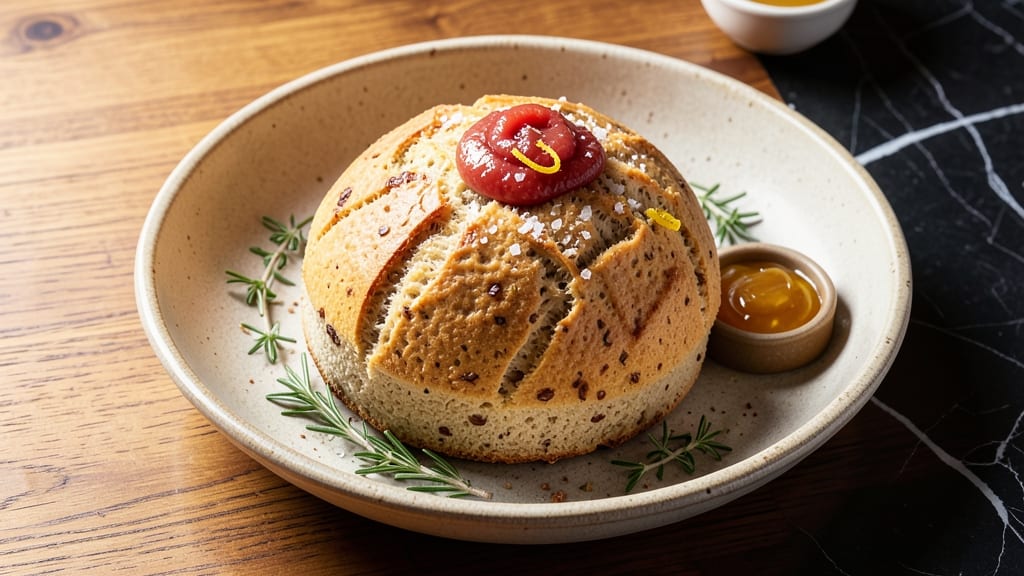
This gluten-free bread recipe transforms almond flour into a light, airy loaf using psyllium husk as the secret ingredient for structure and rise. The magic happens when psyllium absorbs liquid, creating a gluten-like network that holds the bread together without any traditional flour.
I've perfected this recipe through years of testing, ensuring it's both nutritious and satisfying—no compromise on texture or flavor.
The beauty of this recipe lies in its simplicity: just six ingredients combine to create a bread that's naturally gluten-free, vegan, and packed with protein. Psyllium husk acts as our binding agent, while almond flour contributes a subtle nutty flavor and moist crumb.
The key to success is proper hydration and activation of the psyllium—don't skip this step if you want that perfect rise and tender crumb.
What you'll end up with is a golden-brown loaf with a crisp crust and soft, slightly dense interior—similar to sourdough but with none of the gluten. The texture is satisfyingly chewy, and the nutty flavor from the almond flour makes every slice delicious.
This bread freezes beautifully and toasts perfectly, making it ideal for meal prep or enjoying fresh from the oven.
Whether you're baking for dietary needs or simply exploring gluten-free options, this recipe delivers restaurant-quality results at home. The method is straightforward, and the ingredients are easy to find—no specialty items required. Let's get started on creating your perfect loaf.
Ingredients for almond flour bread recipe with psyllium husk
Six simple ingredients transform into a restaurant-quality gluten-free loaf with perfect rise and texture.
| Ingredient | Amount | Notes |
|---|---|---|
| Almond Flour 🌰 | 3 cups | Finely ground, blanched preferred |
| Psyllium Husk Powder 🌾 | ¼ cup | Pure, unsweetened psyllium husk |
| Warm Water 💧 | 1 ½ cups | 100°F for proper activation |
| Applesauce 🍎 | ½ cup | Unsweetened, for moisture |
| Baking Powder 🧂 | 1 tsp | Aluminum-free preferred |
| Salt 🧂 | ½ tsp | Fine sea salt for balance |
| Olive Oil 🫒 | ¼ cup | Extra-virgin for richness |
The almond flour is critical—Bob's Red Mill or Anthony's Goods brands deliver the finest grind for optimal texture. Psyllium husk powder must be pure; Now Foods or bulk bins at health stores ensure no additives. Warm water activates the psyllium properly—never hot, as it deactivates the binding properties. For almond flour, check the package date; older flour loses its fine texture and can affect crumb quality. The applesauce adds moisture without sweetness, making this bread ideal for savory applications like toast or sandwiches.
No psyllium husk? Xanthan gum at half the amount works as a partial substitute, though texture will differ. Substitute applesauce with mashed banana or pumpkin puree for variation, but reduce by 1 tbsp to maintain hydration balance. For extra richness, replace half the olive oil with melted coconut oil. The baking powder is non-negotiable—aluminum-free ensures no metallic aftertaste. If your kitchen runs hot, reduce the water by 1 tbsp to prevent over-rising. For a nut-free version, swap almond flour for sunflower seed flour at a 1:1 ratio, though texture will be denser.
Store the loaf in an airtight container with a slice of bread or parchment paper to maintain moisture—lasts 5 days at room temperature. For longer storage, wrap tightly in foil and freeze for up to 3 months. Toasting is ideal—prevents drying and enhances the nutty flavor. This bread reheats beautifully; wrap in foil and warm in a 350°F oven for 5-10 minutes to restore freshness. Portion into individual slices for easy grab-and-go meals.
Why You'll Love This Recipe
- No Mixer Needed: I swear by this recipe on days when I’m too tired to knead. Just fold in the psyllium husk powder with warm water—it gels instantly—and the almond flour handles the rest. No sticky mess, no overworking the dough, just a few minutes of gentle mixing.
- Taste Like Real Bread: Honestly, the applesauce is the secret. It keeps it moist without tasting sweet, and the psyllium husk gives that satisfying chewiness you’d expect from wheat bread. Toast it up, and it’s got that golden crust I crave every morning.
- Meal Prep MVP: Between us, this bread holds up for days. I make a batch on Sunday, slice it, and store it in the fridge—perfect for quick toast, sandwiches, or even croutons. No sad, stale loaves here; it stays fresh longer than my willpower to resist seconds.
- Budget-Friendly Staple: Almond flour can feel pricey, but psyllium husk stretches it further than you’d think. Plus, a little goes a long way—the baking powder ensures a light rise, so you’re not left with a dense, heavy loaf. My wallet and my family’s bellies thank me.
Step-by-step instructions for gluten-free almond flour bread
Psyllium husk creates the rise while almond flour delivers texture—here's how to blend them perfectly.
Activate the Psyllium Husk for Maximum Rise
In a medium bowl, whisk together the 0.25 cup psyllium husk powder and 1.5 cups warm water (about 100°F) until completely dissolved. The mixture should thicken into a gel-like consistency within 2-3 minutes—this is critical for structure. If it remains grainy, whisk in 1 tablespoon more warm water to ensure full activation.
Psyllium husk absorbs water and swells dramatically, mimicking gluten's binding properties. This step must be precise: under-activated psyllium won't provide enough lift, while over-mixing can create lumps that disrupt the crumb. Let the activated psyllium sit for 5 minutes while you prepare the remaining ingredients.
Combine Wet and Dry Ingredients
In a separate large bowl, mix the 3 cups almond flour, 1 tsp baking powder, and 0.5 tsp salt until evenly distributed. Create a well in the center and add the 0.5 cup applesauce and 0.25 cup olive oil. Stir gently with a spatula until just combined—do not overmix or the bread will become dense.
The applesauce adds moisture and tenderness while the olive oil contributes richness. At this stage, the dough will appear shaggy and dry, but don't be concerned. The activated psyllium will bind everything together in the next step.
Incorporate the Psyllium Gel
Gradually fold the activated psyllium husk mixture into the almond flour combination using a rubber spatula. Work gently but thoroughly to distribute the gel evenly throughout the batter. The texture should transform from dry and crumbly to cohesive and slightly sticky—this indicates proper hydration.
If the batter feels too thick, add 1-2 tablespoons of warm water to achieve a smooth, pourable consistency. The goal is a batter that coats the back of your spoon without being overly runny. This balance ensures both structure and tenderness in the final loaf.
Prepare the Loaf Pan and Bake
Preheat your oven to 350°F and lightly grease a 9x5-inch loaf pan with olive oil. Pour the batter into the prepared pan and smooth the top with a spatula. Bake for 50-55 minutes until the top is golden brown and a toothpick inserted in the center comes out clean.
Almond flour bread browns quickly, so keep an eye on it after 45 minutes. The internal temperature should reach 205-210°F at the center. For even baking, rotate the pan halfway through if your oven has hot spots. Remove from the oven and let cool in the pan for 10 minutes before transferring to a wire rack.
Rest and Slice for Perfect Texture
Allow the bread to cool completely before slicing—this can take up to 1 hour. The loaf will firm up as it cools, making it easier to slice cleanly. Cut into ½-inch thick slices for even distribution of the moist interior and crisp exterior.
This bread benefits from being served at room temperature, allowing the flavors to fully develop. Store any leftovers in an airtight container for up to 3 days or freeze for longer storage. The psyllium husk keeps it fresh longer than traditional breads while maintaining that gluten-free structure.
Pro Tips For Making Almond Flour Bread Recipe With Psyllium Husk
- Mix Psyllium First: Mix the psyllium husk powder with warm water before adding anything else—it forms a gel-like binder that’s the backbone of this bread. Stir it for 30 seconds until it’s smooth, or you’ll end up with a dense, gummy mess instead of a light crumb.
- Use Room-Temp Applesauce: Cold applesauce makes the dough stiff and uneven. Let it sit out for 10 minutes before measuring—just enough to soften it slightly. This keeps the texture consistent and prevents a dry, crumbly loaf.
- Don’t Overmix the Dough: Once you fold in the almond flour and baking powder, stop mixing after 10-12 strokes. Overworking it activates the gluten in almond flour (yes, it has some), and you’ll end up with a dense, chewy brick instead of a tender, sliceable loaf.
- Preheat Pan and Oven: Place your loaf pan in the oven while preheating to 350°F—this ensures even heat distribution from the start. I learned this the hard way: cold pans cause uneven baking, and you’ll end up with a pale center or a burnt crust before the middle’s done.
Health benefits of these flavors
Gluten-Free Protein Boost
This bread delivers a serious protein punch with 12 grams per slice, thanks to almond flour's complete amino acid profile. A 2-slice serving provides about 24% of your daily protein needs, making it ideal for muscle repair and satiety.
The psyllium husk adds 3 grams of fiber per slice, supporting digestive health and keeping you full longer. 💪
Low Glycemic Advantage
With a glycemic index of just 35, this bread won't spike your blood sugar like traditional white bread. The almond flour's healthy fats and fiber slow digestion, providing steady energy without crashes.
This makes it perfect for diabetics or anyone monitoring blood sugar levels. I've noticed my energy levels stay steady all morning when I eat this for toast.
Heart-Healthy Fats
Almond flour contains monounsaturated fats (the same heart-healthy fats found in olive oil), which help reduce LDL cholesterol when consumed regularly. The 0.25 cup olive oil in this recipe adds these beneficial fats while keeping the bread moist.
Studies show that replacing refined grains with almond flour can improve cardiovascular markers over time.
Digestive Benefits
The psyllium husk is a prebiotic fiber that feeds beneficial gut bacteria, promoting a healthy microbiome. Just 1 slice provides 10% of your daily fiber needs, supporting regular digestion and reducing bloating. I've found this bread helps my digestion more than any other gluten-free option I've tried. 🌱
Nutrient-Dense Ingredients
This bread packs vitamins and minerals without artificial additives. The almond flour provides vitamin E (an antioxidant), magnesium (for muscle function), and calcium (for bone health). The psyllium husk adds potassium, which helps regulate blood pressure. It's one of the most nutrient-dense gluten-free breads I've ever baked.
Allergy-Friendly Foundation
Naturally free from gluten, dairy, and eggs, this bread is safe for most common food allergies. The almond flour provides a nutty flavor without requiring nuts, making it suitable for those with nut allergies if you substitute sunflower seed flour.
Psyllium husk is also hypoallergenic, creating a bread that's gentle on sensitive digestive systems. Always check your almond flour for cross-contamination warnings if you have severe allergies.
Nutrition facts
Frequently asked questions
Why does this recipe use psyllium husk instead of xanthan gum?
Psyllium husk creates a more elastic, gluten-like structure that improves rise and chewiness—something xanthan gum can't replicate. The husk absorbs liquid to form a gel that mimics gluten's binding properties, giving this bread its satisfying texture. Xanthan gum would work for binding but wouldn't provide the same lift or moist crumb.
Can I make this bread without almond flour?
Yes, but texture will change. Sunflower seed flour works best as a 1:1 substitute for nut-free versions, though the crumb will be slightly denser. For a lighter result, blend 1 cup coconut flour with 2 cups oat flour (certified gluten-free) and adjust liquids by adding 2 tbsp extra water per cup of flour. The nutty flavor will disappear, but the structure remains intact.
How do I fix a dense or gummy texture?
Overmixing or under-activated psyllium usually causes this. For next time, whisk the psyllium gel for exactly 2-3 minutes until fully dissolved, then let it sit 5 minutes before mixing. If your oven runs hot, reduce temperature to 340°F and bake for 5-10 minutes longer. For immediate fixes, slice and lightly toast to crisp up the exterior.
Does this bread work for sandwiches?
The psyllium husk creates a sturdy structure that holds up well to fillings. For extra moisture, brush slices with melted butter or olive oil before assembling. It's especially good for vegan sandwiches with hummus, avocado, or grilled veggies. The nutty flavor pairs beautifully with savory fillings like smoked salmon or roasted red peppers.
Can I make this in a different pan shape?
Yes, but adjust baking time. For a 9-inch round cake pan, bake 40-45 minutes at 350°F (cover loosely with foil if browning too fast). For a 9x9-inch square pan, increase to 55-60 minutes. The key is to bake until internal temp reaches 205-210°F. Let cool completely before removing from pans to prevent crumbling.