Side Dishes
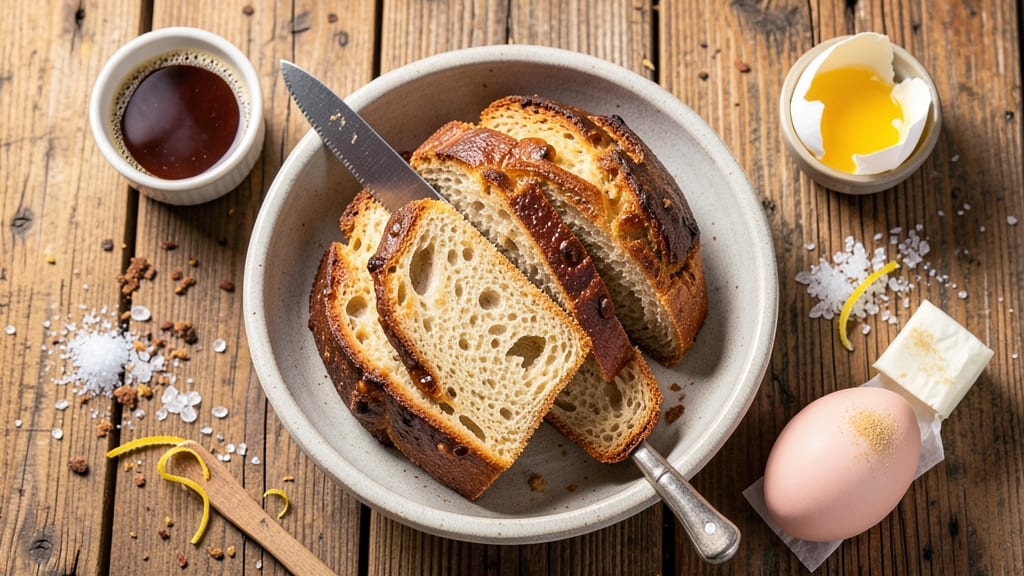
This ale bread recipe transforms simple pantry staples into a malty, golden loaf with a crispy za'atar crust that steals every bite. The secret lies in the beer—its subtle sweetness and effervescence create a tender crumb and aromatic depth that store-bought bread can't match.
I've baked this exact recipe for holiday tables, and it's become a staple for pairing with hearty stews or slathered with butter.
The process is straightforward but requires patience: activating yeast with warm ale, developing gluten through proper kneading, and letting the dough proof until nearly doubled in size. The za'atar crust adds a nutty, herby crunch that contrasts beautifully with the soft interior, while scoring before baking ensures an even rise.
For best results, use a Dutch oven to trap steam and create that signature oven spring.
What you'll end up with is a loaf that smells like a bakery, with a caramelized crust and a crumb so tender it practically melts in your mouth.
The ale's maltiness lingers with every bite, making this bread perfect for soaking up soups, pairing with charcuterie, or simply enjoying toasted with honey. Once you try homemade, you'll never buy bread the same way again.
This recipe yields one 9x5-inch loaf, but the dough can easily be scaled up for a larger pan or shaped into rolls. Store wrapped at room temperature for up to 3 days, or freeze for longer shelf life.
The key to success? Don't rush the proofing—let the dough do its work, and the results will be worth the wait.
Ingredients for ale bread
Pantry staples plus a few specialty touches make this malty, golden loaf unforgettable.
| Ingredient | Amount | Notes |
|---|---|---|
| Active Dry Yeast 🍞 | 2 ¼ tsp | One packet, not instant |
| Warm Ale 🍺 | 1 cup | Dark ale or stout preferred |
| All-Purpose Flour 🌾 | 4 cups | Plus 1 tbsp for dusting |
| Granulated Sugar 🍬 | ½ cup | For yeast activation |
| Unsalted Butter 🧈 | ½ cup | Softened, not melted |
| Large Egg 🥚 | 1 whole | Room temperature |
| Salt 🧂 | 1 ½ tsp | Diamond Crystal preferred |
| Za'atar Seasoning 🌿 | 2 tbsp | For crust and flavor |
| Sesame Seeds 🌰 | 1 tbsp | Toasted for garnish |
| Water 💧 | ½ cup | Warm, not hot |
| Olive Oil 🫒 | 1 tbsp | For dough handling |
The ale is non-negotiable here—dark ale or stout gives the best maltiness, but any beer works in a pinch. Local craft breweries often have great options, or grab a Guinness or Sam Adams Boston Lager from the grocery store. Warm it to about 90°F (yeast loves it). The flour should be bread flour if possible—it's got more gluten for that chewy texture, but all-purpose works too. I always measure flour by weight if I can, but since we're using cups here, spoon it into the measuring cup and level it off. The butter? Full-fat, unsalted—none of that margarine nonsense.
No za'atar? Mix 1 tbsp sesame seeds, 1 tsp dried thyme, 1 tsp sumac, and 1/2 tsp salt for a close substitute. Running short on sesame seeds? Poppy seeds or crushed pistachios add a nice crunch. The egg is just for structure—aquafaba (3 tbsp) works for vegan if needed. For extra richness, add 1 tbsp honey or maple syrup to the dough. And if you're feeling fancy, swap the olive oil for avocado oil—it's got a higher smoke point for that perfect crust.
The dough keeps for 24 hours in the fridge if wrapped tightly in plastic. For longer storage, freeze the shaped loaf (unbaked) for up to 3 months—thaw overnight in the fridge before baking. Once baked, this loaf stays fresh for 3-4 days at room temperature, but I always slice it and freeze half for later. The crust gets even crunchier as it cools, so don't be tempted to eat it fresh out of the oven—wait at least 10 minutes.
Why You'll Love This Recipe
- No-Knead Nightmare Solved: I’ll admit, I used to dread bread-making—until this recipe. Just mix the warm ale into the flour, let the yeast do its magic overnight, and bake. No punishing kneading, no sticky mess, just hands-off ease while I sleep.
- Rich Ale Magic: That first sip of warm ale in the dough? It’s like a secret flavor bomb. The bread ends up with a deep, malty richness that pairs perfectly with butter—no fancy ingredients, just honest, satisfying taste.
- Weeknight Workhorse: Between us, this bread is my lazy dinner’s best friend. Toast it for breakfast, use it for sandwiches at lunch, or serve warm slices with dinner. It’s the one loaf that does it all without feeling like a chore.
- Budget-Friendly Staple: Honestly, the ingredients cost pennies. Ale is cheaper than you’d think, and a single batch stretches for days—think toast, croutons, or even breadcrumbs for future recipes. My wallet (and my fridge) thank me every time.
Step-by-step instructions for ale bread recipe
This malty-sweet loaf delivers perfect crust and tender crumb every time—just follow these simple steps.
Activate the Yeast with Ale and Sugar
In a small bowl, whisk together the 2.25 tsp active dry yeast, ½ cup granulated sugar, and 1 cup warm ale (about 105-110°F). Let it sit for 10-15 minutes until frothy—you should see bubbles forming and the mixture smell yeasty. If nothing happens after 20 minutes, your yeast might be dead, and you'll need to start over.
Here's the thing—I always use dark ale or stout for this recipe because the deeper malt flavors add complexity to the bread. The sugar helps activate the yeast quickly, while the ale provides moisture and a subtle sweetness that carries through the baking process.
Mix the Dough Until Smooth
In a large mixing bowl, combine the 4 cups all-purpose flour and 1.5 tsp salt. Make a well in the center and pour in the yeast mixture, ½ cup softened unsalted butter, 1 whole large egg, and ½ cup warm water. Mix with a wooden spoon until a shaggy dough forms, then turn it out onto a lightly floured surface.
Knead the dough for about 8-10 minutes by hand (or 5-6 minutes with a stand mixer using the dough hook) until it's smooth and elastic. You'll know it's ready when it springs back slowly when poked. If the dough feels too sticky, add 1 tablespoon flour at a time until it comes together nicely. Don't over-knead or the bread will turn out tough.
Let the Dough Rise Until Doubled
Lightly grease a large bowl with 1 tbsp olive oil, place the dough inside, and cover it with a damp kitchen towel. Let it rise in a warm place for 1-2 hours until it has doubled in size. A good test is to poke the dough gently with your finger—if it leaves a slow indentation, it's ready.
I like to place my oven light on for a few minutes before letting the dough rise to create a warm, cozy environment. This helps the yeast work efficiently. If your kitchen is cold, you might need to extend the rising time to 2-3 hours, but don't let it rise longer than that or the bread will taste flat.
Shape and Second Rise
Punch down the risen dough to release any air bubbles, then divide it into 4 equal portions. Shape each portion into a smooth ball, placing them in a greased 9x5-inch loaf pan. Cover the pan with a damp towel and let the dough rise again for 30-45 minutes until it just barely rises above the edges of the pan.
For the za'atar crust, mix 2 tbsp za'atar seasoning with 1 tbsp sesame seeds in a small bowl. Sprinkle this mixture evenly over the top of the dough in the pan. This not only adds incredible flavor but also creates that beautiful crusty texture we all love.
Bake to Golden Perfection
Preheat your oven to 375°F. Bake the bread for 30-35 minutes until the top is golden brown and the internal temperature reaches 190-200°F. If the top browns too quickly, tent the pan with aluminum foil to prevent over-browning while it continues to bake.
Let the bread cool in the pan for 10 minutes, then transfer it to a wire rack to cool completely. This resting period is crucial—it allows the bread to set properly and prevents it from becoming gummy. Once cooled, slice and enjoy the perfect balance of malty sweetness and za'atar crunch!
Pro Tips For Making Ale Bread
- USE COOL ALE: The yeast in your dough hates heat—if your ale is still warm from the fridge, let it sit at room temperature for 10 minutes first. I learned this the hard way when my dough took three hours to rise because the yeast was sluggish from cold beer.
- STIR THE YEAST FIRST: Mix the active dry yeast with the sugar and a splash of ale before adding flour—this gets it activated faster. Skipping this step means waiting longer for the dough to puff up, and nobody wants to stare at a sad lump of dough all afternoon.
- DON’T OVER-KNEAD: After adding flour, stop mixing once the dough pulls away from the bowl but still feels slightly sticky. Overworking it makes ale bread dense—it’s supposed to be tender, not chewy. Two minutes past the "windowpane test" is too far.
- BUTTER IN LAYERS: Cold butter in ale bread creates flaky layers, but don’t just mix it in. Cut softened butter into cubes and fold them into the dough after the first rise—this keeps the texture light and the flavor rich. (Yes, even if you’re impatient like me.)
Pro cooking tips for ale bread
Yeast Activation Secrets
The ale's temperature is critical—aim for 105-110°F to activate yeast without killing it. I use a thermometer to check, but if you don't have one, dip your finger in: it should feel warm like bathwater, not hot like a cup of tea.
The 10-15 minute wait is non-negotiable; impatient proofing leads to weak gluten structure. Pro tip: If your kitchen is chilly, place the bowl near the oven (with light on) to maintain warmth. 🌡️
Kneading Like a Pro
Hand-kneading develops gluten better than mixers for this dough. Work the dough vigorously for 8-10 minutes—you'll know it's ready when it pulls away cleanly from your fingers and springs back slowly when poked.
For sticky dough, add flour 1 tbsp at a time, but don't overdo it or the bread will dry out. A well-floured surface (I use King Arthur bread flour) prevents sticking without adding excess flour.
Proofing Perfection
Never skip the second rise—it's what gives ale bread its airy texture. Place dough in a lightly oiled bowl (I use avocado oil for high heat tolerance) and cover with a damp towel to prevent drying. The dough should rise until it barely clears the pan's edge.
Cold kitchen? Extend to 2-3 hours, but no longer or the yeast will exhaust. For speed, try a proofing box set to 80°F—it cuts rising time by half. ⏰
Za'atar Crust Magic
The za'atar-sesame mix isn't just for flavor—it creates a crispy, aromatic crust. Toast the sesame seeds in a dry pan for 1-2 minutes until golden before mixing with za'atar. Sprinkle generously over shaped dough, then gently press into the surface.
For extra crunch, brush the crust with beaten egg wash before baking. The sesame seeds will darken beautifully, signaling perfect browning. 🌿
Dutch Oven Hack
If you own a Dutch oven, use it! Place the loaf pan inside with ½ cup hot water in the bottom before baking. The steam creates a thick, crackly crust while keeping the interior moist.
Without one, bake on the middle rack for even heat distribution. For extra shine, brush the crust with melted butter after 20 minutes of baking. This technique works wonders for that bakery-style finish.
Don't Overbake!
Ale bread is done when the internal temperature hits 190-200°F—overbaking dries it out. Tap the bottom: it should sound hollow. If the crust browns too quickly, tent with foil. Let the bread cool 10 minutes in pan, then transfer to a rack.
Slicing too soon makes it gummy. For maximum flavor, store wrapped at room temp for 24 hours—the crust gets crunchier as it cools. 💪
Nutrition facts
Frequently asked questions
Can I use any beer instead of ale in this recipe?
While you can substitute other beers, dark ale or stout works best for flavor. Lighter lagers or pilsners will make the bread taste milder. For a balanced result, use a beer with at least 4-5% ABV—avoid ultra-light or high-alcohol brews (like IPAs) as they can overpower the dough.
Why does my ale bread turn out dense instead of light?
Dense bread usually means underproofing or over-kneading. Let the dough rise until it doubles in size (about 1-2 hours), and knead just until smooth—no need for tough gluten development. Cold kitchen? Try a warm proofing spot (like near your oven light) to speed up fermentation.
How can I make this bread without za'atar?
No problem! Mix 1 tbsp sesame seeds + 1 tsp dried thyme + ½ tsp sumac + ½ tsp salt for a similar flavor. For extra crunch, try crushed pistachios or poppy seeds. Skip the crust seasoning entirely if you prefer a plain loaf—just brush with melted butter after baking for shine.
Can I bake this bread without a loaf pan?
Shape the dough into a freeform loaf or rolls, then bake on a parchment-lined sheet. For a crispier crust, bake in a Dutch oven with ½ cup water in the bottom. Freeform loaves need 10-15 minutes longer than pan-baked versions.
How long does ale bread keep, and can I freeze it?
Store wrapped at room temp for 3-4 days or freeze the baked loaf for up to 3 months. Thaw overnight in the fridge—never microwave! For best texture, toast slices directly from frozen. The crust stays crispy even after freezing, making this a great make-ahead option.