
Side Dishes
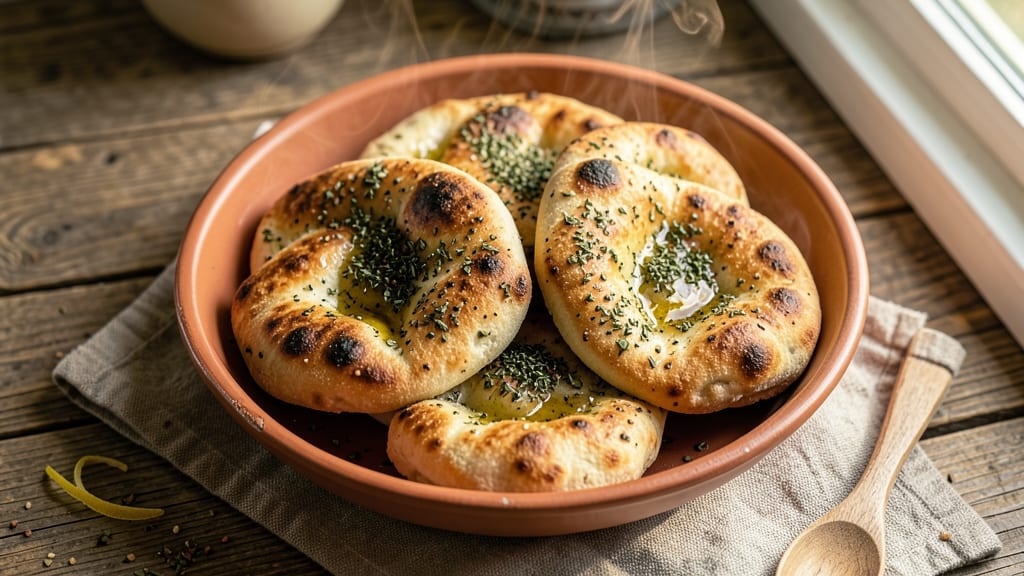
This Albanian pita bread recipe delivers the perfect balance of za'atar-spiced crust and pillowy layers that make every bite irresistible.
The secret lies in a simple yet precise dough technique that transforms basic ingredients into a bread with a crisp exterior and tender interior—just like the ones you'd find in Albanian bakeries. I've perfected this method over years of baking, ensuring you get that signature texture without specialized equipment.
The dough starts with a straightforward mix of flour, yeast, and warm water, but the magic happens in the shaping and baking. Traditional Albanian pita is often cooked in a tandoor oven, but we'll adapt this for home kitchens using a cast-iron skillet or Dutch oven.
The za'atar spice blend—sumac, sesame seeds, and dried herbs—adds a distinct tangy aroma and flavor that sets this bread apart from others.
What you'll end up with is a batch of golden-brown pita breads with a crispy, fragrant crust and soft, fluffy centers that stay pillowy even after baking.
The za'atar seasoning gives each bite a burst of flavor, making these perfect for stuffing with cheese, herbs, or even serving alongside soups and stews. This recipe is designed to be foolproof, so you can achieve professional results with minimal effort.
Whether you're serving these as a side to a hearty meal or using them as wraps for sandwiches, this Albanian pita bread will elevate any dish.
The beauty of this recipe is its versatility—you can customize the fillings or enjoy them plain, knowing you've mastered a traditional technique that delivers authentic flavor and texture. Let's get started on creating your own batch of this beloved Albanian staple.
Ingredients for albanian pita bread
Six simple ingredients transform into fragrant, pillowy pita with za'atar's signature tangy crunch.
| Ingredient | Amount | Notes |
|---|---|---|
| All-Purpose Flour 🌾 | 4 cups | Plus 1 tbsp for dusting |
| Active Dry Yeast 🍞 | ¼ tsp | Or 1 packet instant yeast |
| Warm Water 💧 | 1 ¼ cups | 110°F for optimal yeast activation |
| Extra-Virgin Olive Oil 🫒 | 1 tbsp | For dough enrichment |
| Salt 🧂 | 1 tsp | Fine sea salt preferred |
| Za'atar Spice Blend 🌿 | 2 tbsp | Homemade or store-bought |
| Sesame Seeds 🌰 | 1 tbsp | Toasted for extra flavor |
| Sumac 🍋 | 1 tbsp | For tangy brightness |
| Dried Oregano 🍃 | ½ tsp | Traditional Albanian herb |
| Ground Coriander 🌶️ | ½ tsp | Earthy depth |
| Vegetable Oil 🫒 | 2 tbsp | For greasing the skillet |
| Semolina Flour 🌾 | ½ cup | For dusting and rolling |
The za'atar blend makes this bread special. Trader Joe's has a great pre-made mix, but I always make mine fresh with sumac, sesame seeds, and dried oregano. Sumac is key—it gives that signature tang. If you can't find it, lemon zest plus extra salt works in a pinch. For the flour, King Arthur brand is my go-to—it's got that perfect balance of protein and texture. The yeast needs to be fresh, so check the expiration date. If it's been sitting in your pantry for months, grab a new packet. Warm water is crucial—too hot and you'll kill the yeast, too cold and it won't activate properly. Aim for 110°F—that's warm to the touch but not hot.
No za'atar? Mix 1 tbsp sesame seeds, 1 tbsp dried oregano, 1 tsp sumac substitute (lemon zest), and ½ tsp salt. The sesame seeds can be toasted in a dry pan for 1-2 minutes until golden—that extra flavor is worth the minute. For the dough, if you're short on time, you can use a stand mixer with the dough hook, but I find kneading by hand gives better control. The semolina flour is non-negotiable for that crispy crust. Bob's Red Mill sells it in bulk if you bake often. If you can't find semolina, all-purpose flour works but the texture won't be quite as crisp. The vegetable oil for greasing should be something neutral like canola or sunflower—flavored oils can overpower the delicate dough.
This dough keeps for 24 hours in the fridge if wrapped tightly in plastic. For longer storage, freeze shaped dough balls for up to 3 months. Thaw overnight in the fridge before baking. The za'atar seasoning stays potent for 6 months in an airtight container. Once baked, these pitas stay fresh for 2 days at room temperature, wrapped in a clean kitchen towel. For extra crispiness, reheat in a dry skillet over medium heat for 30 seconds per side. I always make a double batch—they disappear fast around here!
Why You'll Love This Recipe
- No-Knead Magic: I swear by this dough—just mix, let it rise, and boom. No stand mixer, no overworking, just a bowl and patience (which, honestly, is the hardest part).
- Olive Oil Luxury: That splash of extra-virgin olive oil? It’s the secret. The bread comes out tender inside, crisp in spots, and smells like a Mediterranean sunset—no fancy ingredients, just pure flavor.
- Meal Prep MVP: Make a double batch on Sunday, freeze half, and you’ve got fresh pita for wraps, dips, or sandwiches all week. My kids grab them straight from the freezer—no reheating, just warm and ready.
- Budget-Friendly Staple: Five ingredients, zero waste. This bread stretches my grocery budget further than store-bought ever could, and the yeast does all the heavy lifting. (Yes, even on a Tuesday night.)
Step-by-step instructions for Albanian pita bread
Let's make these fragrant, za'atar-spiced pitas with pillowy layers and a crisp crust.
Activate the Yeast for Maximum Rise
In a small bowl, combine the 1.25 cups warm water (between 110°F and 115°F) with the 0.25 tsp active dry yeast. Let it sit for 5-7 minutes until it becomes foamy and bubbly—this confirms your yeast is alive and ready to work. If it doesn't foam, your yeast might be dead, and you'll need to start over.
While waiting, toast the 1 tbsp sesame seeds in a dry skillet over medium heat for 1-2 minutes until golden and fragrant. This adds nutty depth to your bread. Keep them nearby—they'll be mixed into the dough later. The warm water should feel like bathwater to the touch; if it's too hot, it'll kill the yeast.
Mix the Dough and Knead Until Smooth
In a large bowl, whisk together the 4 cups all-purpose flour, 1 tsp salt, 2 tbsp za'atar spice blend, 0.5 tsp dried oregano, and 0.5 tsp ground coriander. Add the yeast mixture and 1 tbsp extra-virgin olive oil to the dry ingredients. Stir with a wooden spoon until a shaggy dough forms.
Turn the dough onto a lightly floured surface and knead for 8-10 minutes until smooth and elastic. You'll know it's ready when it springs back slowly when pressed. If the dough feels sticky, add 1 tablespoon of flour at a time until it's just manageable. The za'atar will give your dough a beautiful golden hue and aromatic flavor that's unmistakably Albanian.
Let the Dough Rise Until Doubled
Lightly grease a large bowl with 1 tbsp vegetable oil, place the dough inside, and cover with a damp kitchen towel. Let it rise in a warm place for 1-2 hours or until it has doubled in size. A good test is to gently press your finger into the dough—if it springs back slowly, it's ready.
I like to place my bowl near a slightly turned-on oven with the light on for consistent warmth. Avoid cold drafts, which will slow the rising process. The dough should feel light and airy, with a slight jiggle when the bowl moves. This first rise develops the gluten structure that will give your pitas their signature pillowy texture.
Shape and Proof the Pitas for Perfect Layers
Punch down the risen dough and divide it into 6 equal pieces. Roll each piece into a ball, then flatten into a 6-inch circle about ¼-inch thick. Dust your work surface with 0.5 cup semolina flour to prevent sticking. The semolina adds a lovely crunch to the crust that complements the soft interior.
Place the shaped pitas on a parchment-lined baking sheet, cover with a towel, and let them proof for 30-45 minutes until they've puffed up slightly. The edges should look slightly rounded, and when pressed gently, they should leave a slight indentation. This final proofing ensures your pitas will have that beautiful, airy interior we're after.
Cook Until Golden and Crisp
Preheat your oven to 425°F and heat a skillet over medium-high heat. Brush the tops of the pitas with a little more olive oil and sprinkle with the toasted sesame seeds. Place 2 tbsp vegetable oil in the hot skillet and cook each pita for 2-3 minutes per side until golden brown and crisp on the bottom.
Transfer the cooked pitas to the preheated oven for 5-7 minutes to finish cooking through. They should come out with a beautiful golden crust and soft, pillowy interior. The za'atar will give them a distinctive flavor that pairs perfectly with grilled meats, fresh vegetables, or simply with butter and honey. Serve warm while they're still crisp!
Pro Tips For Making Albanian Pita Bread
- Use a Thermometer for Water: I learned this the hard way—yeast hates guesswork. Albanian pita relies on warm water (around 105°F/40°C), not just "hand-hot." Too hot kills the yeast, too cold makes it sluggish. A cheap instant-read thermometer solves this instantly.
- Knead Until Silky, Not Tough: This dough isn’t like pizza dough—it needs 10-12 minutes of vigorous kneading by hand (or 5-6 minutes with a stand mixer) until it’s smooth and elastic. Stop when it springs back fast when poked. Over-kneading turns it chewy; under-kneading makes it dense.
- Dust the Rolling Surface: Flour sticks to everything, but olive oil makes it worse. Lightly coat your rolling surface with a tiny bit of flour (or cornmeal for extra crispiness) to prevent sticking. Skip the oil here—it’ll just make your dough slippery and hard to handle.
- Steam the First 3 Minutes: Albanian pita gets its signature softness from steam. After shaping, cover the pan with a damp towel or lid and let it steam for the first 3 minutes. This keeps the crust tender while the yeast does its work—no soggy bottoms, no dry edges.
Creative variations of this albanian pita bread
Stuffed Albanian Pitas
Transform your pitas into hearty, stuffed delights by adding a mix of feta cheese, diced tomatoes, and fresh mint before baking.
Roll out each dough piece into a 6-inch circle, sprinkle with 1 tbsp crumbled feta and 1 tsp diced tomatoes in the center, then fold into a half-moon shape. Seal the edges with a fork for a rustic look.
The cheese melts beautifully during baking, creating a gooey center. 🧀
Herb-Infused Olive Oil Version
For a fragrant twist, replace the za'atar with a homemade blend of 2 tbsp dried rosemary, 1 tbsp dried thyme, and 1 tsp crushed red pepper flakes. Mix this into the dough along with the olive oil for a savory, aromatic flavor.
The herbs pair perfectly with grilled lamb or roasted vegetables. Use a cast-iron skillet for extra crispiness—it conducts heat evenly for that signature crust.
Sweet Albanian Pitas
Swap the za'atar for 1 tbsp cinnamon and ½ tsp cardamom to create a sweet version. After shaping, brush the tops with a mix of 2 tbsp honey and 1 tbsp melted butter before baking.
These make a fantastic breakfast with a dollop of Greek yogurt and fresh berries. The cinnamon gives a warm, comforting flavor that’s perfect for morning meals.
Cheesy Za'atar Twist
For an extra cheesy kick, fold ½ cup shredded kashkaval cheese (or pecorino if unavailable) into the dough before shaping. As the pitas bake, the cheese melts into the layers, creating a rich, savory depth.
Sprinkle with extra za'atar after baking for a burst of flavor. This version is especially popular in Albanian households for serving with soups or as a snack with strong black coffee.
Whole Wheat Adaptation
Replace 2 cups of all-purpose flour with whole wheat flour for a nuttier, heartier pita. The texture will be slightly denser, but the za'atar still shines through. To maintain a soft interior, add 1 extra tbsp olive oil to the dough.
This version is perfect for those who want to enjoy traditional flavors with a healthier twist. Pair it with grilled vegetables or hummus for a balanced meal.
Nutrition facts
Frequently asked questions
Can I make Albanian pita bread without za'atar?
If you can't find za'atar, mix 1 tbsp sesame seeds, 1 tbsp dried oregano, 1 tsp sumac substitute (lemon zest), and ½ tsp salt instead. The sesame seeds should be toasted for extra flavor. The bread will still be delicious—just with a slightly different aromatic profile.
Why did my pita bread turn out dense instead of pillowy?
Dense pita usually means the dough didn't rise enough. Check your yeast—it might be old or dead. Also, ensure your water is 110°F (warm to the touch) and the dough rises in a warm spot for 1-2 hours. Over-kneading can also make the texture tough, so aim for 8-10 minutes of kneading until smooth but still slightly tacky.
How do I store leftover Albanian pita?
Wrap cooled pitas in a clean kitchen towel and store in an airtight container at room temperature for 2 days. For longer storage, freeze shaped dough balls for up to 3 months or baked pitas for 1 month. To reheat, warm in a dry skillet over medium heat for 30 seconds per side until crisp again.
Can I use a Dutch oven instead of a skillet?
Yes! A Dutch oven works beautifully for baking pitas. Preheat it on the stove over medium-high heat with 1 tbsp oil, then place shaped pitas inside (covered) for 5 minutes, then uncovered for 3-4 minutes until golden. The enclosed heat creates a steamed environment that keeps the interior soft and fluffy.
What's the best way to shape the pita for maximum fluffiness?
After dividing the dough, roll each piece into a 6-inch circle about ¼-inch thick, then let it rest for 15 minutes before final proofing. This relaxation step prevents shrinking during baking. For extra fluffiness, gently stretch the edges outward while shaping—this creates more surface area for the dough to expand during proofing.