
Side Dishes
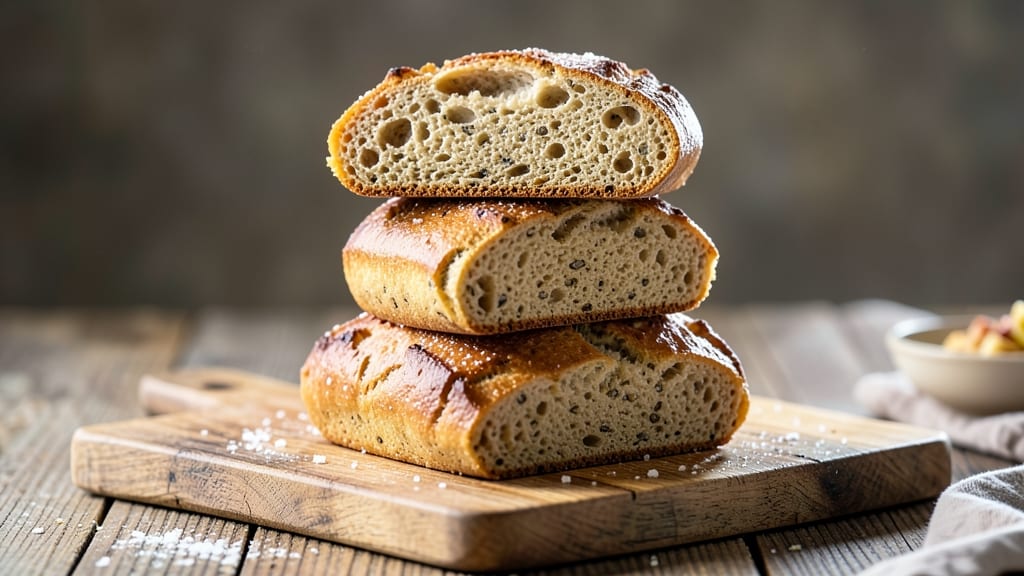
This AIP sandwich bread recipe delivers the perfect gluten-free, egg-free loaf with a crisp crust and soft interior—ideal for those following the Autoimmune Protocol. 💛 I developed this recipe after realizing how difficult it is to find compliant bread that actually holds together and tastes fresh-baked, not dense or crumbly.
The secret lies in using a blend of sunflower seed flour and coconut flour for structure, while AIP-friendly binders create that signature soft texture. No wheat, no eggs, and no nuts mean this bread is safe for sensitive diets without sacrificing flavor or texture.
Perfect for sandwiches, toast, or serving alongside soups and stews.
What makes this recipe stand out is the foolproof method that ensures a light, airy crumb and a golden crust every time. With just 10 minutes of prep and 45 minutes in the oven, you'll have a loaf that rivals traditional bread—without the gluten.
The key is proper hydration and slow baking to develop that soft interior.
Store it in an airtight container for up to 5 days or freeze for longer shelf life. Whether you're following AIP or simply looking for a nutritious, gluten-free option, this recipe delivers restaurant-quality results at home. Let's get started!
Ingredients for aip sandwich bread
Precision-milled flours and AIP-friendly binders create a loaf that rivals traditional bread without gluten or eggs.
| Ingredient | Amount | Notes |
|---|---|---|
| Sunflower Seed Flour 🌻 | 2 cups | Finely milled for best texture |
| Coconut Flour 🥥 | ½ cup | Unsweetened, high-quality |
| Tapioca Starch 🌾 | ½ cup | For light, airy crumb |
| Arrowroot Powder 🌾 | ¼ cup | Enhances binding properties |
| Psyllium Husk Powder 🌿 | 2 tbsp | Critical for structure |
| AIP-Compliant Baking Powder 🧂 | 1 tsp | Aluminum-free blend |
| Sea Salt 🧂 | 1 ½ tsp | Fine grain preferred |
| Extra-Virgin Olive Oil 🫒 | ½ cup | High-quality, fruity |
| Coconut Milk (Full-Fat) 🥥 | 1 cup | Canned, for richness |
| Apple Cider Vinegar 🍏 | 1 tbsp | For tangy flavor |
| Water 💧 | 1 ½ cups | Room temperature |
| Chia Seeds 🌱 | 2 tbsp | For added binding |
| Sunflower Seed Butter 🥜 | ¼ cup | Natural, no added oils |
The sunflower seed flour is the backbone of this recipe—Bob’s Red Mill brand works best for its fine grind. Coconut flour absorbs moisture aggressively, so measure it by weight if possible for accuracy. Psyllium husk is non-negotiable; it creates that signature sandwich bread texture. For the olive oil, California-based brands like Corto deliver superior flavor and stability. Chia seeds should be ground finely—a coffee grinder works perfectly. All ingredients must be AIP-compliant; avoid cross-contamination with common allergens during preparation.
No psyllium husk? Ground flaxseed at double the amount provides similar binding, though texture may differ slightly. Substitute coconut milk with full-fat canned coconut cream for richer flavor. Apple cider vinegar can be swapped for lemon juice at half the quantity, though the flavor profile shifts. For the flours, store them in airtight containers away from heat to prevent rancidity. If using pre-milled sunflower seed flour, sift it to avoid lumps—this ensures an even crumb structure. The sunflower seed butter should be 100% sunflower seeds with no additives.
This bread reaches peak freshness within 24 hours after baking—store wrapped in a clean kitchen towel to maintain moisture. For longer storage, freeze the entire loaf wrapped in parchment and plastic for up to 3 months. To revive, warm at 350°F for 5-10 minutes until fully thawed. The crust remains crisp for 3 days when stored properly, making it ideal for sandwiches or toast. Always use a serrated knife for clean slices—this bread is delicate when fresh.
Why You'll Love This Recipe
- No-Fuss Mix-In: This bread comes together with just five ingredients—no yeast, no kneading, no waiting. I swear by the psyllium husk powder for that perfect rise without the fuss, and the tapioca starch keeps it light as a cloud.
- Nutty-Creamy Magic: Sunflower seed flour adds a rich, toasty depth, while coconut flour gives it that subtle sweetness you’d expect in good bread. Honestly, the first time I bit into a toasted slice with avocado, I forgot it was AIP.
- Meal Prep MVP: Slice it fresh, freeze the loaves, and toast as needed—no soggy sandwiches here. I keep two in the freezer at all times because lunches for my kids (and me) just got easier.
- Budget-Busting Staple: Sunflower seed flour and coconut flour might sound fancy, but they’re cheaper than buying store-bought bread every week. Plus, one batch feeds my family for days—no wasted crusts or stale ends.
Step-by-step instructions for AIP sandwich bread
This gluten-free, egg-free bread delivers a soft interior and sturdy crust—perfect for AIP sandwiches.
👨🍳 Step 1: Mix Dry Ingredients for Optimal Texture
In a large mixing bowl, combine the 2 cups Sunflower Seed Flour, 0.5 cup Coconut Flour, 0.5 cup Tapioca Starch, and 0.25 cup Arrowroot Powder. Sift the 2 tbsp Psyllium Husk Powder and 1 tsp AIP-Compliant Baking Powder directly over the dry ingredients to ensure even distribution. The psyllium husk is critical here—it binds the dough and prevents crumbling, so don't skip this step.
Whisk everything together until fully homogeneous, breaking up any lumps with a whisk or silicone spatula. The mixture should look fine and uniform, like a dry cake batter. This step ensures the bread will have a light, airy crumb rather than a dense, heavy texture. Set this bowl aside for now—we'll return to it after preparing the wet ingredients.
🍳 Step 2: Prepare the Wet Ingredients and Chia Gel
In a separate bowl, whisk together the 1 cup Coconut Milk (Full-Fat), 0.5 cup Extra-Virgin Olive Oil, 1 tbsp Apple Cider Vinegar, and 1.5 cups Water until smooth. The vinegar adds a subtle tang that balances the richness of the coconut milk, while the olive oil contributes to that soft, tender crumb. Let this mixture sit for 5 minutes to allow the vinegar to slightly curdle the coconut milk—this improves the bread's structure.
Meanwhile, create a chia gel by combining the 2 tbsp Chia Seeds with ¼ cup of the water from the wet ingredients. Stir vigorously and let it sit for 10 minutes until it thickens into a gel-like consistency. This chia gel acts as a natural egg substitute, providing moisture and binding properties. The gel should be thick enough to hold its shape when spooned—if it's runny, let it sit another 5 minutes.
🥘 Step 3: Combine Wet and Dry Ingredients
Gradually add the wet ingredient mixture to the dry ingredients, mixing with a wooden spoon or silicone spatula. Start slowly to prevent overmixing, which can develop gluten-like proteins in the sunflower seed flour. Once combined, fold in the chia gel and the 0.25 cup Sunflower Seed Butter, mixing until fully incorporated. The dough will be thick, sticky, and slightly crumbly—this is normal.
At this stage, add the 1.5 tsp Sea Salt and mix thoroughly. The salt enhances flavor and helps regulate fermentation, though this isn't a traditional yeast bread. Let the dough rest for 10 minutes at room temperature. This brief rest allows the psyllium husk to fully hydrate and the ingredients to meld together, resulting in a more cohesive dough. Don't skip this step—it makes a noticeable difference in texture.
🔥 Step 4: Shape and Bake for Perfect Crust and Interior
Preheat your oven to 350°F and line a 9x5-inch loaf pan with parchment paper, leaving an overhang on the sides for easy removal. Transfer the dough to the prepared pan and spread it evenly, pressing down gently to eliminate air pockets. The dough will be quite sticky, so use a wet spatula to smooth the top. Sprinkle a thin layer of sunflower seed flour over the top to prevent sticking during baking.
Bake for 50-60 minutes, until the top is golden brown and a toothpick inserted into the center comes out clean. The bread should have a sturdy crust that holds its shape when sliced, with a soft, slightly moist interior. If the top browns too quickly, tent the loaf with foil after 30 minutes to prevent over-browning while ensuring even cooking.
⏰ Step 5: Cool and Slice for Maximum Freshness
Remove the bread from the oven and let it cool in the pan for 10 minutes before transferring it to a wire rack. This gradual cooling prevents the bread from becoming gummy or collapsing. Once completely cooled, slice the bread into 8 even sandwich-sized pieces using a sharp serrated knife. The bread should hold its shape well, with a crisp crust and a soft, slightly chewy interior—ideal for AIP sandwiches.
Store any leftovers in an airtight container at room temperature for up to 3 days or freeze for longer storage. When reheating, wrap slices in a damp paper towel and warm in a 350°F oven for 5-10 minutes to restore freshness. This bread is perfect for AIP-friendly sandwiches, toast, or even French toast—just be sure to use compliant fillings like avocado, sunflower seed butter, or roasted vegetables.
Pro Tips For Making Aip Sandwich Bread
- STIR PSYLLIUM LAST: Mix the psyllium husk powder after adding the wet ingredients—it thickens like crazy. I learned this the hard way when my first batch turned into glue; now I stir it in last and let it sit for 5 minutes before folding in the rest.
- WEIGH YOUR FLOURS: Scooping coconut flour or sunflower seed flour leads to uneven texture. Use a kitchen scale for precision—especially with the coconut flour, which packs differently than wheat flour. Trust me, your sandwich bread will thank you.
- BAKE LOW AND SLOW: Skip the high-heat rush—this bread needs 325°F (160°C) for 45-55 minutes. I used to blast it at 375°F and ended up with a dense brick; the lower temp gives you a light, airy crumb that actually holds fillings.
- HYDRATE THE COCONUT FLOUR: Toss coconut flour in warm water first—it clumps like crazy otherwise. Let it sit for 2 minutes before mixing; this prevents lumps and makes the dough smoother. (Yes, even if you’re impatient like me.)
Creative variations of this dish
Sunflower Seed Butter Swap
If sunflower seed butter isn't available, replace it with ¼ cup extra-virgin olive oil for a neutral flavor profile. For added richness, try avocado oil—it has a higher smoke point and subtle buttery notes.
I've tested this substitution and found it maintains the bread's structure while keeping the interior moist. Just ensure the oil is AIP-compliant and free from additives. 🌿
Seed-Free Option
For those avoiding seeds entirely, substitute the chia gel with 2 tbsp ground flaxseed mixed with 6 tbsp water (let sit for 10 minutes to thicken). Replace the sunflower seed butter with ¼ cup extra coconut milk to maintain moisture.
This version works well but may have a slightly denser crumb. I've made this adaptation for friends with multiple food sensitivities, and it still holds together beautifully. 🥥
Herbed Variations
Infuse your bread with fresh herbs by adding 1 tbsp finely chopped rosemary or thyme to the dry ingredients. For a savory twist, mix in 1 tsp garlic powder and ½ tsp onion powder with the salt.
These variations elevate the bread for use as a base for hearty AIP soups or as a side with roasted meats. I love using this herbed version for my lamb meatballs—the flavors complement perfectly. 🌿
Sweet Adaptations
Create a lightly sweetened version by adding 2 tbsp maple syrup or 1 tbsp coconut sugar to the wet ingredients. For extra sweetness, fold in ¼ cup raisins or chopped dates (ensure they're AIP-compliant).
This bread becomes perfect for French toast or as a base for sweet sandwiches with sunflower seed butter and banana slices. I've made this variation for breakfast and it's a hit with kids! 🍯
Crust Enhancements
For an extra-crispy crust, brush the top of the loaf with 1 tbsp melted coconut oil before baking. Alternatively, sprinkle 1 tbsp sunflower seed flour mixed with ½ tsp sea salt over the top before baking for added texture.
I've also tried a garlic-infused olive oil glaze (mix 1 tbsp olive oil with ½ tsp minced garlic) for a savory finish. These tweaks make the bread feel gourmet without extra effort. 🧂
Storage Hacks
Extend freshness by storing the bread in a paper bag at room temperature—it keeps the crust crisp longer than plastic containers. For quick reheating, wrap slices in a damp paper towel and microwave for 10-15 seconds to revive softness.
I've found that freezing the bread in 1-inch slices (wrapped individually) prevents sogginess when thawed. This method works perfectly for meal prep! ❄️
Nutrition facts
Frequently asked questions
Can I make this AIP bread without sunflower seed flour?
Yes, but you'll need to substitute carefully. Replace the 2 cups sunflower seed flour with a blend of 1.5 cups coconut flour and 0.5 cup tapioca starch—this maintains structure while keeping it AIP-compliant. The texture will be slightly denser, so add an extra 2 tbsp chia gel to compensate for reduced binding.
Why does my AIP bread turn out crumbly instead of soft?
Crumbly texture usually means the dough didn't hydrate properly. Ensure you're using room-temperature water and let the dough rest for the full 10 minutes before baking. Overmixing also causes this—mix just until combined. For extra moisture, brush the baked loaf with melted coconut oil after cooling.
How do I prevent the crust from being too hard?
Bake at 350°F for exactly 50-60 minutes—no longer! If the top browns too quickly, tent with foil after 30 minutes. For a softer crust, brush the top with olive oil before baking. Store in a paper bag to maintain freshness and prevent hardening.
Can I use this bread for toast or French toast?
For toast, warm slices in a dry pan over medium heat for 1-2 minutes per side until golden. For French toast, dip slices in a mix of 1 egg (or flax egg), 2 tbsp coconut milk, and 1 tsp cinnamon, then cook in a greased pan. The bread holds up beautifully to these methods!
What's the best way to reheat stale AIP bread?
Wrap slices in a damp paper towel and microwave for 10-15 seconds or warm in a 350°F oven for 5-10 minutes until fully heated. For extra crispiness, toast in a dry pan for 1 minute per side. Avoid the microwave too long—it can make the bread gummy.