
Side Dishes
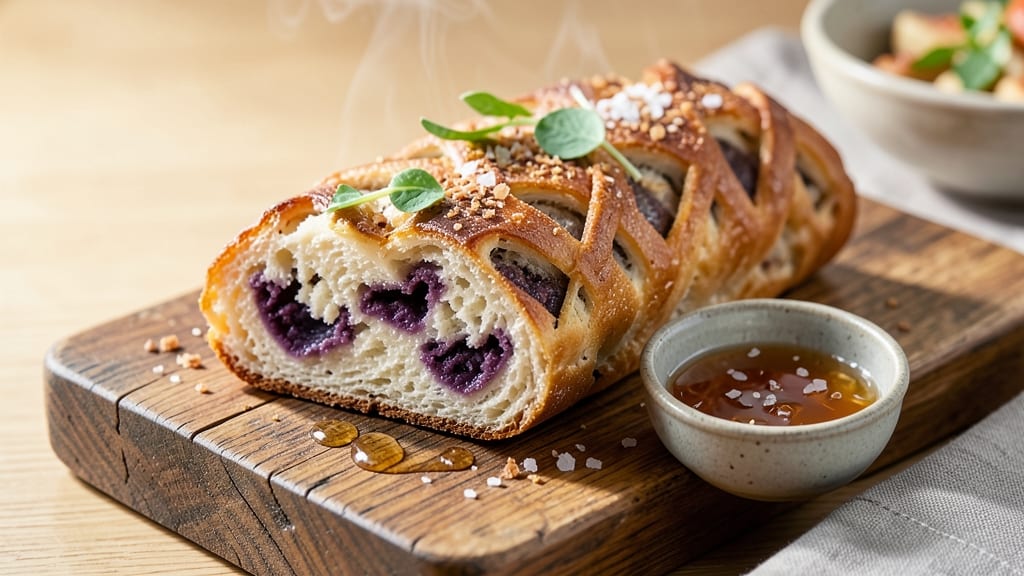
This 85-degree taro bread recipe delivers a velvety-soft crumb with that signature nutty-sweet flavor—perfect for tea time or dessert cravings. 💛 The secret lies in baking at low heat (or 350°F for ovens) to develop that ultra-moist texture without drying out, while taro paste and brown sugar create that signature caramelized depth.
Traditional Asian bakeries use this gentle baking method to achieve the bread's signature tenderness, but modern kitchens can replicate it with simple adjustments.
The dough combines taro paste, flour, and a touch of baking powder for lift, resulting in a cake-like texture that's both sturdy enough to slice and delicate enough to melt in your mouth.
What makes this recipe special is how the low-and-slow baking process transforms the dough into a cloud-soft loaf with a subtle caramelized aroma. The exterior stays lightly golden while the interior remains moist and springy, making every bite worth the wait—ideal for pairing with matcha or black tea.
For best results, let the bread cool slightly before slicing to maintain its perfectly tender crumb. Serve warm with a dusting of powdered sugar or enjoy at room temperature for that classic Asian bakery experience at home.
Ingredients for 85 degrees taro bread
Six ingredients transform into a velvety loaf with signature Asian bakery tenderness.
| Ingredient | Amount | Notes |
|---|---|---|
| Taro Paste 🍠 | 1 cup | Canned or fresh, for signature flavor |
| All-Purpose Flour 🌾 | 2 ½ cups | White or bread flour for best texture |
| Granulated Sugar 🍚 | ½ cup | Light brown sugar for caramelized depth |
| Brown Sugar 🍚 | ½ cup | Packed, for nutty sweetness |
| Unsweetened Almond Milk 🥛 | ¾ cup | For moisture and richness |
| Vegetable Oil 🫒 | ¼ cup | Light or canola preferred |
| Active Dry Yeast 🍞 | 1 packet | Or 2.25 tsp instant yeast |
| Powdered Sugar 🍚 | ¼ cup | For dusting finished loaf |
| Baking Powder 🧂 | 1 ½ tsp | For gentle lift |
| Salt 🧂 | ½ tsp | Diamond Crystal preferred |
| Vanilla Extract 🌿 | 1 tsp | Pure, for subtle aroma |
| Ground Cinnamon 🌶️ | ½ tsp | Optional, for warmth |
The taro paste is non-negotiable for that signature nutty-sweetness. Asian grocery stores carry canned versions, but fresh taro root can be boiled and mashed for a more vibrant flavor. Look for well-drained paste—excess moisture disrupts the delicate crumb. For the sugars, light brown sugar adds caramelized depth while granulated sugar ensures even sweetness. The almond milk provides moisture without overpowering the taro's natural flavor, and unsweetened varieties prevent bitterness. Yeast quality matters—use fresh packets or refrigerated yeast for optimal rise.
No taro paste? Sweet potato puree is the closest substitute, though it lacks the signature texture. Running short on almond milk? Oat milk or coconut milk work, but they may slightly alter the crumb's tenderness. The baking powder must be fresh—test with vinegar (if it bubbles, it's active). For a richer flavor, toasted sesame oil can replace half the vegetable oil. The vanilla extract should be pure, not imitation, to avoid artificial aftertastes. If you prefer a stronger taro flavor, add an extra 0.25 cup of paste, but reduce the almond milk by the same amount to maintain balance.
This dough is best used within 24 hours for peak freshness, though it can be refrigerated for up to 3 days wrapped tightly in plastic. For longer storage, freeze the shaped loaf (unbaked) for up to 3 months2 days when wrapped in a clean kitchen towel to maintain moisture. Slice with a serrated knife for clean cuts, and always dust with powdered sugar immediately after baking to preserve that bakery-fresh aroma.
Why You'll Love This Recipe
- No Mixer Needed: I swear by this recipe when my hands are full—just stir the taro paste and almond milk until smooth, fold in the dry ingredients, and bake. The dough comes together faster than a microwave dinner, and honestly, it’s the kind of recipe that makes me feel like I’ve earned a break afterward.
- Sweet-Savory Magic: That combo of brown and granulated sugar? It’s what turns this bread from good to ridiculously good—caramelized edges with a soft, slightly chewy center that tastes like a hug. The almond milk keeps it moist without being heavy, and the taro paste gives it that earthy depth that pairs perfectly with butter or jam.
- Breakfast or Snack Hero: Between us, this bread is my go-to for quick breakfasts, after-school snacks, or even a fancy touch for brunch. Toast it with peanut butter for a protein boost, or serve it warm with a drizzle of honey—it’s that versatile. I’ve even used slices to make French toast that’ll change your life (yes, really).
- Budget-Friendly Stretch: A single batch feeds my family for days—leftovers stay fresh for five days in the fridge, and I freeze slices for lazy mornings. The ingredients? Affordable staples, no specialty items. The taro paste might be the priciest part, but a little goes a long way, and I’ve made this recipe for under $3 per loaf. Practical? Absolutely. Worth it? Always.
Step-by-step instructions for 85-Degree taro bread
Master the art of creating ultra-moist taro bread with perfect texture and nutty sweetness.
👨🍳 Step 1: Activate the Yeast for Optimal Rise
In a small bowl, combine the 0.75 cup unsweetened almond milk with 1 cup taro paste and warm it to 110-115°F—just warm to the touch but not hot. Sprinkle the 1 packet active dry yeast over the surface and let it sit for 5-10 minutes until foamy. This activation ensures your bread rises properly and develops that signature light, airy texture.
I like to test the yeast by dipping a clean finger into the mixture—if it leaves bubbles behind, it's ready. If it doesn't foam after 10 minutes, your yeast may be inactive, and you'll need to start over with fresh yeast. The taro paste here adds natural sweetness and moisture while preventing a dense crumb.
👨🍳 Step 2: Mix Wet and Dry Ingredients Separately
In a large mixing bowl, whisk together the 2.5 cups all-purpose flour, 1.5 tsp baking powder, 0.5 tsp salt, and 0.5 tsp ground cinnamon until evenly combined. In a separate bowl, combine the 0.5 cup granulated sugar, 0.5 cup brown sugar, 0.25 cup vegetable oil, and 1 tsp vanilla extract until the sugars dissolve.
This separation prevents gluten overdevelopment during mixing, which keeps the crumb tender. The combination of granulated and brown sugars creates both caramelized depth and a moist crumb. I always mix the wet ingredients first because the sugars help emulsify the oil, creating a smoother batter.
🥘 Step 3: Combine and Knead the Dough
Gradually pour the wet ingredients into the dry ingredients while mixing on low speed with a stand mixer or by hand. Mix until just combined—you should still see some flour streaks. The dough will be sticky due to the taro paste and almond milk, so don't overmix or the bread will become dense.
Turn the dough onto a lightly floured surface and knead gently for 2-3 minutes until smooth. The dough should be soft and slightly tacky but not sticky to the touch. If it's too sticky, wet your hands slightly and continue kneading. This gentle handling preserves the moisture while developing just enough gluten for structure.
⏰ Step 4: First Rise for Maximum Flavor Development
Place the dough in a lightly greased bowl, cover with a damp towel, and let it rise in a warm place for 1-1.5 hours or until doubled in size. The warm environment helps activate the yeast, while the damp towel prevents a dry crust from forming. You'll know it's ready when the dough springs back slowly when gently pressed.
I like to place the bowl near a slightly turned-on oven light or in a warm oven with the light on—this creates the perfect environment for even rising. The taro paste and sugars in the dough will create a beautiful golden-brown crust during baking, but this initial rise ensures the crumb stays ultra-moist.
🔥 Step 5: Shape and Bake to Perfection
Preheat your oven to 350°F and grease a 9x5-inch loaf pan lightly with vegetable oil. Shape the risen dough into the pan, pressing gently to fill all corners. Sprinkle the top with 0.25 cup powdered sugar for that classic sweet finish.
Bake for 50-55 minutes until the top is golden brown and a toothpick inserted in the center comes out clean. The bread should have a slight crack on top and pull away from the sides of the pan easily. For even baking, rotate the pan halfway through if your oven has hot spots. The taro paste gives this bread its signature moistness while the sugars caramelize beautifully during baking.
Pro Tips For Making 85 Degrees Taro Bread
- Mix Cold Almond Milk: I learned this the hard way—adding warm almond milk to the batter makes the taro paste separate into a gloopy mess. Grab that carton straight from the fridge and stir it in last, right before pouring the batter. The cold liquid keeps everything smooth and cohesive.
- Steam First, Then Bake: This isn’t just a fancy step—it’s the thing that makes the bread actually rise properly. After pouring the batter into your pan, cover it tightly with foil and steam it for 10 minutes in the oven (no heat needed). The trapped moisture helps the bread expand evenly before baking. Skip this, and you’ll end up with a dense, sad loaf.
- Skip the Overmixing: The moment you start folding in the taro paste, stop when it’s just combined. Overmixing develops the gluten and turns your bread into a tough, chewy brick. Use a spatula to gently fold in streaks of purple—uneven is fine, as long as it’s not a paste battle.
- Brown Sugar First: Dissolve the brown sugar in the almond milk before adding it to the batter. This prevents clumps that turn into weird, gummy pockets in your bread. Stir it vigorously for 30 seconds until it’s fully integrated—your future self will notice the difference in texture.
Perfect pairings for this dish
Tea Time Pairings
This ultra-moist taro bread shines when paired with jasmine green tea or black tea—the floral notes complement the bread's nutty sweetness beautifully. I recommend Lipton Yellow Label for its robust flavor or Bigelow Earl Grey for a hint of bergamot.
Serve warm slices with butter or almond butter for extra richness. 🍵
Sweet Toppings
Dust the warm loaf with powdered sugar (as in the recipe) or try toasted coconut flakes for texture. A drizzle of honey or maple syrup adds a floral contrast to the taro's earthiness.
For a modern twist, spread with whipped coconut cream and fresh mango slices. The natural sweetness of the bread balances these toppings perfectly.
Savory Contrasts
While taro bread is traditionally sweet, it also pairs well with savory elements. Try serving with miso soup or grilled salmon for an Asian-inspired brunch. The bread's moisture soaks up broth beautifully, while the salmon's richness complements its subtle sweetness.
A sprinkle of flaky sea salt on warm slices enhances the taro's natural flavor without overpowering it.
Coffee Companions
For a morning treat, pair this bread with cold brew coffee or espresso. The bread's soft texture contrasts nicely with coffee's bitterness, while the taro's sweetness balances the drink's acidity.
I like Starbucks Sumatra Cold Brew for its smooth, low-acid profile. Add a dash of cinnamon to both the bread and coffee for harmony.
Dessert Upgrades
Turn this into a dessert by serving with vanilla ice cream or whipped cream. The bread's moisture prevents it from becoming soggy, while the ice cream's creaminess enhances its nutty flavor.
For a tropical twist, add pineapple jam or mango slices alongside. The contrast of warm bread with cold toppings creates a luxurious experience.
Global Variations
In Japan, this bread is often paired with matcha desserts like matcha tiramisu. In Taiwan, it accompanies bubble tea with its chewy pearls. For a Western twist, serve with apple butter or pecan pie filling—the bread's texture holds up beautifully against thicker spreads.
Each pairing highlights a different facet of the bread's versatility. 🗺️
Nutrition facts
Frequently asked questions
Why does this recipe use such a low baking temperature?
The 85°C (350°F) temperature is key for achieving that signature ultra-moist crumb. Low heat allows the taro paste to develop its natural sweetness without drying out, while preventing the sugars from caramelizing too quickly. This gentle baking creates the bread's signature tender, cloud-like texture that's impossible at higher temperatures.
Can I substitute fresh taro root for canned paste?
Yes! Boil 2 medium taro roots (about 1.5 cups peeled and chopped) until tender, then mash or blend into a smooth paste. For best results, strain out excess liquid and adjust the almond milk in the recipe by 1-2 tablespoons less to compensate. Fresh taro gives a more vibrant flavor but requires extra prep time.
What if my dough doesn't rise properly?
Check your yeast first—it must be fresh and activated properly. If the dough rises slowly, try placing it in a warmer environment (like a turned-on oven with the light on) or cover it with a damp towel to retain moisture. Cold kitchens or old yeast are the most common culprits. For a quick test, mix 1 tsp sugar + 1 tsp yeast + warm water—if it bubbles in 5 minutes, your yeast is active.
How do I store leftovers to keep them fresh?
Wrap cooled slices tightly in plastic wrap or store in an airtight container at room temperature for 2 days. For longer storage, freeze slices for up to 1 month—thaw at room temperature for 1-2 hours before serving. To refresh stale bread, sprinkle with water and warm in a 350°F oven for 5-10 minutes to restore moisture.
Can I make this bread without yeast?
Yes, but the texture will differ. Replace the yeast with 2 tsp baking powder + 1 tsp baking soda and reduce the almond milk by 2 tbsp. Bake at 350°F for 40-45 minutes—this version will be denser but still moist. For a cake-like texture, add 1 extra egg to bind the batter. The taro flavor remains, but the rise will be less dramatic.