
Side Dishes
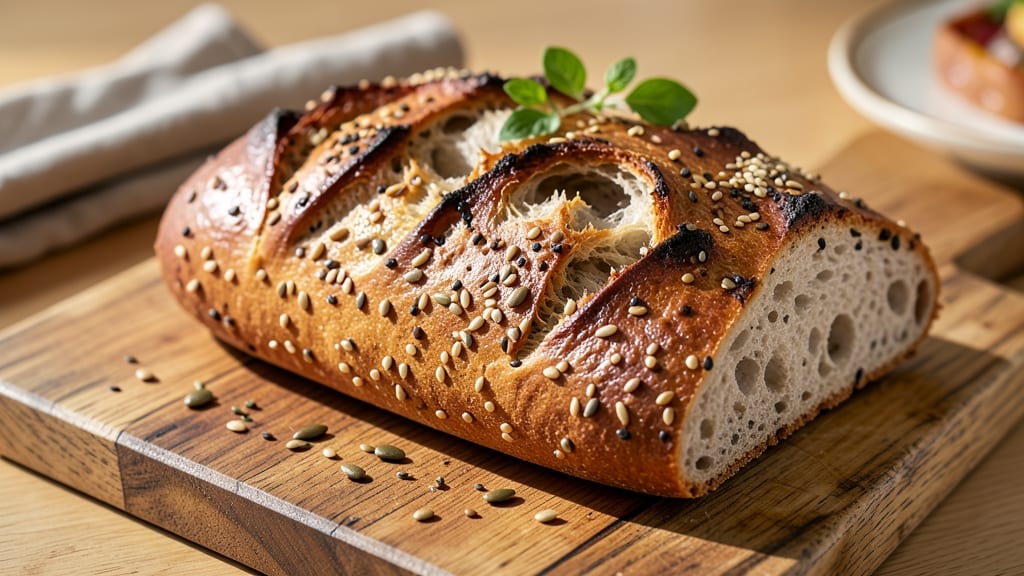
This 7 seed bread recipe delivers a wholesome, nutty loaf with a crisp whole grain crust and tender interior—perfect for elevating any meal. 🌾 The blend of flax, sunflower, sesame, and other seeds adds texture and nutrition, while a simple whole wheat dough keeps the process straightforward.
Unlike dense seed breads, this version stays light and airy, making it ideal for sandwiches or sides.
The recipe combines basic pantry staples with seeds for a nutrient-packed loaf that’s naturally gluten-free if you substitute the flour. Kneading and shaping are minimal, and the proofing process ensures a consistent rise.
Baking at the right temperature locks in that signature crust while keeping the crumb tender—no specialized equipment required.
What sets this bread apart is its versatility—slice it for toast, use it as a sandwich base, or serve warm with soups. The seeds provide fiber, healthy fats, and minerals, while the whole grain crust adds a satisfying crunch.
It’s the kind of bread that makes homemade meals feel special without the fuss.
For those with dietary restrictions, swapping the flour for a gluten-free blend keeps the texture intact. The seeds can also be adjusted to suit preferences—just ensure they’re toasted lightly before mixing.
Ready in about 2 hours, this bread is a game-changer for anyone looking to bake healthier, heartier loaves at home.
Ingredients for 7 seed bread
Whole grain flour and seven nutritious seeds create this wholesome loaf with a crisp crust and airy crumb.
| Ingredient | Amount | Notes |
|---|---|---|
| Bread Flour 🌾 | 4 cups | High-protein for structure, or whole wheat blend |
| Flaxseeds 🌰 | ½ cup | Whole, lightly toasted for nuttiness |
| Sunflower Seeds 🌻 | ½ cup | Unsalted, toasted for crunch |
| Sesame Seeds 🌿 | ¼ cup | White or black, toasted lightly |
| Pumpkin Seeds 🎃 | ¼ cup | Raw, shelled, lightly toasted |
| Chia Seeds 🌱 | ¼ cup | Whole, lightly toasted |
| Poppy Seeds 🌼 | 2 tbsp | Toasted for subtle sweetness |
| Active Dry Yeast 🍞 | 2 ¼ tsp | Fresh yeast at half quantity |
| Granulated Sugar 🍚 | 2 tbsp | For yeast activation |
| Warm Water 💧 | 1 ¼ cups | 110°F for yeast activation |
| Unsalted Butter 🧈 | ½ cup | Cold, cubed for dough enrichment |
| Diamond Crystal Kosher Salt 🧂 | 1 ½ tsp | Fine grain preferred |
| Extra-Virgin Olive Oil 🫒 | 2 tbsp | For dough elasticity |
| Honey 🍯 | 1 tbsp | For dough tenderness |
The seeds are the heart of this recipe—toasting them lightly in a dry pan before mixing unlocks their full flavor. Bob's Red Mill carries excellent bulk seeds, but any health food store will have quality options. For a gluten-free version, swap the bread flour for a 1:1 gluten-free blend like King Arthur. The yeast should be fresh; if using active dry, make sure it's within 4 months of the date on the package. The butter should be cold to prevent over-development during mixing.
No sunflower seeds? Pepitas or toasted almonds work as substitutes, though texture will vary. The honey can be swapped for maple syrup at half the quantity if preferred. Olive oil can be replaced with avocado oil for a neutral flavor. For a sweeter loaf, add 1 tbsp molasses to the dough. If you're short on time, instant yeast can be used directly without proofing—just reduce to 1.75 tsp.
This dough is best baked within 24 hours of mixing, though it can be refrigerated for up to 48 hours if wrapped tightly. For longer storage, freeze shaped loaves on a tray before transferring to a bag for 3 months. Toast slices directly in the toaster for maximum crispness. The crust stays fresh for 3 days at room temperature, while the crumb remains tender for 5 days when wrapped well.
Why You'll Love This Recipe
- This bread handles everything: toast for breakfast, sandwiches for lunch, or crusty bites with soup. Between us, I’ve even used it as a base for charcuterie boards—it’s that versatile.
- No-Knead Magic: I swear by this—just mix, let it rise, and bake. Honestly, the dough comes together in minutes, and the seeds do all the heavy lifting while you’re busy with the rest of dinner.
- Nutty Crunch Perfection: That first bite? The seeds pack a satisfying crunch that holds up for days. Sunflower seeds add a buttery richness, while sesame and pumpkin seeds bring a toasty, almost smoky depth—no fancy ingredients, just pure flavor.
- Weeknight Workhorse: This bread handles everything: toast for breakfast, sandwiches for lunch, or crusty bites with soup. Between us, I’ve even used it as a base for charcuterie boards—it’s that versatile.
Step-by-step instructions for 7 seed bread
Here's the precise method for crafting a rustic loaf with a crisp crust and nutty seed crunch throughout.
👨🍳 Step 1: Activate the Yeast and Toast the Seeds
In a small bowl, whisk together the 2.25 tsp active dry yeast, 2 tbsp granulated sugar, and 1.25 cups warm water (about 110°F). Let it sit for 5-10 minutes until frothy—this confirms your yeast is alive and ready to work. While waiting, toast the seeds in a dry skillet over medium heat for 3-4 minutes, stirring constantly until they're fragrant and lightly golden. This enhances their flavors and prevents bitterness in the finished bread.
Real talk: If your yeast doesn't bubble, start over with fresh yeast. Cold water kills yeast instantly, while water hotter than 115°F can also deactivate it. The seeds should smell nutty and toasted, not burnt. Transfer the toasted seeds to a plate to cool while you prepare the dough.
🍳 Step 2: Mix the Dough with Butter and Honey
In the bowl of a stand mixer fitted with the dough hook, combine the 4 cups bread flour and 1.5 tsp kosher salt. Add the yeast mixture and mix on low speed for 1 minute to hydrate the flour. Then add the 2 tbsp extra-virgin olive oil, 1 tbsp honey, and ½ cup cold cubed butter. Mix on medium speed for 3-4 minutes until the dough begins to pull away from the sides of the bowl and forms a shaggy mass.
Here's the thing—cold butter creates pockets of fat that make this bread incredibly tender. If your dough feels too sticky, add 1 tbsp flour at a time until it's just manageable. The dough should be soft but not wet, and it will become more cohesive as it develops.
🥘 Step 3: Knead Until Smooth and Elastic
Continue kneading on medium speed for 8-10 minutes until the dough is smooth, elastic, and passes the windowpane test: stretch a small piece between your fingers—it should be thin enough to see light through without tearing. This develops gluten for proper structure in your loaf.
I press down gently on the dough during the first minute of kneading—this prevents it from curling and ensures even contact with the kneading hook. If the dough starts to stick to the bowl, lightly coat your hands with olive oil and continue kneading. The final dough should be slightly tacky but not sticky to the touch.
⏰ Step 4: First Rise and Seed Incorporation
Shape the dough into a ball, place it in a lightly greased bowl, and cover with a damp towel. Let it rise in a warm place for 1-1.5 hours or until doubled in size. While it rises, combine all the toasted seeds in a small bowl. When the dough has risen, punch it down to release air, then turn it out onto a lightly floured surface.
Gently press the seeds into the surface of the dough, then fold the edges inward to encase them completely. This creates that signature seed crust without overloading any one section. Shape the dough into a round loaf and place it seam-side up in a greased pullman pan or 9x5-inch loaf pan.
🔥 Step 5: Proof and Bake to Golden Perfection
Cover the dough again and let it rise for another 45-60 minutes until it's just above the rim of the pan. Preheat your oven to 375°F with a baking stone or inverted baking sheet on the middle rack. This creates steam for a crisp crust. Brush the risen loaf with a little water, then bake for 30-35 minutes until the top is deep golden brown and sounds hollow when tapped.
If the top browns too quickly, tent loosely with foil after 20 minutes to prevent over-browning. The internal temperature should reach 190-200°F. Remove from the oven and let cool in the pan for 10 minutes, then transfer to a wire rack. The bread will continue to firm up as it cools, developing that perfect crust.
Pro Tips For Making 7 Seed Bread
- TOAST SEEDS FIRST: I learned this the hard way—raw seeds taste bitter and dull. Lightly toast flaxseeds, sunflower seeds, and pumpkin seeds in a dry pan for 3-4 minutes until golden and fragrant. The sesame seeds don’t need toasting, but the extra effort makes the flavor pop in every bite.
- GRIND SEEDS FINE: Skip the whole seeds if you want a smooth texture. Pulse flaxseeds and pumpkin seeds in a food processor until they’re almost powdery—this helps them distribute evenly and prevents clumpy bread. Sunflower seeds can stay slightly chunky, but consistency matters most with flax.
- DON’T OVERKNEAD: This dough is stubborn. Stop mixing when the gluten starts pulling away from the bowl—usually after 5-6 minutes by hand or 3-4 on low speed. Overworking it makes the bread dense, and with all those seeds, it’ll fight back. Test by stretching a small piece; if it springs back slowly, you’re good.
- USE COLD WATER: The bread flour absorbs water like a sponge, but cold water keeps the dough from getting too sticky too fast. Mix in ice cubes or cold water first, then add warm water if needed. This also helps control fermentation—your dough will rise predictably, not too fast or too slow. Trust me, it’s worth the extra 30 seconds.
Perfect pairings for this recipe
Soup Side Pairings
Serve this hearty 7-seed bread alongside minestrone soup—the nutty seeds and crust complement the vegetable medley beautifully. I like toasting slices with garlic-infused olive oil before serving. For a lighter option, pair with butternut squash and sage soup—the bread's crunch contrasts perfectly with the creamy base. 🥘
Sandwich Star
Use this bread for grilled cheese sandwiches with sharp cheddar and caramelized onions—the seeds add texture that holds up to melting cheese. For a vegetarian twist, try hummus and roasted red pepper on toasted slices. The crust stays crisp even when toasted, making it ideal for hearty lunches. 🧀
Breakfast Boost
Toast thick slices and top with avocado mash, everything bagel seasoning, and a drizzle of chili crisp for a satisfying breakfast. The seeds provide fiber and crunch that keeps you full. I also love pairing it with scrambled eggs and smoked salmon for a protein-packed morning meal. 🍳
Cheese Board Essential
Slice the bread into ½-inch thick pieces and arrange on a cheese board with aged cheddar, brie, and fig jam. The seeds add a satisfying crunch that balances creamy cheeses. Add cured meats like prosciutto or dried apricots for extra depth. 🧀✨
Soup Dipper
Cut into ½-inch cubes for dipping in tomato basil soup or creamy mushroom soup. The bread's sturdy crust holds up better than soft breads, and the seeds add an extra layer of flavor with every bite.
Warm the cubes in the oven for 5 minutes before serving for maximum crispness. 🍲
Gluten-Free Adaptations
For gluten-free guests, serve with quinoa-stuffed mushrooms or roasted vegetable platters. The bread's texture remains intact when made with gluten-free flour, and the seeds provide fiber for those avoiding gluten. Pair with olive tapenade for a Mediterranean-inspired spread. 🌱
Nutrition facts
Frequently asked questions about 7 seed bread
Can I substitute any of the seeds in this recipe?
The recipe is flexible—swap any seeds for your favorites while keeping the total quantity at 1.75 cups. Try pumpkin seeds for sunflower seeds or almond slices for sesame seeds. Just toast them lightly first to enhance flavor.
Why does my dough feel too sticky after kneading?
Sticky dough often means either the flour needs more hydration or the gluten isn't fully developed. Add 1 tbsp flour at a time until it's just manageable, or knead 2-3 more minutes to strengthen the gluten. Cold butter can also make dough stickier—ensure it's cubed and chilled.
How do I store this bread to keep it fresh?
Wrap cooled loaves tightly in plastic wrap or place in an airtight container to preserve freshness. At room temperature, it stays fresh for 3-4 days. For longer storage, freeze sliced bread in a freezer bag for up to 3 months. Toast frozen slices directly from the freezer for crispy results.
Can I make this bread gluten-free?
Yes! Replace the bread flour with a 1:1 gluten-free flour blend (like King Arthur's). The recipe's structure relies on proper kneading and proofing, so use xanthan gum if your blend requires it. The seeds will still provide texture and nutrition.
What's the best way to reheat sliced 7 seed bread?
For crispy toast, use a toaster or toaster oven. For softer slices, wrap in foil and warm in a 350°F oven for 5-7 minutes. Avoid microwaving—it makes bread gummy. The seeds stay crunchy when toasted properly!