
Side Dishes
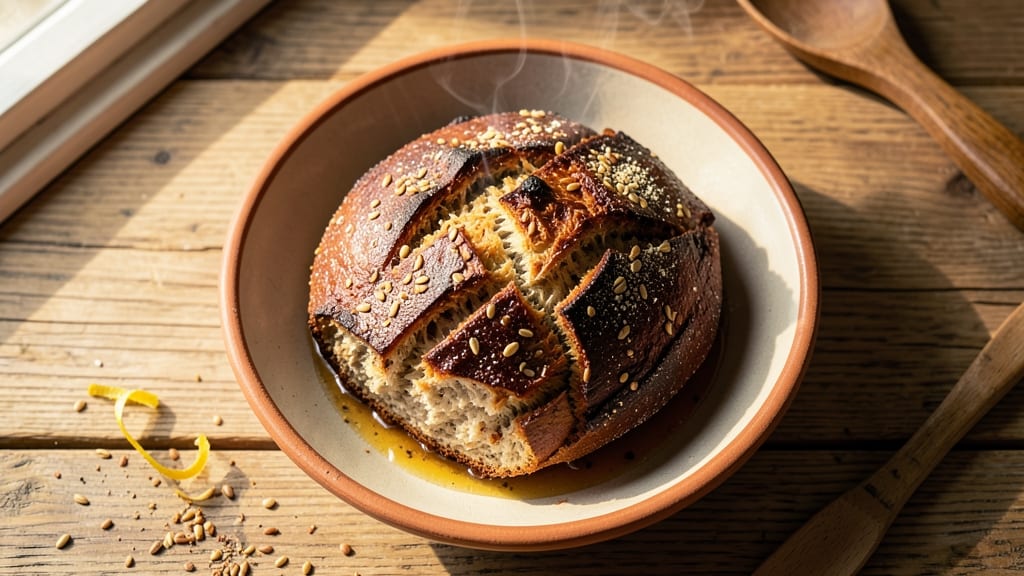
A 7-grain flour bread recipe transforms your kitchen into an artisan bakery with just one loaf—nutty depth, crispy crust, and a chewy crumb that rivals store-bought. The secret lies in blending whole wheat, rye, spelt, and five other grains for complex flavor and texture that keeps you coming back.
This isn’t just bread; it’s a foolproof method for achieving bakery-quality results at home, even if you’ve never baked before.
The magic happens in the mix: warm water activates the yeast, while the combination of flours creates a perfect balance of heartiness and lightness. Kneading develops gluten for structure, and a long, slow proof ensures that signature open crumb.
The crust? Achieved through steam and high heat, giving you that golden, shatteringly crisp exterior that holds up to dipping in olive oil or soup.
By the time it emerges from your oven, you’ll have a loaf with nutty undertones, a crackling crust, and a crumb so tender it practically melts in your mouth.
The aroma alone—warm, grainy, and slightly sweet—will have everyone asking for seconds. This bread isn’t just a side; it’s the star of your table.
Use it for sandwiches, toast with butter, or serve alongside soups. The recipe scales easily, so double it for gatherings. Here’s how to bake it like a pro—no fancy equipment required.
Ingredients for 7 grain flour bread
Seven flours blend for bakery-style depth—nutty, crispy, and foolproof for beginners.
| Ingredient | Amount | Notes |
|---|---|---|
| Whole Wheat Flour 🌾 | 1 cup | Lightly sifted for even texture |
| Rye Flour 🌾 | ½ cup | Dark rye for robust flavor |
| Spelt Flour 🌾 | ½ cup | Freshly milled if possible |
| Oat Flour 🌾 | ½ cup | Blended from rolled oats |
| Barley Flour 🌾 | ¼ cup | Pearled barley for texture |
| Buckwheat Flour 🌾 | ¼ cup | Rich, earthy flavor |
| Cornmeal 🌾 | ¼ cup | Fine-ground for smoothness |
| Active Dry Yeast 🍞 | 2 ¼ tsp | Freshly opened for potency |
| Granulated Sugar 🍚 | 1 tbsp | Feeds yeast for rise |
| Diamond Crystal Kosher Salt 🧂 | 1 ½ tsp | Fine grain preferred |
| Olive Oil 🫒 | 2 tbsp | Extra-virgin for richness |
| Warm Water 💧 | 1 ¼ cups | 110°F for yeast activation |
| Honey 🍯 | 1 tbsp | Wildflower for subtle sweetness |
The flours are the heart of this bread. Bob's Red Mill carries excellent whole-grain blends, but if you're sourcing separately, King Arthur Flour has top-tier rye and spelt. Look for freshly milled flours—they pack more flavor and better texture. The buckwheat and barley add earthy notes that balance the sweetness of the honey. If you can't find buckwheat flour, blend raw buckwheat groats for a similar effect. For the yeast, check the expiration date—old yeast won't activate properly, no matter how warm your water gets. Store your flours in airtight containers to preserve freshness.
No spelt flour? Substitute whole wheat at the same amount, but expect a slightly denser crumb. Running low on rye? Dark pumpernickel flour works in a pinch. The honey can be swapped for maple syrup or agave, but honey's floral notes are ideal here. For a gluten-free version, replace all flours with a 1:1 gluten-free blend—just know the texture will differ. If you're baking in high humidity, reduce the water by 1 tbsp to prevent a gummy dough. The olive oil adds richness; if you prefer, avocado oil works just as well.
This dough keeps for 24 hours in the fridge, covered, if you want to proof it overnight. For best results, bake within 4 hours of mixing. The loaf stays fresh for 3-4 days at room temperature, wrapped in a clean kitchen towel. For longer storage, slice and freeze portions—perfect for toast. The crust crisps up beautifully when reheated in a 350°F oven for 5 minutes. Double the recipe for gatherings; just scale up all ingredients proportionally.
Why You'll Love This Recipe
- No-Fuss Mixing: I swear by this—just toss the flours (whole wheat, rye, spelt, oat, barley) with water, a pinch of salt, and let the dough handle itself. No kneading, no fuss, no stress. Honestly, my hands stay clean while the bread does all the work.
- Earthy, Toasty Magic: That blend of rye and barley? It’s like a warm hug for your taste buds—nutty, slightly sweet, with a chewy bite that sticks around. I’ll be real: it’s the kind of bread that makes store-bought loaves feel boring.
- Meal Prep MVP: Slice it, toast it, freeze it—this bread survives everything. I keep a batch in the freezer for lazy mornings or quick sandwiches. Even my picky teenager grabs it for toast with peanut butter. (Yes, even on a Tuesday night.)
- Pantry Stash Winner: No fancy ingredients, just flours you likely already have. I’ve made this for under $3 a loaf, and it lasts for days. Between us, it’s my budget-friendly secret for feeding the whole family without breaking the bank.
Step-by-step instructions for 7-Grain flour bread
Here's how to transform those nutty flours into a loaf with a crisp crust and tender crumb.
Activate the Yeast with Warm Water and Honey
In a small mixing bowl, combine the 1.25 cups warm water (about 110°F) with the 1 tbsp honey and 2.25 tsp active dry yeast. Let it sit for 5-10 minutes until you see frothy bubbles forming on the surface—that's your yeast coming to life. The honey feeds the yeast while adding subtle sweetness that balances the earthy flours.
If the mixture doesn't bubble after 10 minutes, your yeast might be dead. Start fresh with new yeast—this is the foundation of your bread, and skipping this step risks a dense loaf. The warm water should feel like bathwater to the touch; if it's too hot, you'll kill the yeast before it even wakes up.
Mix the Dry Ingredients for Even Distribution
In a large bowl, whisk together the 1 cup whole wheat flour, 0.5 cup rye flour, 0.5 cup spelt flour, 0.5 cup oat flour, 0.25 cup barley flour, 0.25 cup buckwheat flour, 0.25 cup cornmeal, 1 tbsp granulated sugar, and 1.5 tsp diamond crystal kosher salt. Sift the flours lightly through a fine-mesh sieve if possible—this prevents lumps and ensures even hydration.
The buckwheat and barley flours will give your bread a rich, nutty depth, while the oat flour adds subtle sweetness. The cornmeal contributes a slight gritty texture that enhances the crust. Don't skip the salt—it's essential for flavor balance and gluten development. Mix these dry ingredients thoroughly before adding liquids to prevent pockets of unmixed flour.
Combine Wet and Dry Ingredients to Form a Dough
Pour the yeast mixture into the dry ingredients and add the 2 tbsp olive oil. Using a wooden spoon or dough whisk, stir until a shaggy dough forms. The olive oil adds richness and helps create a tender crumb. Let the dough rest for 5 minutes—this allows the flours to absorb the liquid and the gluten to begin developing.
After resting, knead the dough on a lightly floured surface for 8-10 minutes until it becomes smooth and elastic. The 7-grain blend is denser than all-purpose flour, so don't be surprised if it feels slightly sticky. If it's too dry, add 1 tsp warm water at a time until it reaches the right consistency—it should hold together but still be slightly tacky to the touch.
First Rise for Flavor Development
Place the dough in a lightly oiled bowl, cover it with a damp kitchen towel, and let it rise in a warm place for 1.5-2 hours or until it has nearly doubled in size. The warm environment (like the top of your fridge with a light on) helps the yeast work efficiently. Poke the dough gently—if it springs back slowly, it's ready.
This first rise is crucial for developing flavor and texture. The dense flours need extra time to hydrate fully, so resist the urge to rush it. The dough might not rise as dramatically as all-purpose flour bread, but it should still show noticeable expansion. If your kitchen is cold, place the bowl near a warm oven (with the light on) to maintain an ideal rising temperature.
Shape and Second Rise for Structure
Punch down the dough to release air, then shape it into a round loaf. For a rustic look, place it seam-side up in a greased pullman pan or a round baking dish. Cover it again and let it rise for another 30-45 minutes until it's puffy and just about ready for the oven. The second rise ensures the bread has proper structure before baking.
Preheat your oven to 375°F while the dough rises. For extra crusty texture, place a baking stone or inverted baking sheet on the lower rack 15 minutes before baking. This creates steam that helps develop a crisp exterior. Brush the risen loaf with a little water or egg wash if you prefer a golden-brown finish—this step is optional but enhances the crust's appeal.
Bake to Golden Perfection
Bake the bread for 35-40 minutes until the crust is deep golden brown and the internal temperature reaches 190-200°F. The crust should sound hollow when tapped on the bottom. If it browns too quickly, tent it loosely with foil to prevent over-browning while it finishes baking.
Remove the bread from the oven and let it cool on a wire rack for at least 30 minutes before slicing. The interior will continue to set as it cools, ensuring a clean slice every time. The aroma of freshly baked 7-grain bread—nutty, earthy, and slightly sweet—will fill your kitchen, making the wait worthwhile. Serve warm with butter or your favorite jam for the ultimate experience.
Pro Tips For Making 7 Grain Flour Bread
- Sift the Oat Flour: Oat flour is a beast—it’s dense and gummy if not handled right. Sift it twice with the other dry ingredients, then whisk the mix to break up clumps. I learned this the hard way when my first batch turned into a brick.
- Hydrate the Rye First: Rye flour absorbs moisture like a sponge. Mix it with the water before adding it to the other flours—this prevents a dry, crumbly dough. Skip this, and your bread might taste more like sawdust than rustic goodness.
- Don’t Overknead the Spelt: Spelt flour gets sticky fast, and overworking it turns the dough into glue. Knead just until the ingredients come together—about 5-6 minutes by hand. The dough should be tacky but not fight you every step.
- Steam the Loaf Early: Seven-grain bread dries out fast, especially with all that whole grain. Spritz the oven walls with water before baking, then tent the loaf with foil after 15 minutes. This keeps the crust from hardening too soon—trust me, your crumb will thank you.
Flavor customization for this 7 grain flour bread
Sweet & Nutty Twist
Add 1 tbsp cinnamon and ½ cup chopped walnuts to the dough for a warm, spiced variation. The cinnamon enhances the honey's sweetness, while the walnuts add crunch and richness. I like to sprinkle extra nuts on top before baking for a beautiful, textured crust. 🌟
Herb-Infused Crust
Mix 1 tbsp dried rosemary or thyme into the dry ingredients for an aromatic twist. Fresh herbs work too—just finely chop 2 tbsp fresh rosemary and fold it in after kneading. The herbs pair beautifully with the bread's nutty base, especially when served with olive oil and balsamic vinegar.
Seed & Nut Topping
Before baking, sprinkle 2 tbsp pumpkin seeds and 1 tbsp sesame seeds on top for extra texture and visual appeal. Toast the seeds in a dry pan for 2-3 minutes until fragrant, then press them gently into the dough.
This adds a satisfying crunch with every bite and makes the loaf look even more inviting. 💫
Smoky BBQ Variation
For a smoky flavor, replace ½ cup of the warm water with ½ cup smoked paprika-infused water (steep 1 tbsp smoked paprika in the water for 5 minutes before mixing).
This gives the bread a subtle, charred depth that pairs perfectly with pulled pork sandwiches. The smokiness complements the earthy grains beautifully.
Sun-Dried Tomato & Garlic
Add ¼ cup finely chopped sun-dried tomatoes and 2 minced garlic cloves to the dough for a Mediterranean-inspired twist. The tomatoes add a tangy sweetness, while the garlic deepens the flavor profile.
I like to fold them in after the first rise, just before shaping the loaf. This variation shines when served with hummus or as a bruschetta base. 🌶️
Whole Grain & Honey Glaze
For an extra-special touch, brush the baked loaf with a mix of 1 tbsp melted butter and 1 tbsp honey after removing it from the oven. Let it cool slightly before slicing—this creates a sticky, caramelized crust that’s irresistible.
The glaze balances the bread’s nutty flavors with a touch of sweetness, making it perfect for breakfast or dessert. 🍯
Nutrition facts
Frequently asked questions
Why does my 7-grain bread turn out dense instead of light and airy?
The dense flours in this recipe absorb more moisture and develop gluten differently than all-purpose flour. Over-kneading or skipping the 1.5-2 hour first rise are common culprits. Let the dough rest longer between kneading and shaping—this helps the grains hydrate properly. Also, check your yeast: if it didn't bubble in the warm water, it won't activate the dough.
Can I substitute any of the flours if I can't find them all?
The key is maintaining the nutty, hearty texture. Replace missing flours with equal amounts of whole wheat or rye. For example, swap buckwheat with extra rye flour—it won't be identical, but the flavor will still be rich. The cornmeal and oat flour are easiest to omit (they add texture), but if you do, reduce the total flour by ¼ cup to keep the dough from getting too dry.
How do I get a crispy crust like artisan bread?
Steam is your secret weapon! Place a baking stone in the oven 15 minutes before baking, then pour ½ cup hot water into a tray on the lower rack when you put the bread in. The steam creates a crisp exterior while keeping the crumb tender. For extra crunch, brush the risen dough with egg wash or olive oil before baking—this forms a golden, shatterable crust.
Will this bread work in a bread machine?
Yes, but with adjustments! Use the whole wheat setting and add 1 extra tbsp water (the grains absorb more). Set the machine to 2 hours for kneading and 1 hour for rising. The dough will be stickier, so grease the pan well. For best results, shape it by hand after the machine cycle—this gives you more control over the final texture.
How long can I store or freeze this bread?
At room temperature, wrap it in a clean kitchen towel and store in an airtight container for 3-4 days. For longer storage, slice and freeze portions—perfect for toast. Thaw at room temperature or reheat slices in a 350°F oven for 5 minutes to restore crispiness. The crust stays fresh longer if you reheat it this way rather than microwaving.