Breakfast & Brunch
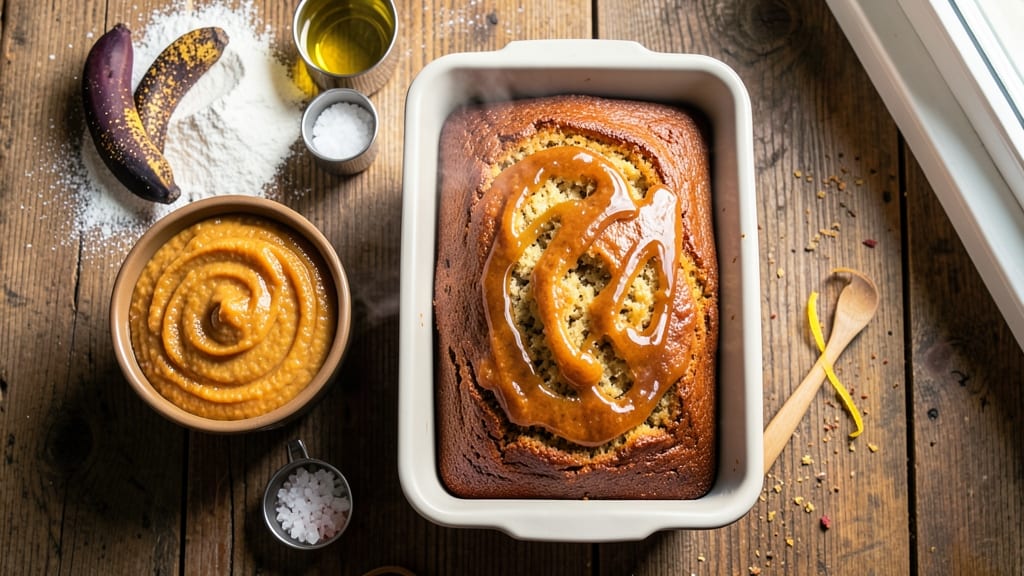
This 6-ingredient banana bread recipe delivers the perfect balance of moist crumb and tender texture without overcomplicating the process. The secret lies in minimal mixing and a few simple pantry staples that work together to create a loaf so good, you'll forget it's made with just six ingredients.
I've baked this version countless times, and it never fails to impress—whether you're feeding a crowd or just craving a slice of comfort.
The beauty of this recipe is its simplicity: no fancy techniques, no special equipment, and no overmixing. Overmixing develops gluten, which can make banana bread dense and tough. Instead, we focus on combining ingredients just until they're incorporated, ensuring a tender, moist crumb that stays fresh for days.
The recipe relies on ripe bananas for natural sweetness and moisture, while a touch of leavening keeps the texture light and airy.
By the time it emerges from the oven, you'll have a golden-brown loaf with a crackly top and a crumb so tender it practically melts in your mouth. The aroma alone will have everyone gathering in the kitchen, and the first bite will confirm why this is a foolproof favorite.
No one will guess it's made with just six ingredients—it tastes like the classic banana bread you remember from childhood.
Perfect for breakfast, dessert, or a quick snack, this banana bread keeps well for up to a week when stored properly. The simplicity of the recipe makes it ideal for beginners, while the results will satisfy even the most experienced bakers. Let's get started on creating this crowd-pleaser!
Ingredients for 6 ingredient banana bread
Six simple ingredients transform into the perfect moist banana bread with minimal effort.
| Ingredient | Amount | Notes |
|---|---|---|
| Ripe Bananas 🍌 | 3 medium | Dark speckled skin preferred |
| All-Purpose Flour 🌾 | 2 cups | Sifted for even texture |
| Granulated Sugar 🍚 | 1 cup | White or light brown |
| Vegetable Oil 🫒 | ½ cup | Light or canola preferred |
| Baking Soda 🧂 | 1 tsp | Pure baking soda, not baking powder |
| Salt 🧂 | ½ tsp | Fine sea salt preferred |
The bananas are the heart of this recipe—ripe ones with dark speckles pack the most natural sweetness and moisture. Grab a bunch from the store's produce section (they're usually marked clearly) or check your fruit bowl for any that've turned brown. Whole Foods or your local grocery store's organic section often has the ripest selection. If you're unsure, mash one banana and taste it—if it's sweet, it's ready. The flour is non-negotiable here; King Arthur or Bob's Red Mill brands work best for consistent texture. For the sugar, white or light brown both work, but white gives a slightly cleaner flavor that lets the banana shine.
No vegetable oil? Melted coconut oil or applesauce works in a pinch (use equal amounts), though the texture will be slightly denser. Short on baking soda? Baking powder at 1.5 times the amount can substitute, but the flavor won't be identical. The salt is easy to overlook, but it balances the sweetness—Diamond Crystal kosher salt dissolves perfectly. If you're baking at high altitudes, add an extra 1/4 tsp baking soda. For extra richness, swap half the oil for Greek yogurt or sour cream, but keep the total liquid at 1/2 cup. The recipe's magic comes from minimal mixing—just combine until the flour is just incorporated, no more.
This loaf stays fresh for 5-6 days wrapped at room temperature or 1 week in the fridge. For longer storage, slice and freeze portions for up to 3 months. The best part? It reheats beautifully—wrap a slice in foil and microwave for 20 seconds to revive that fresh-baked aroma. I always bake two loaves and freeze one immediately; it's perfect for lazy mornings or last-minute guests. The crust gets crispier as it sits, so if you prefer it softer, slice and serve immediately after baking.
Why You'll Love This Recipe
- No Fuss Mixing: I swear by the "dump-and-stir" method here—just mash those bananas, toss in the dry stuff, and let the baking soda do its magic. No whisking, no measuring cups cluttering your counter, just a bowl and a spoon. Honestly, it’s the kind of recipe that makes me feel like I’ve earned my coffee break before I even start.
- Sweet Spot Flavor: That caramel depth from overripe bananas? It’s where this bread shines. The sugar doesn’t overpower—it just enhances the natural sweetness, while the oil keeps it moist without tasting greasy. Between us, this is the kind of banana bread that disappears faster than my willpower on a Sunday morning.
- Breakfast or Snack Fix: Slice it warm for a quick breakfast with peanut butter, or pack it cold for lunch—this bread handles both like a champ. I’ll be real: I’ve even microwaved a slice for my kids’ after-school snack, and they never complain. It’s that reliable.
- Pantry Staple Rescue: Got a bunch of spotted bananas? This recipe turns them into gold. No wasted ingredients, no extra shopping trips—just flour, sugar, and a splash of oil you probably already have. Plus, it keeps for days, so you’re not scrambling to bake something fresh every time hunger strikes. My secret weapon for lazy days.
Step-by-step instructions for 6-Ingredient banana bread
Here's the method for tender, moist banana bread with just six ingredients—no overmixing, no fuss.
Prep the Bananas and Mix Wet Ingredients
Preheat your oven to 350°F and grease a 9x5-inch loaf pan lightly with vegetable oil or line it with parchment paper. Peel the 3 medium ripe bananas and mash them thoroughly in a large mixing bowl using a fork until completely smooth—no lumps. The riper the bananas, the sweeter and moister your bread will be, so don't skip this step.
Add the ½ cup vegetable oil and 1 cup granulated sugar to the mashed bananas. Stir vigorously for about 30 seconds until the mixture is well combined and slightly thickened. This step ensures the sugar dissolves completely, which helps create that signature moist crumb. The mixture should look like a thick batter with a glossy sheen from the oil.
Combine Dry Ingredients and Fold Gently
In a separate medium bowl, whisk together the 2 cups all-purpose flour, 1 teaspoon baking soda, and ½ teaspoon salt. Sifting the flour at this stage prevents lumps and ensures an even texture in your final loaf. I like to use a fine-mesh sieve for this step—it makes all the difference in achieving that light, airy crumb.
Now, pour the dry ingredients into the wet banana mixture. Using a rubber spatula, gently fold everything together just until combined—you should still see some streaks of flour. Overmixing develops gluten, which can make the bread dense instead of tender. The goal here is to incorporate the dry ingredients without overworking the batter. Once combined, the batter will be thick and slightly sticky, resembling cookie dough.
Pour and Bake to Golden Perfection
Transfer the batter to your prepared loaf pan and smooth the top with the back of a spoon. Tap the pan gently on the counter a few times to release any air bubbles that may have formed. This helps prevent cracks in the crust and ensures an even rise. The batter should fill the pan about ¾ full—it won't rise dramatically, so don't worry if it looks like it won't reach the top.
Bake in the preheated oven for 50-60 minutes, or until a toothpick inserted into the center comes out clean or with just a few moist crumbs clinging to it. The bread is done when the top is golden brown and springs back slightly when pressed gently in the center. If the top browns too quickly, tent the pan loosely with aluminum foil after 30 minutes to prevent over-browning while the center finishes cooking.
Cool and Serve for Maximum Moisture
Remove the banana bread from the oven and let it cool in the pan for 10 minutes. This brief resting period allows the heat to distribute evenly and prevents the bread from falling apart when you try to remove it. After 10 minutes, carefully invert the loaf onto a wire rack to cool completely. I find that cooling on a rack rather than in the pan helps the bread set properly and keeps the bottom from becoming soggy.
Slice the bread when it's completely cool—this ensures clean cuts and prevents the loaf from falling apart. The interior should be moist with a tender crumb, and the aroma should be rich and sweet. Serve slices warm or at room temperature, and store any leftovers in an airtight container at room temperature for up to 3 days or in the refrigerator for up to 5 days. For longer storage, freeze the loaf wrapped tightly in plastic wrap for up to 3 months.
Pro Tips For Making 6 Ingredient Banana Bread
- MASH THE BANANAS WELL: I learned this the hard way—skipping a good mash leaves lumps that make your bread dense and uneven. Use a fork or potato masher to crush those bananas until smooth, no bigger than small pebbles. If you’re impatient, a quick pulse in the food processor works, but don’t overdo it—you’re not making banana puree.
- WEIGH YOUR FLOUR (YES, REALLY): Scooping flour from the bag packs in air, and that’s how you end up with a dry, crumbly loaf. Use a kitchen scale for the 200g (or ~1¾ cups) called for—tap the bowl gently to settle the flour before scooping. Trust me, your bread will be lighter and less likely to sink in the middle.
- DON’T OVERMIX THE BATTER: After 10 batches, I finally realized: stir just until the flour disappears. Overmixing develops gluten, and that’s how you turn tender banana bread into a tough, cake-like brick. Give it 10-12 strokes max—your bread will stay moist and fluffy.
- CHECK DONENESS WITH A TOOTHPICK (NOT THE CENTER): The toothpick test is classic, but most people jab the center and call it quits too soon. Pull it out from the sides near the edge—if it comes out clean (or with a few moist crumbs), your bread’s done. A wet center means more baking time, but a dry side means you’ve overdone it.
Troubleshooting great 6 ingredient banana bread
Dense Crumb Fix
If your banana bread turns out dense instead of tender, you’ve likely overmixed the batter. The key is to stop folding as soon as the dry ingredients disappear—just 10-15 strokes with a spatula.
Overmixing develops gluten, which makes the crumb tough. For extra moisture, add 1-2 tablespoons of milk or yogurt to the wet ingredients before combining. This lightens the texture without adding extra ingredients. 💡
Cracked Top Prevention
Those frustrating cracks on top usually happen from two things: overbaking or rapid temperature changes. To avoid them, tent the loaf with foil after 30 minutes if the top browns too quickly. Also, don’t open the oven door early—each time you peek, the temperature drops, causing uneven baking.
For a smoother finish, brush the batter with a thin layer of melted butter before baking. This creates a protective barrier that prevents cracks. ✨
Dry or Crumbly Texture
A dry loaf often means the bananas weren’t ripe enough or the oven was too hot. Always use speckled, soft bananas—they’re sweeter and moister. If your oven runs hot, reduce the temperature to 325°F and bake for 60-70 minutes.
For extra richness, replace 2 tablespoons of oil with 2 tablespoons of applesauce—it adds moisture without altering the flavor. Store leftovers in an airtight container with a slice of bread to keep them fresh longer. 🍞
Uneven Baking
If one side of your loaf is undercooked while the other burns, your oven likely has hot spots. Rotate the pan halfway through baking (after 25 minutes) to ensure even heat distribution. A light-colored metal pan (like aluminum) helps reflect heat more evenly than dark pans.
For extra insurance, place a baking sheet on the lower rack to preheat the oven evenly before adding your loaf. 🔥
Sticky or Gummy Crumb
A gummy texture usually means the bread didn’t bake long enough or was removed too soon. Always check doneness with a toothpick—it should come out with a few moist crumbs, not wet batter.
If your loaf feels sticky after cooling, it might have absorbed too much moisture from the pan. Next time, line the pan with parchment paper for easier removal and a cleaner finish. For a firmer crumb, let it cool completely before slicing. 🍌
Nutrition facts
Frequently asked questions
Why do my bananas need to be so ripe for this recipe?
Ripe bananas with dark speckles are sweeter and moister, which naturally balances the flavor and texture of your bread. The natural sugars caramelize during baking, creating that signature tender crumb. Plus, they require less added sugar—this recipe only uses 1 cup total! If your bananas aren't ripe enough, add 1-2 tablespoons of honey or maple syrup to compensate.
Can I substitute butter for the vegetable oil?
Yes, but you'll need to melt it first. Replace the ½ cup vegetable oil with ¼ cup melted butter—the butter adds richness, but the texture will be slightly denser. For a lighter option, use ½ cup applesauce instead, which keeps the bread moist and adds a subtle tang. Just be sure to measure accurately, as butter is denser than oil.
How do I know when my banana bread is fully baked?
The best way to test is with a toothpick inserted into the center—it should come out clean or with just a few moist crumbs clinging to it. The top should also be golden brown and spring back slightly when pressed gently. Baking times vary by oven, so start checking after 50 minutes. If the edges brown too quickly, tent the pan with foil after 30 minutes to prevent over-browning.
Can I add nuts or chocolate chips to this recipe?
Fold in ½ cup chopped walnuts or pecans or ½ cup chocolate chips after combining the wet and dry ingredients. For best results, use mini chocolate chips—they melt more evenly. Just don’t overmix, or the nuts/chips will sink unevenly. If you add extras, reduce the flour by 2 tablespoons to maintain the right texture.
Why does my banana bread taste bland?
Bland flavor usually means the bananas weren't ripe enough or the baking soda wasn't fresh. Use speckled, soft bananas for natural sweetness, and always check your baking soda's expiration date (old baking soda loses potency). For extra depth, add ½ teaspoon vanilla extract or a pinch of cinnamon to the wet ingredients. A splash of lemon juice (1 teaspoon) also brightens the flavor beautifully.