
Side Dishes
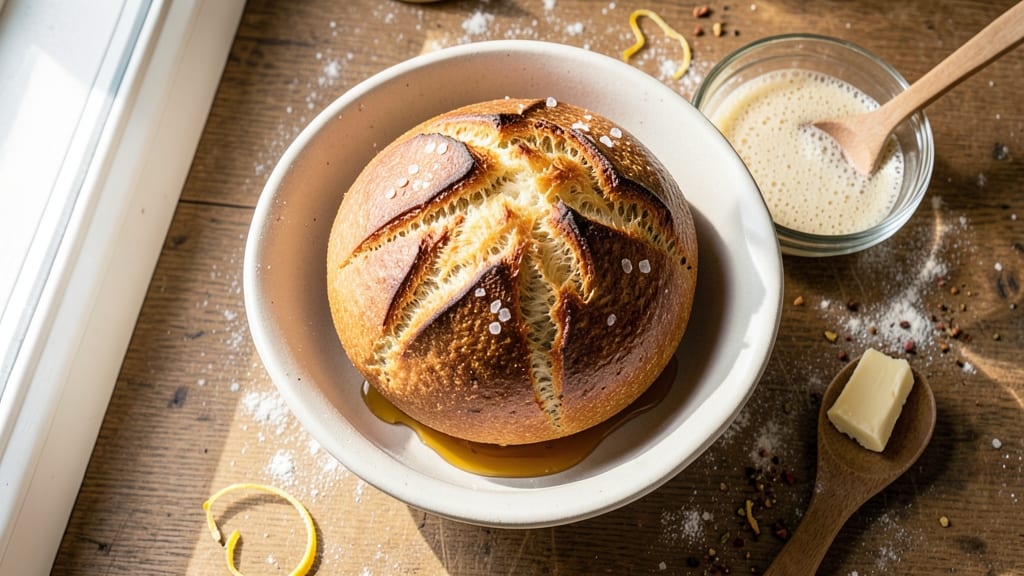
This 500g bread recipe delivers the perfect balance of crispy golden crust and tender, airy crumb—exactly what you need for sandwiches, toast, or dinner rolls. Dutch oven baking creates that restaurant-quality texture at home, with no special equipment beyond what you likely already own. The secret lies in precise hydration and controlled oven temperatures that transform simple ingredients into something extraordinary.
This recipe uses a straightforward mix of all-purpose flour, active dry yeast, and warm water to create a dough that's easy to handle but yields professional results. The kneading process develops gluten for that signature chewy texture, while proofing times ensure proper rise without overdevelopment.
Baking in a Dutch oven traps steam, creating that coveted crisp exterior while keeping the interior soft and pillowy.
What you'll end up with is a loaf that's crisp enough to stand up to butter but tender enough to melt in your mouth—ideal for slicing thick or serving as a warm, fresh accompaniment.
The aroma alone will have everyone gathering at the table, and the versatility means it works equally well for everyday meals or special occasions.
Ready in about 3 hours (including proofing), this bread requires minimal attention but delivers maximum impact. The recipe includes optional variations for darker crusts or added flavorings, so you can customize it to your preferences. Let's get started on creating your perfect loaf.
Ingredients for 500g bread
Simple ingredients, Dutch oven magic, and 3 hours to golden perfection—this 500g loaf delivers restaurant-quality texture at home.
| Ingredient | Amount | Notes |
|---|---|---|
| All-Purpose Flour 🌾 | 3 ½ cups | Sifted for even texture |
| Active Dry Yeast 🍞 | ¼ oz | Or 2 1/4 tsp (1 packet) |
| Granulated Sugar 🍚 | ½ tsp | Feeds yeast effectively |
| Salt 🧂 | 1 ½ tsp | Diamond Crystal preferred |
| Unsalted Butter 🧈 | ¼ cup | Cold, cubed for dough |
| Warm Water 💧 | 1 cup | 105-110°F (40-43°C) |
| Large Egg 🥚 | 1 whole | Room temperature |
| Cornmeal 🌽 | ½ cup | For dusting Dutch oven |
| Ice Water ❄️ | ¼ cup | For final knead if needed |
Flour is the foundation—King Arthur or Gold Medal brands work best for that tender crumb. Yeast is non-negotiable here: Fresh is ideal, but active dry works fine if stored properly (cool, dark place). The butter? European-style has higher fat content, giving that extra richness. Warm water temp matters—too hot kills yeast, too cold slows fermentation. I always test with my finger: should feel like bathwater, not boiling. For the Dutch oven, Le Creuset or Lodge brands are my go-tos—they hold heat like champs.
No cornmeal? Semolina or all-purpose flour works in a pinch. Butter too expensive? Olive oil or coconut oil keeps it tender, though texture will differ slightly. Egg allergy? Flax egg (1 tbsp ground flax + 3 tbsp water) mimics the structure. The sugar can be swapped for honey or maple syrup (same amount), but sugar feeds yeast faster. For a darker crust, brush with melted butter or olive oil> after baking. Proofing too fast? Your kitchen's too warm—try a cooler spot> or cover with a damp towel.
Dough keeps 2 days> in the fridge, wrapped tightly. For longer storage, freeze shaped loaves (unbaked) for up to 3 months>—thaw overnight before baking. The Dutch oven? Preheat it 1 hour> before baking to mimic restaurant ovens. Leftovers? Toast everything—toast, croutons, or garlic bread>—nothing goes to waste. And if you're making two loaves, double the yeast>—it's the only ingredient that scales linearly.
Why You'll Love This Recipe
- No-Fuss Dough: I swear, this takes less time than ordering takeout. Just mix the flour, yeast, sugar, and a pinch of salt—then fold in softened butter until it’s just shaggy. No kneading, no fuss, and honestly? That’s all it needs.
- Buttery Crust Magic: That single stick of butter makes all the difference—a golden, crackly crust with a tender crumb inside. The sugar caramelizes just enough to give it a subtle sweetness, like a hug for your sandwiches.
- Weeknight Hero: Between us, this is my go-to when I’m too tired to bake but still want fresh bread. Toss it in a loaf pan, let it rise while I make dinner, and boom—warm bread with zero effort. (Yes, even on a Tuesday night.)
- Budget-Friendly Staple: Five ingredients, one loaf that lasts. The butter makes it feel special, but the flour and yeast keep it affordable. Plus, it’s the perfect base for toast, sandwiches, or even breadcrumbs—no waste here.
Step-by-step instructions for Dutch oven bread with crispy exterior and soft crumb
Master this technique and you'll achieve that perfect bakery-style crust with an airy, pillowy interior every time.
Activate the Yeast for Maximum Rise
In a small bowl, combine the 1 cup warm water with the 0.5 tsp granulated sugar and 0.25 oz active dry yeast. Let this mixture sit for 5-10 minutes until it becomes frothy and bubbly. This activation step is crucial—it tells you your yeast is alive and ready to work.
I like to test the water temperature first by dipping my finger in—it should feel warm but not hot to the touch. If the mixture doesn't bubble within 10 minutes, your yeast might be dead, and you'll need to start over. The yeast should nearly double in volume and develop a foamy head before you proceed.
Mix the Dough with Proper Hydration
In the bowl of a stand mixer fitted with the dough hook attachment, combine the 3.5 cups all-purpose flour and 1.5 tsp salt. Add the yeast mixture and the 1 whole large egg to the dry ingredients. Mix on low speed until the dough just begins to come together, about 1-2 minutes.
Add the 0.25 cup cold unsalted butter, cubed, to the mixer. Increase the speed to medium and knead for 5-7 minutes until the dough is smooth and elastic. The butter should be fully incorporated but still visible as small flecks. If the dough feels too sticky, add 1 tablespoon flour at a time until it pulls away cleanly from the bowl.
Develop Gluten Through Proper Kneading
Continue kneading the dough by hand on a lightly floured surface for 8-10 minutes until it becomes smooth and slightly tacky but not sticky. You'll know it's ready when it springs back slowly when poked with your finger—a sign the gluten has properly developed.
Shape the dough into a round loaf and place it back in the bowl. Cover with a damp towel and let it rise in a warm place for 1-1.5 hours or until it has doubled in size. I place my dough near the oven with the light on to create a warm, consistent environment. The dough should feel light and airy, with no dense spots remaining.
Shape and Prepare for Baking
Punch down the risen dough to release air, then shape it into a round loaf again. Place it seam-side up in a bowl and let it rise for another 30-45 minutes. Meanwhile, preheat your oven to 450°F with a Dutch oven inside for 30 minutes.
When the dough has risen again, turn it out onto a floured surface and shape it into an oval loaf. Dust the Dutch oven with 0.5 cup cornmeal and carefully transfer the dough inside, seam-side up. The cornmeal prevents sticking and adds to that beautiful crust texture.
Bake to Golden Perfection
Bake the bread in the preheated Dutch oven for 25-30 minutes until it's golden brown. After 15 minutes, remove the lid and continue baking for another 10-15 minutes until the top is deeply browned and the internal temperature reaches 190-200°F.
Let the bread cool on a wire rack for at least 30 minutes before slicing. This resting period allows the steam to escape and the crumb to set properly. The exterior should be crisp with a beautiful golden-brown crust, while the interior should be soft and airy with an open crumb structure. If you tap the bottom, it should sound hollow—a sign of perfect baking.
Pro Tips For Making 500g Bread
- Use Room-Temp Butter: Cold butter pockets slow yeast activity—soften it to 65°F (18°C) before mixing. I learned this the hard way when my dough took three times longer to rise because the butter resisted incorporation. Just set it on the counter for 20 minutes (yes, even if you’re impatient like me).
- Weigh Your Flour: Scooping flour from the bag packs in air, which throws off hydration. Use a kitchen scale for 500g—tap the bowl gently to settle it before measuring. I was skeptical until I tried it; my bread finally had consistent texture and didn’t turn out dense.
- Skip the Over-Kneading: This isn’t a baguette—stop when the dough springs back slowly (about 5–7 minutes by hand). Overworking gluten makes bread tough. My grandmother swore by this, and she was right: the first batch I over-kneaded tasted like chewing cardboard.
- Proof Dough in a Warm Spot: A 78°F (25°C) environment (like an oven with a bowl of hot water inside) speeds up rise time to 1–1.5 hours. Cold kitchens? Double the wait. I used to rush it in the fridge and end up with flat, sad loaves—now I plan ahead and set the oven to “warm” 10 minutes before shaping.
Wine and beer pairings for 500g bread
Crisp White Wine
For this bread's crisp exterior and tender crumb, a dry Riesling or Sauvignon Blanc is my go-to choice. The bright acidity cuts through the buttery richness while complementing the bread's golden crust.
Look for a German Riesling with mineral notes or a New Zealand Sauvignon Blanc for that zesty citrus punch. Serve slightly chilled—around 50°F—to enhance the wine's crispness and let it refresh your palate between bites of warm bread. 🍷
Malty Amber Ale
If you prefer beer, an amber ale with caramel and toasted malt flavors creates a perfect pairing. I love Fat Tire or Leinenkugel's Summer Shandy for their balanced sweetness and subtle bitterness. The malty notes mirror the bread's crust, while the effervescence cleanses your palate.
For a bolder option, try a Belgian-style witbier like Hoegaarden—the coriander and citrus add a refreshing contrast to the bread's richness.
Red Wine Exception
While white wines and beers dominate, a light-bodied Pinot Noir from Oregon or Burgundy works beautifully if you prefer red. Choose one with bright fruit notes and minimal tannins to avoid overpowering the bread.
A 2019 or 2020 vintage with 12-13% ABV strikes the right balance. Serve at 60°F to preserve its delicate aromas and let the wine's acidity shine alongside the bread's crust. 🍇
Cider Pairing
Don't overlook dry hard cider—especially a French Poiré or American dry cider like Angry Orchard. The crisp apple notes and slight effervescence enhance the bread's buttery texture without competing. Opt for a cider with 6-7% ABV and minimal sweetness to avoid cloying the bread's flavors.
Chill it to 45°F for the best experience, and watch how the cider's acidity makes every bite of crust even more satisfying.
Dessert Wine Twist
For a special occasion, a dry sparkling wine like Prosecco or Cava adds a festive touch. The bubbles and citrusy notes elevate the bread's crust, making it feel like a celebration. Serve chilled to 45°F and pair with a charcuterie board for a sophisticated spread.
The contrast between the bread's richness and the wine's effervescence is pure magic—perfect for holidays or weekend brunches. ✨
Nutrition facts
Frequently asked questions
Why does my bread dough feel too sticky?
Sticky dough usually means either too much hydration or insufficient gluten development. Try adding 1 tablespoon of flour at a time while kneading until it pulls away cleanly from the bowl. If it's still sticky after adding flour, your kitchen might be too humid—try kneading with ice water (1 tbsp at a time) to tighten the gluten structure. The dough should be tacky but not wet when properly kneaded.
Can I make this recipe without a Dutch oven?
Yes! Use a heavy oven-safe pot with a lid or even a baking stone. Preheat your oven to 450°F with the pot inside for 30 minutes, then place your shaped loaf inside with a cup of boiling water to create steam. Cover with the lid for 20 minutes, then remove the lid and bake 10-15 minutes more until golden. The crust won't be as crisp, but the interior will still be tender.
How do I know when the bread is fully baked?
Your bread is done when it reaches an internal temperature of 190-200°F and has a deep golden-brown crust. Tap the bottom—it should sound hollow. Another trick: pull the bread out early if the top is browning too fast, and brush it with cold water before putting it back in. This creates a shinier crust while keeping the interior soft.
What if my bread didn't rise enough?
Underproofed bread usually happens when your kitchen is too cold or the yeast was old. Next time, place your dough bowl near the oven with the light on to create warmth. If your dough hasn't doubled after 2 hours, your yeast might be dead—replace it with 1 packet fresh yeast and let it rise again. For immediate fixes, try baking what you have (it'll be denser) or let it rise longer in a warm spot.
Can I add herbs or seeds to this recipe?
For a savory twist, mix in 1 tablespoon dried herbs (rosemary, thyme) or 2 tablespoons seeds (sesame, poppy) with the flour. For extra flavor, try 1 tsp garlic powder or ½ tsp onion powder in the dough. Just be mindful of hydration—herbs and seeds may require 1-2 extra tablespoons of water to maintain the right consistency. Distribute them evenly for balanced flavor.